datastats / SIGNAL
enfresde
LIVE
← ALL SIGNALS
datastats / Culture
Culture ● Peak Trend score 76 · Published September 15, 2026 · Updated September 15, 2026

Mexican Independence Day: Date, El Grito and Traditions

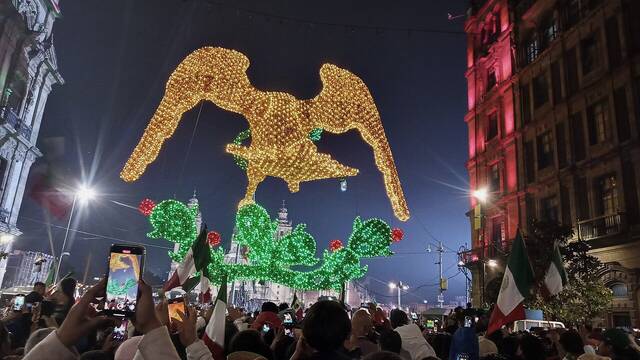
Mexican Independence Day is September 16, and it marks the start of the war of independence in 1810, not its end. The commemoration begins the night before: on Tuesday, September 15, 2026 at around 11 p.m., President Claudia Sheinbaum rings the bell of Dolores from the balcony of the National Palace in Mexico City and gives El Grito to the Zócalo below, the 216th anniversary of Miguel Hidalgo's call to arms. The military parade follows on the morning of September 16. It is not Cinco de Mayo, which is a different date and a different war. Sources: Government of Mexico, Infobae, El Informador, Wikipedia.
By · datastats
INTEREST INDEX
76 -4% · 24h
Mexican Independence Day: Date, El Grito and Traditions
PetrohsW · CC BY-SA 4.0
30-DAY PEAK
81
modeled window
90-DAY AVG
49
stable
TREND SCORE
76
-4% · 24h
TRACKED QUESTIONS
14
from public queries
INTEREST OVER TIME
Momentum trajectory
PEAK 81
30d ago15dtoday

The context

Mexican Independence Day is September 16, but almost nobody experiences it on September 16. The part everyone shows up for happens the night before.

At around 11 p.m. on Tuesday, September 15, 2026, President Claudia Sheinbaum will step onto the central balcony of the National Palace, ring a bell that was carried to Mexico City from a parish church in Guanajuato in 1896, and shout a roll call of names into a Zócalo holding a crowd in the hundreds of thousands. Each name gets a “¡Viva!” back. It ends with three cries of “¡Viva México!”, then the anthem, then fireworks. It is the 216th anniversary of the night the priest Miguel Hidalgo y Costilla rang his own church bell in the town of Dolores and told his parishioners to take up arms against Spanish rule.

Two things about that anniversary are routinely got wrong. The first is that this is the start of the war, not the end of it. Hidalgo was captured and shot in 1811. Independence was not settled until 1821, with the Treaty of Córdoba and the entry of the Army of the Three Guarantees into Mexico City on September 27. Mexico chose to commemorate the call rather than the victory, which tells you something about how the country reads its own history. The second is Cinco de Mayo, which is not this. That is the Battle of Puebla against the French, 1862, a minor date in Mexico and a major one in the United States, and the confusion is almost entirely an export.

The 2026 edition has its own details. Sheinbaum gives the Grito for the second time, after becoming the first woman to lead the ceremony in 2025, an edition in which she added the heroines of independence to a list of names that had been male for two centuries. The Zócalo programme starts at 7 p.m. with the Marina band, the National Guard mariachi, José Alfredo Jiménez “Nieto” and three winners of the México Canta contest, before Intocable closes the night. Access is free.

The following morning, September 16, is the formal half: the military parade leaves the Zócalo at about 11 a.m., runs down Paseo de la Reforma and ends at Campo Marte, broadcast nationally. Offices, banks and schools are closed, because September 16 is one of the statutory holidays written into the federal labour law.

Outside Mexico, the date travels. Chicago, Los Angeles, Houston, San Antonio and Phoenix all hold parades on the nearest weekend, and Mexican consulates around the world run their own Grito on the evening of the 15th. And in Mexico itself the food does most of the talking: chiles en nogada, green, white and red, in season in precisely this month, which is the rare case of a patriotic dish that is patriotic because of the calendar rather than in spite of it. Sources: Government of Mexico, Infobae, El Informador, Proceso, Wikipedia.

People also ask

14 questions · sorted by search share

September 16, every year. It is a statutory national holiday in Mexico, banks, schools and government offices close, and in 2026 it falls on a Wednesday. The public celebration, however, starts the evening before, on September 15. Sources: Government of Mexico, Wikipedia.

El Grito de Independencia, the reenactment of the call to arms that started the war. On the night of September 15 into 16, 1810, the parish priest Miguel Hidalgo y Costilla rang the bell of his church in the town of Dolores, in what is now Guanajuato, and called his parishioners to rise against Spanish rule. Every year since, the head of state repeats a version of it from the National Palace, rings the same bell, and the crowd answers each viva. Sources: Wikipedia, Government of Mexico.

Around 11 p.m. on Tuesday, September 15, 2026, from the central balcony of the National Palace on the Zócalo in Mexico City. The bell, the vivas, the national anthem and the fireworks follow in that order. Music in the square starts earlier, from 7 p.m.. Sources: Infobae, El Informador, TV Azteca.

President Claudia Sheinbaum, for the second time. Her first, in 2025, was the first time in more than two centuries that a woman led the ceremony, and she used it to add independence heroines to the roll call of names. Sources: Mexico News Daily, El Financiero.

No, and this is the single most common mix-up. Cinco de Mayo marks the Mexican army's victory over French forces at the Battle of Puebla in 1862, a different war, 52 years later. It is a minor holiday in Mexico, mostly observed in Puebla, and a much bigger one in the United States. Independence Day is September 16. Sources: Wikipedia, National Geographic.

No. September 16, 1810 is the day the fight started. Independence was actually achieved eleven years later: the Treaty of Córdoba was signed in August 1821 and the Army of the Three Guarantees entered Mexico City on September 27, 1821. Mexico celebrates the beginning of the struggle, not its conclusion. Sources: Wikipedia, Britannica.

The military parade, the Desfile Militar. It starts around 11 a.m. from the Zócalo, runs along Paseo de la Reforma and finishes at Campo Marte, with the armed forces, the navy, the National Guard and, in recent editions, contingents that draw the largest applause from the crowd rather than the reviewing stand. It is broadcast live nationally. Sources: Government of Mexico, Infobae.

The headline act is Intocable, the norteño group from Texas. The programme from 7 p.m. also includes the Marina band, the National Guard mariachi, José Alfredo Jiménez "Nieto" and three winners of the México Canta contest. Entry to the Zócalo is free. Sources: Proceso, Infobae.

A Catholic priest in the town of Dolores and, from September 1810, the leader of the first insurgent army. He was a criollo, educated, in his fifties, and by the standards of the colonial clergy a troublemaker well before the uprising. He was captured and executed by firing squad in 1811, ten years before independence was won, which is why the date celebrated is his call rather than his victory. Source: Wikipedia.

Chiles en nogada above all, poblano chillies stuffed with picadillo, covered in walnut sauce and pomegranate seeds, green, white and red like the flag, and in season precisely in September. Alongside them: pozole, tacos, tamales, tequila and mezcal. The dish is genuinely seasonal rather than symbolic-by-decree, which is part of why it has held. Sources: Wikipedia, Mexico News Daily.

With parades and street festivals in cities with large Mexican-American populations, Chicago, Los Angeles, Houston, San Antonio and Phoenix among them, usually on the weekend closest to September 16. Mexican consulates also hold their own Grito ceremonies on the evening of the 15th, led by the consul. Sources: Remitly, local city listings.

There is no fixed text. The head of state calls out a roll of independence heroes, Hidalgo, Morelos, Allende, Josefa Ortiz de Domínguez and others, each answered by the crowd with "¡Viva!", then closes with three cries of "¡Viva México!". Which names are included is a political choice, and presidents have added and removed them. Sources: Government of Mexico, Mexico News Daily.

Yes, it is one of the statutory holidays set in the federal labour law, meaning paid leave for employees and a legal premium for anyone who works it. Banks, schools and public offices close. September 15 is a normal working day. Sources: Mexican Federal Labour Law, Government of Mexico.

It was moved. The original bell that Hidalgo rang in Dolores in 1810 was brought to the National Palace in 1896, under Porfirio Díaz, who also moved the Grito ceremony itself to the night of September 15, his own birthday. Both changes stuck. Sources: Wikipedia, Government of Mexico.

True or false?

7 rumors fact-checked, with sources
False
Mexican Independence Day is Cinco de Mayo.

Different date, different war. Cinco de Mayo is the 1862 Battle of Puebla against the French. Independence Day is September 16. (Wikipedia, National Geographic)

False
Mexico won its independence on September 16, 1810.

That is the day the war started. It ended in 1821, with the Treaty of Córdoba and the entry into Mexico City on September 27. (Wikipedia, Britannica)

True
The Grito takes place on the night of September 15, not on the 16th.

Around 11 p.m. on the 15th, from the National Palace balcony. The parade is the following morning. (Government of Mexico, Infobae)

True
The bell rung at the National Palace is the original one from Dolores.

It was moved to Mexico City in 1896 under Porfirio Díaz, along with the ceremony itself. (Wikipedia, Government of Mexico)

True
Claudia Sheinbaum was the first woman to give El Grito.

In 2025, after more than two centuries of the ceremony being led exclusively by men. 2026 is her second. (Mexico News Daily, El Informador)

True
Intocable headlines the Zócalo on the night of the 2026 Grito.

Confirmed in the official programme, alongside the Marina band, the National Guard mariachi and México Canta winners. (Proceso, Infobae)

False
You have to pay to get into the Zócalo for El Grito.

Access is free and open to the public. Expect security filters and very large crowds from the early evening. (Government of Mexico, Infobae)

INTEREST BY REGION
Where it's trending
India
100
United States
80
United Kingdom
51
France
49
Brazil
45
Germany
34
Japan
18
Canada
14
Sources
Public-source data, structured and editorially reviewed.