Day of the Dead 2026: Dates, Mexico City Parade and Traditions
Day of the Dead (Día de Muertos) 2026 is celebrated on Sunday, November 1 and Monday, November 2, with many families setting up their ofrenda from October 31 or earlier. Mexico City's Gran Desfile de Día de Muertos, the 10th edition, steps off on Saturday, October 31 at 14:00 from the Diana Cazadora fountain on Paseo de la Reforma to the Zócalo, where a Megaofrenda dedicated to José Guadalupe Posada opens on October 29. The tradition has been on UNESCO's intangible heritage list since 2008 (proclaimed in 2003), and the parade itself only dates from 2016, inspired by the James Bond film Spectre. Sources: UNESCO, Fox Sports México, Chilango, Expansión, PBS NewsHour.
The context
Day of the Dead 2026 falls on Sunday, November 1 and Monday, November 2. The first day is traditionally kept for children who have died, the second for adults, but the season opens well before: across Mexico families set up their ofrenda by the night of October 31, and popular calendars welcome other souls from late October. UNESCO, which has listed the Indigenous festivity dedicated to the dead as intangible cultural heritage since 2008 (after a first proclamation in 2003), describes a time when the dead are believed to return briefly to their families, at the close of the maize harvest cycle.
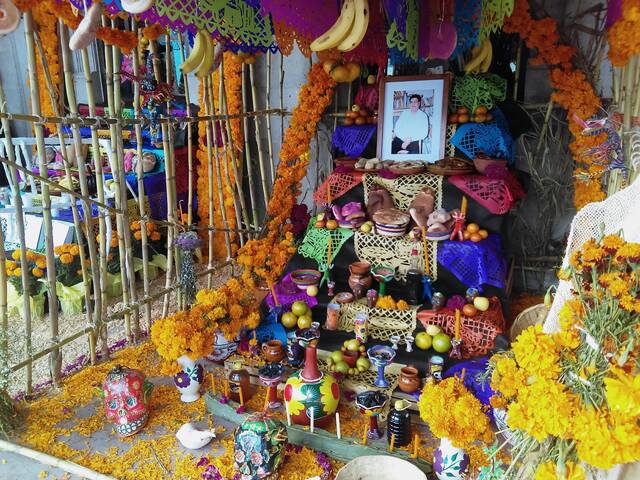
The ofrenda is the heart of it. On a home altar people place photographs, candles, water and salt, copal, sugar skulls, pan de muerto and the favorite dishes of the person they are remembering, framed by papel picado and the orange petals of cempasúchil, the Mexican marigold whose color and scent are said to guide the souls home. In many communities the night is spent at the cemetery, cleaning and decorating graves. The tone is affectionate rather than morbid, which is the clearest difference with Halloween, even if the two now share shop windows and, this year, a Saturday.
In Mexico City, the big date is Saturday, October 31 at 14:00, when the 10th Gran Desfile de Día de Muertos sets off from the Diana Cazadora fountain on Paseo de la Reforma toward the Zócalo, with more than 4,000 participants, 12 floats and tributes to Juan Gabriel, Juan Rulfo, Nellie Campobello and Emilio “El Indio” Fernández. The parade is recent: it was created in 2016 after the James Bond film Spectre staged a fictional one in 2015 and visitors started asking where it was. The Megaofrenda in the Zócalo, dedicated this year to José Guadalupe Posada and built around a 32-meter Catrina, opens on October 29, and the alebrijes from the October 17 parade stay on Reforma until November 8.
The iconic skeleton lady is Posada’s work, an etching from around 1912 originally called La Calavera Garbancera, which Diego Rivera renamed La Catrina in his Alameda mural of the late 1940s. Pixar’s Coco (2017) later carried that imagery around the world. In the United States, where millions of people of Mexican heritage keep the tradition, ofrendas and Día de Muertos events now appear alongside Halloween every autumn. Sources: UNESCO, Fox Sports México, Chilango, Récord, Publimetro, Expansión, PBS NewsHour, N+, WikiArt.
People also ask
True or false?
The first parade was held in 2016, after the James Bond film Spectre (2015) invented one for its opening scene. 2026 is the 10th edition. (PBS NewsHour, Publimetro)
It is a separate tradition, rooted in Indigenous practices combined with the Catholic feasts of All Saints and All Souls, focused on honoring the dead rather than fear. (UNESCO, National Geographic)
Proclaimed in 2003 and inscribed in 2008 on the Representative List of the Intangible Cultural Heritage of Humanity. (UNESCO)
It is not among the mandatory rest days of article 74 of the Federal Labor Law, although schools close under the SEP calendar. (Expansión)
José Guadalupe Posada drew the figure, as the Calavera Garbancera, around 1912. Rivera named her La Catrina in his 1946-1947 Alameda mural. (WikiArt, Milenio)
The city is attempting it, but the record only counts once Guinness World Records validates it. (Expansión, Chilango)