datastats / SIGNAL
enfresde
LIVE
← ALL SIGNALS
datastats / Culture
Culture ▲ Rising Trend score 83 · Published September 19, 2026 · Updated September 19, 2026

Halloween 2026: What Day It Falls On and Why That Matters

Halloween 2026 falls on Saturday, October 31, the first Saturday Halloween since 2020, which puts trick-or-treating and parties on the night itself rather than on a school night. Two calendar quirks sit either side of it: a full seven-game World Series would reach Game 7 on October 31, and clocks in the United States go back the very next morning, November 1, a week after Europe's change on October 25. The most recent National Retail Federation figure is the 13.1 billion dollar record set in 2025; the 2026 survey is due in late September. Sources: NRF, MLB, Britannica, Snopes.
By · datastats
INTEREST INDEX
83 +14% · 24h
Halloween 2026: What Day It Falls On and Why That Matters
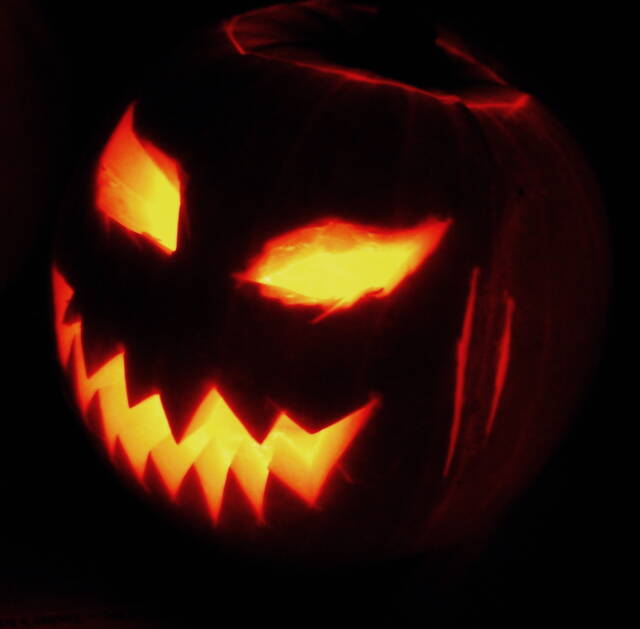
Toby Ord · CC BY-SA 2.5
30-DAY PEAK
90
modeled window
90-DAY AVG
56
trending up
TREND SCORE
83
+14% · 24h
TRACKED QUESTIONS
14
from public queries
INTEREST OVER TIME
Momentum trajectory
PEAK 90
30d ago15dtoday

The context

Halloween 2026 falls on Saturday, October 31. The date itself never moves, because Halloween is fixed to the eve of All Saints’ Day, but the weekday does, and this year it lands on the best one available. It is the first Saturday Halloween since 2020: trick-or-treating and parties happen on the night itself rather than being dragged onto the nearest weekend, and nobody has school or work the next morning.

Two things sit either side of that Saturday and both get searched heavily. First, the clocks. In the United States and Canada daylight saving time ends on Sunday, November 1, the morning after Halloween, which quietly hands the party an extra hour. Europe and the United Kingdom change a week earlier, on Sunday, October 25, so for that one week the gap between London and New York is four hours instead of the usual five. Second, baseball. The 2026 World Series opens on October 23, and a full seven-game series would put Game 7 on Halloween night.

On the money, be careful with the numbers going around. The last figure the National Retail Federation has actually published is the record 13.1 billion dollars Americans spent in 2025. The 2026 survey is due in late September, which means any 2026 total quoted before then is somebody’s estimate, not a forecast. What the trend data does support is that decorations have been the fastest-growing category for several years, and that participation has stayed above pre-pandemic levels.

The history is older and less American than the modern holiday suggests. Halloween descends from Samhain, the Irish and Scottish Celtic festival marking the end of harvest and the start of winter, when the boundary between the living and the dead was thought to thin. When the Church fixed All Saints’ Day to November 1 in the eighth century, the night before became All Hallows’ Eve, which contracted into Halloween. Irish and Scottish emigrants carried souling and guising to North America in the nineteenth century, where they became trick-or-treating, and carried the carved turnip lantern, which became the pumpkin.

Elsewhere the day reads differently. Across Catholic Europe November 1 is All Saints’ Day and a public holiday in France, Spain, Belgium, Austria and several German states, though in 2026 it falls on a Sunday and brings no extra day off. In Mexico, Dia de Muertos on November 1 and 2 is a separate observance with its own history, regularly and wrongly described as a Mexican Halloween. Sources: NRF, Britannica, History.com, Library of Congress, MLB, Snopes.

People also ask

14 questions · sorted by search share

Saturday, October 31, 2026. The date never moves: Halloween is fixed to October 31 because it is the eve of All Saints' Day on November 1. Only the weekday changes from year to year, and in 2026 it lands on a Saturday. Source: Britannica.

Saturday. It is the first Saturday Halloween since 2020, and the next one will not come until 2037, because the date slides one weekday per year and two after a leap year. A Saturday is the best draw on the calendar for the holiday: no school night, no work the next morning, and the party and the trick-or-treating happen on October 31 itself instead of being pushed to the nearest weekend.

42 days, counted from September 19, 2026 to Saturday, October 31, 2026. If you are reading this later, count the days left in September, then add 31.

The last confirmed figure is the National Retail Federation's record 13.1 billion dollars for 2025. The NRF's 2026 survey is due in late September, so any 2026 total circulating before then is an estimate rather than a published forecast. Costumes, candy and decorations split the bulk of it, with decorations the fastest-growing line for several years running. Source: NRF.

Not on the night itself, but very close to it. In the United States and Canada the clocks go back on Sunday, November 1, 2026, the morning after Halloween, so the party gets an extra hour. In the European Union and the United Kingdom the change comes a week earlier, on Sunday, October 25. For that week the usual gap between London and New York is four hours rather than five.

There could be. The 2026 World Series opens Friday, October 23, and a full seven-game series would reach Game 7 on Saturday, October 31. It is not guaranteed, since the series can end in four, five or six games, but the schedule allows a Game 7 on Halloween night. Source: MLB.

It grew out of the Irish and Scottish Celtic festival of Samhain, which marked the end of the harvest and the start of winter and was thought to be the night the boundary between the living and the dead thinned. In the eighth century the Church placed All Saints' Day on November 1, so the night before became All Hallows' Eve. The two traditions fused. Sources: Britannica, History.com, Library of Congress.

It is a contraction of All Hallows' Even, meaning the evening before All Hallows, the old English name for All Saints' Day. "Hallow" is simply an older word for a saint. Even shortened to e'en, then to een, and All Hallows' Even became Hallowe'en and finally Halloween. Sources: Britannica, History.com.

From two older customs that Irish and Scottish emigrants carried to North America in the nineteenth century: souling, going door to door to ask for cakes in exchange for prayers for the dead, and guising, going in disguise and performing a song or a trick for food or coins. The American form, costume plus the phrase and no performance required, settled into its modern shape in the twentieth century. Sources: History.com, Library of Congress.

No, nowhere in the United States, the United Kingdom, France, Germany or Spain. The day after is a different story: All Saints' Day on November 1 is a public holiday in France, Spain, Belgium, Austria and several German states. In 2026 that falls on a Sunday, so it brings no extra day off in most of those places.

Yes, and unevenly. Ireland and Scotland have the oldest claim, since the festival started there. The United States built the commercial version. Britain and Canada follow closely. In France, Germany and Spain it is a growing but still imported party night rather than a family tradition, and it sits alongside older observances: All Saints' Day across Catholic Europe, and Dia de Muertos on November 1 and 2 in Mexico, which is a distinct holiday and not a Mexican Halloween.

Sunday, November 1 and Monday, November 2, 2026, as every year. Dia de Muertos is a Mexican observance with its own history, honouring the dead with altars, marigolds and graveside gatherings. It overlaps Halloween on the calendar and is regularly confused with it, but they are separate traditions with separate roots.

Because the pumpkin was the New World substitute for a turnip. The carved lantern comes from the Irish tale of Stingy Jack, and in Ireland and Scotland the lanterns were hollowed out of turnips and beets. Irish emigrants found the pumpkin bigger, softer and far easier to carve, and it took over. Sources: History.com, Britannica.

True or false?

8 rumors fact-checked, with sources
False
Strangers hand out poisoned candy to trick-or-treaters every year.

Decades of checking by folklorists and police have never turned up a confirmed case of a stranger poisoning a child's Halloween candy. The story is the most durable urban legend the holiday has. (Snopes)

False
Razor blades hidden in apples are a real Halloween danger.

Sociologist Joel Best tracked roughly 80 sharp-object reports since 1959 and found nearly all of them were hoaxes, with about ten causing even minor injury. (Joel Best, Snopes)

True
Halloween 2026 falls on a Saturday.

October 31, 2026 is a Saturday, the first Saturday Halloween since 2020. Good news for anyone who resents a Tuesday party.

True
A World Series Game 7 could be played on Halloween night 2026.

Game 1 is October 23 and a full seven-game series ends October 31. Whether it gets there is another matter. (MLB)

False
The first jack-o'-lanterns were pumpkins.

They were turnips and beets, carved in Ireland and Scotland. The pumpkin is an American upgrade, bigger and much easier on the knife. (History.com)

False
Halloween is a purely American invention.

The festival is Irish and Scottish in origin, by way of Samhain and All Hallows' Eve. What America invented is the commercial version, and then exported it back. (Britannica)

False
The National Retail Federation has published its 2026 Halloween spending forecast.

Not yet. The 2025 record of 13.1 billion dollars is the latest published figure, and the 2026 survey lands in late September. (NRF)

Unverified
Halloween is the biggest single candy-selling day of the year in the United States.

Halloween is comfortably the biggest candy season, but the single peak day depends on which tracker you read and how it counts, and retailers spread the sales across most of October. (NRF)

INTEREST BY REGION
Where it's trending
United States
100
India
72
France
69
United Kingdom
58
Germany
49
Brazil
44
Japan
14
Canada
14
Sources
Public-source data, structured and editorially reviewed.