Perseid Meteor Shower 2026: When and How to Watch
The Perseids peak overnight on August 12 into the early hours of August 13, 2026, and this year the timing is close to ideal: a new moon means dark, moonless skies during the peak. Under a dark sky you could see 50 to 100 meteors an hour. The Perseids are debris from comet 109P/Swift-Tuttle; the shower is active from about July 17 to August 24. Best viewing is after midnight until dawn. Sources: EarthSky, Space.com, NASA, American Meteor Society.
The context
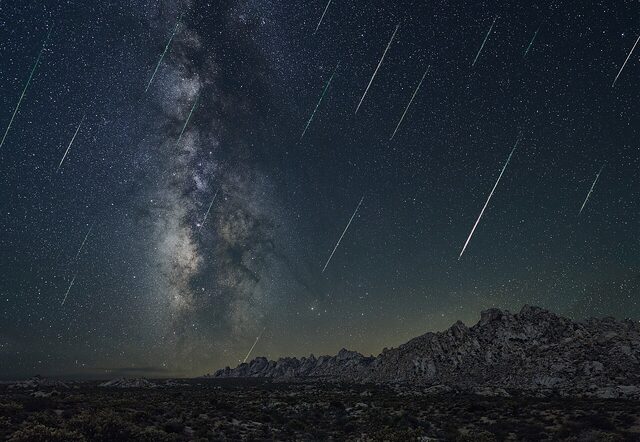
The Perseid meteor shower is the most-watched shower of the year in the Northern Hemisphere, and in 2026 the timing works out unusually well. The peak falls overnight from August 12 into the early hours of August 13, and it lands almost on top of a new moon. That matters more than it sounds: moonlight is normally the single biggest obstacle to seeing a shower, and this year it is effectively gone, leaving a dark sky that lets even the fainter meteors show through.
Under those dark-sky conditions, well away from city lights, you can reasonably expect 50 to 100 meteors an hour at the peak. The Perseids are prized for being bright and fast, frequently leaving glowing trails, and the shower produces more fireballs, exceptionally bright flashes, than most others. The meteors are debris from comet 109P/Swift-Tuttle; every August the Earth passes through the dusty trail the comet has left along its orbit, and those specks burn up high in the atmosphere.
Watching them takes no equipment at all. A telescope or binoculars only get in the way, because a meteor shower is a whole-sky event and you want the widest view you can get. The real essentials are simple: get somewhere dark, lie back, give your eyes 20 to 30 minutes to adjust, keep your phone screen off, and be patient. The best hours are after midnight until dawn, when the shower’s radiant point in the constellation Perseus climbs high and the meteor rate peaks, usually between about 2am and 4am local time.
If you are stuck in a city you can still catch the show, just expect fewer meteors: head for the darkest spot you can reach, face away from the brightest lights, and give it at least half an hour. The shower is active from roughly July 17 to August 24, so the nights on either side of the peak are worth a look too, and a stray early Perseid can appear well before the main event.
There is one more reason August 12 stands out this year. A total solar eclipse can only occur at new moon, and this new moon is doing double duty: in the evening it produces the total solar eclipse that crosses eastern Greenland, Iceland and northern Spain, with a deep partial phase across France and Germany, and then hours later it leaves the night sky completely dark for the Perseid peak. Eclipse at sunset, meteors after midnight, from the same alignment. If you are travelling for one, plan to stay out for the other. Sources: EarthSky, Space.com, NASA, American Meteor Society, IGN Spain, Almanac.
People also ask
True or false?
The opposite is true: it is a naked-eye event and a telescope narrows your view and hurts. (NASA)
Yes, the peak falls close to a new moon, so there is almost no moonlight to wash out meteors. (Weather.com)
No, rates are highest after midnight into the pre-dawn hours, when the radiant is high. (Space.com)
Correct, they are debris from comet 109P/Swift-Tuttle that Earth ploughs through every August. (NASA)
No outburst is forecast; rates look normal. What makes 2026 special is the dark, moonless sky, not extra meteors. (American Meteor Society)
Yes, the radiant rides high in northern skies; southern observers see far fewer. (EarthSky)
True, on 12 August over Greenland, Iceland and northern Spain, and it is the same new moon that leaves the night sky dark. (NASA)