datastats / SIGNAL
enfresde
LIVE
← ALL SIGNALS
datastats / Sport
Sport ▼ Cooling Trend score 80 · Published July 31, 2026 · Updated September 16, 2026

Vuelta a España 2026: Enric Mas Wins in Granada

The 81st Vuelta a Espana ended in Granada on September 13, 2026 with Enric Mas winning his first Grand Tour in 73:52:55, ahead of Primoz Roglic by 2:15 and Felix Gall by 2:44. He is the first Spanish winner since Alberto Contador in 2014, after three previous runner-up finishes. Mikel Landa won the queen stage to the Collado del Alguacil and Tobias Halland Johannessen the finale in Granada. Wout van Aert took the points jersey on 326, Santiago Buitrago the mountains and Oscar Onley the young rider classification, a first for a British rider. Sources: La Vuelta, ProCyclingStats, Cyclingnews, Olympics.com.
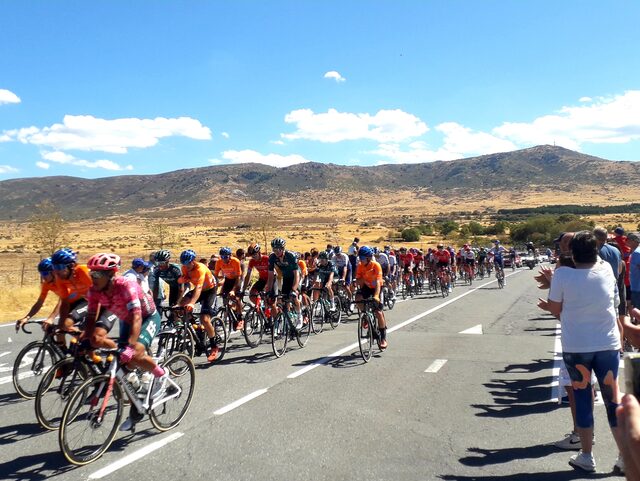
By · datastats
INTEREST INDEX
80 -9% · 24h
Vuelta a España 2026: Enric Mas Wins in Granada
Arturo Francisco Barbero · by-sa
30-DAY PEAK
82
modeled window
90-DAY AVG
53
stable
TREND SCORE
80
-9% · 24h
TRACKED QUESTIONS
46
from public queries
INTEREST OVER TIME
Momentum trajectory
PEAK 82
30d ago15dtoday

The context

Final result, September 13. Enric Mas won the 2026 Vuelta a España in 73:52:55, his first Grand Tour after three second places, and the first Spanish overall win since Alberto Contador in 2014. Primoz Roglic finished second at 2:15, denied a record fifth Vuelta, Felix Gall third at 2:44, then Richard Carapaz at 6:54 and Sepp Kuss at 8:45. Mas took red on stage 8, when Pogacar crashed out of the lead, and defended it for two weeks including through the Jerez time trial. Mikel Landa won the queen stage to the Collado del Alguacil on September 12, 47 seconds clear of Tobias Halland Johannessen, who then won the finale in Granada the next day. Wout van Aert took the points jersey on 326, Santiago Buitrago the mountains on 78, Oscar Onley the young rider classification, the first British rider to do so, and Decathlon CMA CGM the team standings. Matthew Brennan, 21 and on his Grand Tour debut, finished with five stage wins. Sources: La Vuelta, ProCyclingStats, Cyclingnews, ProCyclingUK, Olympics.com.

Race update, September 12 (stage 20, the queen stage). Enric Mas goes into the decisive mountain day leading Primoz Roglic by 1:37, Felix Gall by 3:01, Richard Carapaz by 5:17 and Oscar Onley by 6:03. Stage 20 runs 187 km from La Calahorra to the Collado del Alguacil in the Sierra Nevada, more than 5,000 m of climbing and a summit finish, and it is the last stage that can change anything: the finale on Sunday September 13 is a flat 99.4 km loop around Granada, the eighth city in 81 editions to crown a Vuelta winner. Eddie Dunbar won stage 19 to Penas Blancas on September 11, Stefan Kung took the 32.5 km time trial to Jerez the day before, and Matthew Brennan has now won five stages. Wout van Aert leads the points classification on 306, Santiago Buitrago the mountains on 78.

Race update, August 31 (first rest day). Enric Mas turned an inherited lead into an earned one. On stage 9 to the Alto de Aitana on August 30, the 22.3 km summit finish above La Vila Joiosa, the Movistar rider outsprinted Oscar Onley for the win, with Primoz Roglic third and Felix Gall dropping time in the closing kilometres. Mas now leads Roglic by 1:18, Gall by 1:39 and Onley by 2:20, and takes the first rest day as a leader rather than a caretaker. Stage 10 on September 1 covers 184.7 km from Alcaraz to Elche de la Sierra, 2,991 m of climbing and three category 3 climbs, a day the tougher sprinters can still win. Race update, August 30. The race changed shape on stage 8. Tadej Pogacar had worn red since winning the 9.6 km Monaco time trial on August 22 in 10:57.14, nine hundredths ahead of Ethan Hayter, and had added stage 4 in Andorra and stage 6 into Castello, the latter after skidding off the road on the descent of Puerto El Bartolo and rejoining to win the sprint. On August 29, on a flat 171 km run to Xeraco that should have been a routine sprint day, he crashed and abandoned in the leader’s jersey with reported shoulder and facial injuries. Bryan Coquard won the stage from Mads Pedersen and Jordi Meeus, a first Grand Tour win at 34, in a finale littered with crashes.

That leaves Enric Mas in red for the first time in his career, on 23:23:33, with Primoz Roglic at 1:00, Felix Gall at 1:11, Sepp Kuss at 2:15, Oscar Onley at 2:16 and Richard Carapaz at 2:22. A four-minute cushion has become a one-minute one, and six riders are within two and a half minutes. Wout van Aert leads the points classification on 124, Andreas Leknessund the mountains on 19. Earlier winners: Matthew Brennan on stages 2 and 5, Leknessund on stage 7 at Valdelinares, and stage 3 to Font Romeu cancelled outright by a hailstorm without a winner. Stage 9 on August 30 is the first answer: 187.4 km to the Alto de Aitana, 5,100 m of climbing and a 22.3 km summit finish.

The Vuelta a España 2026 brings the Grand Tour season to a close from August 22 to September 13, and it started with a first: a Grand Départ in Monaco, where a 9.6 km individual time trial threads through the streets of the Principality. According to the organisers, Monaco thereby becomes the first city to have hosted starts of all three Grand Tours. From there the 81st edition crosses southern France and Andorra before committing fully to Spain’s scorching south.

The route is built for climbers. Six summit finishes punctuate the three weeks, with Calar Alto, La Pandera, Peñas Blancas and the Collada de Alguacil in the Sierra Nevada as the marquee ascents. Stage 20 is the queen stage, 187 km and more than 5,000 m of climbing on the eve of the finale, before the race concludes in Granada rather than the traditional Madrid. Two individual time trials, the Monaco opener and a 32.5 km stage 18, add roughly 40 km against the clock, more than recent editions.

In total the route covers 3,310.6 km with 58,156 m of elevation gain, numbers that put the 2026 edition among the most demanding on paper in the race’s history.

The startlist has firmed up considerably since the route presentation. Tadej Pogacar is confirmed with UAE Team Emirates-XRG, and his motivation is unusually legible: the Vuelta is the only Grand Tour missing from his palmares. He arrives having won the 2026 Tour de France in July, his fifth, a total that put him level with Anquetil, Merckx, Hinault and Indurain. Remco Evenepoel, second at that Tour, will challenge for the general classification, and Primoz Roglic returns chasing a record fifth Vuelta title. Juan Ayuso carries Spanish hopes, with Joao Almeida a dangerous outsider.

One name is missing, and it is the biggest one. Jonas Vingegaard won the 2025 Vuelta, but he will not defend the title: the Dane broke his collarbone in a crash at the 2026 Tour de France on July 19, and Visma-Lease a Bike confirmed he was ruled out for the rest of the season. That reshapes the general classification picture. Primoz Roglic is now the most proven rival to Pogacar, albeit with question marks over his form after a training accident, while Felix Gall and Oscar Onley arrive in good shape off the Vuelta a Burgos and Enric Mas and Mattias Skjelmose add depth. UAE Team Emirates-XRG was the first team to publish its eight, with Almeida, Jay Vine and Kevin Vermaerke among the riders shielding Pogacar.

Between the historic Monaco start, the late-summer heat of the Spanish south and a savage final week, the 2026 Vuelta has the ingredients of a genuine season finale. Sources: La Vuelta, Cyclingstage, Rouleur, Cyclist, Olympics.com, Velo, Cycling Weekly, ProCyclingUK, NPR.

People also ask

46 questions · sorted by search share

Enric Mas (Movistar), in 73:52:55, ahead of Primoz Roglic at 2:15 and Felix Gall at 2:44. It is his first Grand Tour victory after finishing runner-up three times, and the first Spanish win at the Vuelta since Alberto Contador in 2014. He took the red jersey on stage 8, when Tadej Pogacar crashed out of the lead, and never gave it back. Sources: La Vuelta, ProCyclingStats, Olympics.com.

1. Enric Mas (Movistar) 73:52:55, 2. Primoz Roglic (Red Bull-Bora-hansgrohe) +2:15, 3. Felix Gall (Decathlon CMA CGM) +2:44, 4. Richard Carapaz (EF Education-EasyPost) +6:54, 5. Sepp Kuss (Visma-Lease a Bike) +8:45. Sources: ProCyclingStats, ProCyclingUK.

Red (general classification): Enric Mas. Green (points): Wout van Aert, on 326 points. Polka dot (mountains): Santiago Buitrago, on 78. White (young rider): Oscar Onley, the first British rider to win that classification at the Vuelta. Team classification: Decathlon CMA CGM. Sources: ProCyclingUK, CyclingUpToDate.

Mikel Landa, from the breakaway, on the summit finish at the Collado del Alguacil on September 12. He came home 47 seconds clear of Tobias Halland Johannessen, with Ramses Debruyne third at 1:27. Behind them Enric Mas held his lead through the last mountain test and mathematically secured the race. Sources: Cyclingnews, ProCyclingUK.

Tobias Halland Johannessen, on the 99.4 km circuit stage into Granada on September 13. It was the first Vuelta in 81 editions to finish outside Madrid in this format, and the sprint-free finale suited a rider who had spent the previous day second on the queen stage. Sources: La Vuelta, ProCyclingUK.

1. Enric Mas (Movistar) in 65:52:03, 2. Primoz Roglic at +1:37, 3. Felix Gall at +3:01, 4. Richard Carapaz at +5:17, 5. Oscar Onley at +6:03. Mas has led since stage 8 and has widened the gap rather than lost it, including through the 32.5 km time trial at Jerez. Wout van Aert leads the points classification on 306, Santiago Buitrago the mountains on 78, and Oscar Onley the young rider classification. Sources: ProCyclingStats, Wikipedia.

Saturday, September 12, 187 km from La Calahorra to the Collado del Alguacil in the Sierra Nevada. It is the queen stage, with more than 5,000 m of climbing and a summit finish, and it is the last real chance to take time off Enric Mas. If his 1:37 lead survives the day, the race is effectively over. Sources: La Vuelta, Rouleur, Cyclingstage.

Sunday, September 13, with a 99.4 km stage that starts and finishes in Granada. It breaks the Madrid tradition: Granada becomes only the eighth city in 81 editions to crown the overall winner. The stage itself is flat and largely ceremonial, so the general classification is settled the day before on the Collado del Alguacil. Sources: La Vuelta, Cyclingstage.

Matthew Brennan (Visma-Lease a Bike), with five: stage 2 to Manosque, stage 5 to Roquetes, stage 11 to Lorca, stage 16 to Palos de la Frontera and stage 17 into Seville. The 22-year-old Briton has turned a first Grand Tour into a sprinting breakout. Tadej Pogacar won three before abandoning, and Wout van Aert has two. Sources: ProCyclingStats, Wikipedia.

Stage 10 (Sept 1, Alcaraz to Elche de la Sierra): Bastien Tronchon. Stage 11 (Sept 2, Cartagena to Lorca): Matthew Brennan. Stage 12 (Sept 3, Vera to Calar Alto): Jakob Omrzel. Stage 13 (Sept 4, Almunecar to Loja): Wout van Aert. Stage 14 (Sept 5, Jaen to Sierra de la Pandera): Marco Brenner. Stage 15 (Sept 6, Palma del Rio to Cordoba): Wout van Aert. Stage 16 (Sept 8, Cortegana to Palos de la Frontera): Matthew Brennan. Stage 17 (Sept 9, Dos Hermanas to Seville): Matthew Brennan. Stage 18 (Sept 10, the 32.5 km time trial to Jerez): Stefan Kung. Stage 19 (Sept 11, Velez-Malaga to Penas Blancas): Eddie Dunbar. Sources: Wikipedia, ProCyclingStats.

Stefan Kung (Switzerland), over the 32.5 km from El Puerto de Santa Maria to Jerez de la Frontera on September 10. It was the longest test against the clock of the race and the last obvious chance for a time triallist to overturn the general classification. Enric Mas came through it still in red. Sources: Wikipedia, ProCyclingStats.

Enric Mas (Movistar), the race leader himself. On Sunday, August 30 he outsprinted Oscar Onley at the top of the Alto de Aitana, the 22.3 km summit finish above La Vila Joiosa, with Primoz Roglic third. It was the first mountain day since Pogacar's withdrawal, and Mas answered the obvious question by winning it. Sources: Cyclingnews, CyclingUpToDate, ProCyclingStats.

1. Enric Mas (Movistar), 2. Primoz Roglic at +1:18, 3. Felix Gall at +1:39, 4. Oscar Onley at +2:20. Mas stretched a one-minute lead into a 1:18 cushion on the Aitana, and Felix Gall lost time in the final kilometres. Six riders were within two and a half minutes before the stage; after it, the top four are the realistic contenders. Sources: ProCyclingStats, Cyclingnews, CyclingUpToDate.

Monday, August 31, 2026, straight after the Alto de Aitana. Mas therefore reaches the rest day as both stage winner and an increasingly settled leader, which is a considerably better position than the one he inherited by accident on August 29. Source: La Vuelta.

Tuesday, September 1, 184.7 km from Alcaraz to Elche de la Sierra. It is rarely flat, with 2,991 m of climbing and three category 3 climbs, but nothing steep enough to rule out the more resilient sprinters. It is the first day back after the rest day, which historically makes it messier than the profile suggests. Sources: Cyclingnews, Cyclingstage.

Tadej Pogacar, by nine hundredths of a second. The Slovenian covered the 9.6 km opening time trial in Monaco in 10:57.14 on Saturday, August 22, edging Ethan Hayter by 0.09 seconds, with Josh Tarling third at around four seconds. Pogacar therefore pulls on the first red jersey of the race. Sources: La Vuelta, ProCyclingStats, ProCyclingUK.

Enric Mas (Movistar), and he has made it his own. He inherited the lead on August 29 when Tadej Pogacar crashed on stage 8 and abandoned in red, won stage 9 on the Alto de Aitana to earn it, and has held it through every mountain day and the stage 18 time trial since. After stage 19 he leads Primoz Roglic by 1:37, Felix Gall by 3:01, Richard Carapaz by 5:17 and Oscar Onley by 6:03. Sources: ProCyclingStats, Wikipedia, La Vuelta.

He crashed. On stage 8 to Xeraco on August 29, a flat sprint day marked by several crashes, the race leader went down and could not continue, abandoning in the red jersey with reported injuries to his shoulder and face. He had led from the opening time trial and had won three stages. It ends his attempt at the one Grand Tour missing from his record. Sources: CyclingUpToDate, IdlProCycling, ProCyclingStats.

Bryan Coquard (Cofidis), in a crash-marred bunch sprint at Xeraco on Saturday, August 29, ahead of Mads Pedersen and Jordi Meeus. It was the Frenchman's first Grand Tour stage win at 34, after years of near misses. The day is remembered less for the sprint than for the crash that took the race leader out of the race. Sources: CyclingUpToDate, VAVEL, ProCyclingStats.

1. Enric Mas (Movistar) in 23:23:33, 2. Primoz Roglic at +1:00, 3. Felix Gall at +1:11, 4. Sepp Kuss +2:15, 5. Oscar Onley +2:16, 6. Richard Carapaz +2:22, 7. Mattias Skjelmose +3:27, 8. Harold Tejada +3:56. Wout van Aert leads the points classification on 124 points and Andreas Leknessund the mountains on 19. Sources: ProCyclingStats, CyclingUpToDate.

Sunday, August 30, 187.4 km from La Vila Joiosa (Villajoyosa) to the Alto de Aitana, with more than 5,100 m of climbing and a 22.3 km summit finish averaging 6 percent. It is the first mountain test since Pogacar's withdrawal and the first real chance to see whether Mas can hold a lead of one minute rather than inherit one. Sources: Rouleur, Cyclingstage.

Matthew Brennan (Visma-Lease a Bike) won the sprint into Manosque on Sunday, August 23, the 22-year-old Briton taking the biggest win of his career on the long road north from Monaco into Provence. Tadej Pogacar finished safely in the bunch and kept the red jersey with a 9-second lead over Wout van Aert, while Brennan also took the young rider classification. Sources: La Vuelta, Cyclingnews, ProCyclingStats.

A hailstorm. On Monday, August 24, the stage from Gruissan to Font Romeu was neutralised and then cancelled outright with about 15 km left, on the Col de Mont-Louis, as large hailstones hit the peloton on what should have been the first summit finish. Riders pulled over to shelter, several of them piling into a building beside the road. The organisers cancelled the stage on safety grounds, so there was no stage winner and the general classification carried over unchanged from Manosque. Sources: Cyclingnews, Olympics.com, ProCyclingUK.

He effectively stopped the race himself. At the head of a much-reduced peloton, Tadej Pogacar slowed the tempo, raised his arm to signal the group to ease off, then pointed left and led the riders off the course towards a building whose doors were opened for them. The peloton sheltered there until the organisers confirmed the stage was cancelled. Sources: Cyclingnews, ProCyclingUK.

Tadej Pogacar. The stage on Tuesday, August 25 started and finished in Andorra la Vella, the first genuine mountain day of this Vuelta, and Pogacar took it himself rather than leave it to a breakaway. It was his second stage win of the race after the Monaco time trial, and it turned a narrow advantage into a commanding one. Sources: Cyclingstage, ProCyclingStats.

Matthew Brennan (Visma-Lease a Bike), his second win of this Vuelta. The 171 km hilly stage from Falset to Roquetes on Wednesday, August 26 came down to a reduced sprint, with Pau Miquel second and race leader Tadej Pogacar third, taking bonus seconds rather than sitting in. Brennan, 22, also won stage 2 into Manosque. Sources: Cyclingstage, Olympics.com.

Tadej Pogacar, his third win of this Vuelta. The 177.4 km stage from Alcossebre to Castello de la Plana on Thursday, August 27 was decided on the gravel climb of Puerto El Bartolo, where Pogacar attacked and opened a gap, only for Enric Mas to claw him back at the summit. Pogacar then skidded off the road on the technical descent, unclipped, rode the edge of a ditch and rejoined, before winning the two-up sprint. Ramses Debruyne was third. Sources: Cyclingstage, CyclingUpToDate, ProCyclingStats.

Tadej Pogacar still leads. Enric Mas is second at 3 minutes 50 seconds and Primoz Roglic third. Mas had moved past Roglic on stage 6 by taking 46 seconds out of the chasing group on the gravel, then conceded a little time back to Pogacar on the first high summit finish at Valdelinares. Sources: ProCyclingStats, NBC Sports, La Vuelta.

Tadej Pogacar led, with Enric Mas second at 3 minutes 34 seconds and Primoz Roglic third at 4 minutes 21 seconds. Mas moved past Roglic on stage 6 by taking 46 seconds out of the chasing group on the gravel, the first time this race that anyone had looked capable of following Pogacar on a climb. Sources: CyclingFlash, CyclingUpToDate, La Vuelta.

Andreas Leknessund. The Norwegian took the 149.9 km stage from Vall d'Alba to Aramon Valdelinares on Friday, August 28 from the breakaway, ahead of Tobias Halland Johannessen and Wout van Aert. It was the first proper high summit finish of the race after the cancellation of Font Romeu, and Tadej Pogacar kept the red jersey. Sources: ProCyclingStats, NBC Sports, Cyclingnews.

Six raced, one cancelled. Stage 1, the Monaco time trial on August 22: Tadej Pogacar. Stage 2 to Manosque on August 23: Matthew Brennan. Stage 3 to Font Romeu on August 24: cancelled by a hailstorm, no winner. Stage 4 in Andorra la Vella on August 25: Tadej Pogacar. Stage 5 from Falset to Roquetes on August 26: Matthew Brennan again. Stage 6 from Alcossebre to Castello on August 27: Tadej Pogacar again. Stage 7 to Valdelinares on August 28: Andreas Leknessund. Stage 8 to Xeraco on August 29: Bryan Coquard, on the day Pogacar crashed out. Thirteen stages remain before the finish in Granada on September 13. Sources: Cyclingstage, ProCyclingStats.

The 81st Vuelta a España runs from Saturday, August 22 to Sunday, September 13, 2026: 21 stages with two rest days, on August 31 and September 7. It is the last Grand Tour of the 2026 season. Sources: La Vuelta, Cyclingstage.

In Monaco, with a 9.6 km individual time trial held entirely inside the Principality on August 22. It is a historic Grand Départ: according to the organisers, Monaco becomes the first city to have hosted starts of all three Grand Tours. The race then crosses southern France and Andorra before diving into Spain. Sources: La Vuelta, Monaco Life.

The 2026 Vuelta finishes in Granada, in Andalusia, on September 13, breaking with the traditional Madrid finale. The closing weekend is set in the far south, near the Sierra Nevada, after a route that spends most of its three weeks in the scorching southern half of Spain. Sources: Cyclingstage, Rouleur.

Six summit finishes, including Calar Alto, La Pandera, Peñas Blancas and the Collada de Alguacil in the Sierra Nevada. Stage 20 is the queen stage: 187 km with more than 5,000 m of climbing on the eve of the finish in Granada. Sources: Cyclingstage, Cyclist.

Yes, two individual time trials: the 9.6 km opener in Monaco on stage 1 and a longer 32.5 km test on stage 18. Around 40 km against the clock is more than recent Vuelta editions, which tilts the balance slightly toward strong time triallists. Sources: Cyclingstage, Cyclist.

Jonas Vingegaard won the 2025 Vuelta a España, his first title in the Spanish Grand Tour. There will be no title defence: the Dane broke his collarbone in a Tour de France crash on July 19, 2026 and was ruled out for the rest of the season. Sources: La Vuelta, Team Visma Lease a Bike, Velo.

Tadej Pogacar (UAE Team Emirates-XRG) is confirmed and is the headline name: the Vuelta is the only Grand Tour he has never won, and he arrives having taken a fifth Tour de France in July. Remco Evenepoel will challenge for the general classification, and Primoz Roglic (Red Bull-Bora-hansgrohe) is chasing a record fifth Vuelta title. Spain's Juan Ayuso and Joao Almeida complete the front rank. Defending champion Jonas Vingegaard is absent through injury. Sources: Olympics.com, Cyclist, Rouleur, Velo.

Yes. Pogacar is confirmed for the 2026 Vuelta with UAE Team Emirates-XRG, targeting the one Grand Tour missing from his record. He has won the Tour de France and the Giro d'Italia but never the Vuelta, so a win here would complete the career Grand Tour set. Source: Olympics.com.

No. Vingegaard will not defend his 2025 title. He broke his collarbone in a crash at the 2026 Tour de France on July 19 and Visma-Lease a Bike confirmed he was ruled out for the remainder of the season, the Vuelta included. His name does not appear on any 2026 Vuelta startlist. Sources: Team Visma Lease a Bike, Velo, Olympics.com.

With the defending champion sidelined, Primoz Roglic remains the most proven rival to Pogacar, though his recovery from a training accident clouds his form. Felix Gall and Oscar Onley arrive in strong shape after good rides at the Vuelta a Burgos, and Enric Mas, Mattias Skjelmose and Joao Almeida add depth to the general classification fight. The practical effect of Vingegaard's absence is that no rider in the field has beaten Pogacar over three weeks in his current form. Sources: Olympics.com, Cycling Weekly, IdlProCycling.

UAE Team Emirates-XRG was the first squad to announce its eight riders for the Vuelta. Alongside Tadej Pogacar the roster includes Joao Almeida, Jay Vine and Kevin Vermaerke, a mix of a protected co-leader for the high mountains, a proven Vuelta stage winner and support for the transition days. Sources: ProCyclingUK, Cycling Weekly.

Tadej Pogacar won the 2026 Tour de France, his fifth, which put him level with Jacques Anquetil, Eddy Merckx, Bernard Hinault and Miguel Indurain on the all-time list. Remco Evenepoel finished second at nearly six and a half minutes and Isaac del Toro third at 9:42. The race ran July 4 to 26, from Barcelona to Paris. Sources: NPR, ProCyclingUK.

3,310.6 km across 21 stages, with a total elevation gain of 58,156 m. That climbing total, spread over six summit finishes and a stage 20 with more than 5,000 m of ascent, is what gives the 2026 edition its reputation. Sources: La Vuelta, Cyclingstage.

The organisers have built a mountain-heavy route: six summit finishes, a queen stage with over 5,000 m of climbing, and a course concentrated in the hottest part of Spain in late August. Some previews call it one of the most demanding editions in race history, though such labels are marketing as much as measurement. Sources: Gran Fondo Guide, Rouleur.

Like all Grand Tours, the Vuelta lasts three weeks: 21 stages plus two rest days, from August 22 to September 13, 2026. The route mixes flat sprint days, medium mountain stages, six summit finishes and two individual time trials. Sources: La Vuelta, Cyclingstage.

True or false?

8 rumors fact-checked, with sources
True
The Vuelta 2026 starts outside Spain.

Yes, in Monaco, with a 9.6 km time trial through the Principality on August 22. (La Vuelta)

False
Tadej Pogacar is still leading the 2026 Vuelta.

He crashed on stage 8 to Xeraco on August 29 and abandoned in the red jersey. Enric Mas leads. (ProCyclingStats)

False
Enric Mas has led a Grand Tour before.

This is the first time in his career he has worn the leader's jersey of a Grand Tour, and he got it without winning a stage. (CyclingUpToDate)

False
Jonas Vingegaard is back to defend his title.

He is out. A collarbone break in a Tour de France crash on July 19 ended his 2026 season, so there is no title defence. (Team Visma Lease a Bike)

True
Primoz Roglic is chasing a record fifth Vuelta win.

Correct: four titles already, and a fifth would stand alone in the race's history. (Velo)

Unverified
The 2026 route is the hardest in Vuelta history.

Organisers and previews tout six summit finishes and a mountain of climbing, but 'hardest ever' is hype until it is raced. (Gran Fondo Guide)

False
The race finishes in Madrid as usual.

Not this year: the 2026 Vuelta finishes in Granada on September 13. (Rouleur)

True
There are two individual time trials in the 2026 Vuelta.

Correct, the 9.6 km opener in Monaco and a 32.5 km test on stage 18. (Cyclingstage)

INTEREST BY REGION
Where it's trending
United Kingdom
100
United States
74
France
69
India
67
Germany
54
Brazil
40
Japan
36
Nigeria
19
Sources
Public-source data, structured and editorially reviewed.