datastats / SIGNAL
enfresde
LIVE
← ALL SIGNALS
datastats / News
News ● Peak Trend score 80 · Published October 26, 2026 · Updated October 26, 2026

Hunter's Moon October 2026: Date, Time and Best Viewing

October's full moon, the Hunter's Moon, peaks on Monday, October 26, 2026 at 04:12 UTC, which is 12:12 a.m. EDT on the 26th and 9:12 p.m. PDT on Sunday the 25th. The best views come at moonrise on Sunday evening (October 25) and Monday evening (October 26), when the Moon clears the eastern horizon around sunset. It is not a supermoon under the standard definition (about 368,870 km away); the next full moon, the Beaver Moon on November 24, is. Sources: Farmers' Almanac, Old Farmer's Almanac, TheSkyLive, Sterngucker.
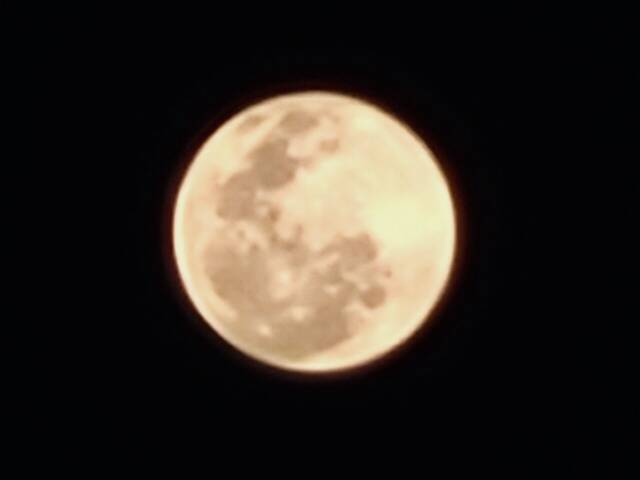
By · datastats
INTEREST INDEX
80 +2% · 24h
Hunter's Moon October 2026: Date, Time and Best Viewing
Sudora · CC0
30-DAY PEAK
85
modeled window
90-DAY AVG
53
stable
TREND SCORE
80
+2% · 24h
TRACKED QUESTIONS
10
from public queries
INTEREST OVER TIME
Momentum trajectory
PEAK 85
30d ago15dtoday

The context

The Hunter’s Moon, October’s full moon and the first after the Harvest Moon, reaches its peak on Monday, October 26, 2026, at 04:12 UTC. In the United States that means 12:12 a.m. EDT on Monday, or 9:12 p.m. PDT on Sunday, October 25 on the West Coast. Searches for “october hunter moon” are climbing in the US as people check when and where to look.

The exact minute matters less than the timing of moonrise. Around full moon, the Moon rises close to sunset and sits low in the east as the sky darkens, which is when it looks largest and most golden. Farmers’ Almanac points to Sunday evening, October 25 as the best night, with Monday evening, October 26 as a strong second option. A flat, unobstructed eastern horizon makes all the difference.

This one is not a supermoon under the standard definition: the Moon is about 368,870 km away, slightly closer than average but not enough to qualify. The supermoons arrive next, with the Beaver Moon on November 24 and the Cold Moon on December 24 both meeting the threshold. Any apparent size boost at moonrise on October 25 and 26 is the familiar Moon illusion rather than a real change in distance.

For Europe, the clock change on October 25 shifts the local times: the full moon falls at 04:12 GMT in London and 05:12 CET in Paris, Berlin and Madrid, both before dawn on Monday. The evening moonrise is again the best viewing window, around 16:00 in London and just before 17:00 in Paris on Sunday. Sources: Farmers’ Almanac, Old Farmer’s Almanac, TheSkyLive, Sterngucker, Pixidia.

People also ask

10 questions · sorted by search share

The full Hunter's Moon falls on Monday, October 26, 2026. The exact moment of full moon is 04:12 UTC, which lands in the middle of the night for North America (late Sunday evening on the West Coast). The Moon looks full to the eye for roughly a day either side, so Sunday night (Oct 25) and Monday night (Oct 26) are both good chances to see it. Sources: Farmers' Almanac, Old Farmer's Almanac.

The peak is at 12:12 a.m. EDT on Monday, October 26, which is 11:12 p.m. CDT, 10:12 p.m. MDT and 9:12 p.m. PDT on Sunday, October 25. In the UK it is 04:12 GMT on the 26th (clocks went back on October 25), and in Paris, Berlin and Madrid it is 05:12 CET. You do not need to be outside at that exact minute: the best show is at moonrise in the evening. Sources: Farmers' Almanac, Sterngucker, Instituto Geográfico Nacional.

Go out at moonrise, which for the Hunter's Moon happens close to sunset. Farmers' Almanac recommends Sunday evening, October 25, when the nearly full Moon rises around sunset, with Monday evening, October 26 as the second chance (it rises shortly after sunset, just past peak). Find a spot with a clear, low eastern horizon and step out about 20 minutes before sunset. Example moonrise times: London 16:00 on Oct 25 and 16:19 on Oct 26; Paris 16:57 and 17:20. Sources: Farmers' Almanac, Pixidia.

The name comes from European and North American seasonal tradition. By late October the crops were in, the fields were bare and game animals had fattened on what was left behind, so a bright full Moon rising early in the evening gave hunters extra light to track game and lay in meat for winter. In the Northern Hemisphere the name goes to the full moon that follows the Harvest Moon. Other October names include the Travel Moon, Dying Grass Moon, Falling Leaves Moon and Freezing Moon. Sources: Farmers' Almanac, Old Farmer's Almanac.

No, not by the standard definition. At full moon it sits about 368,870 km from Earth, a little closer than average but outside the usual supermoon threshold. Sky at Night Magazine and the almanacs list 2026's supermoons as January 3, November 24 and December 24. A few sites using a looser rule call October a supermoon, but in practice it will look like an ordinary, bright full moon. Sources: TheSkyLive, Sterngucker, Sky at Night Magazine.

No. The Harvest Moon is the full moon closest to the autumn equinox. In 2026 the equinox fell on September 22, and the nearest full moon was September 26, so that was the Harvest Moon. The Hunter's Moon is the next one, one lunar cycle later, on October 26. In some years the Harvest Moon lands in early October, and the Hunter's Moon then shifts into November, but not in 2026. Sources: Farmers' Almanac, Old Farmer's Almanac.

Two separate effects. The orange or golden colour near the horizon comes from looking through more atmosphere, which scatters blue light and lets redder light through, the same reason sunsets are red. The bigger look is the Moon illusion: the Moon is not physically larger near the horizon, your brain just judges it against trees and buildings. As the Moon climbs, it turns white and seems to shrink. That is why moonrise is the moment to watch and photograph. Sources: NASA, Old Farmer's Almanac.

No. A full moon is easy to see with the naked eye and safe to look at. Binoculars show the dark lunar seas and bright craters nicely, but the main appeal is the low, coloured Moon at rise, which is best enjoyed with no equipment or a camera on a tripod. Only clouds can spoil it. Sources: Farmers' Almanac, NASA.

The next full moon is the Beaver Moon on Tuesday, November 24, 2026, at 14:53 UTC (9:53 a.m. EST). Unlike October's, it is a supermoon, about 360,765 km from Earth, and it is followed by another supermoon on December 24 (the Cold Moon). Sources: Farmers' Almanac, Sky at Night Magazine, Sterngucker.

There is no scientific meaning beyond the calendar, but in folklore the Hunter's Moon is tied to preparation and gathering in before winter, echoing its practical origins in the hunting season. Modern spiritual and astrology circles often present it as a time for taking stock, letting go and planning ahead. These are cultural interpretations, not astronomical facts; the Moon itself behaves exactly like any other full moon. Sources: Old Farmer's Almanac, Farmers' Almanac.

INTEREST BY REGION
Where it's trending
India
100
United States
74
United Kingdom
67
France
52
Brazil
51
Germany
48
Japan
38
Canada
26
Sources
Public-source data, structured and editorially reviewed.