USS Abraham Lincoln: Where the Carrier Is Now
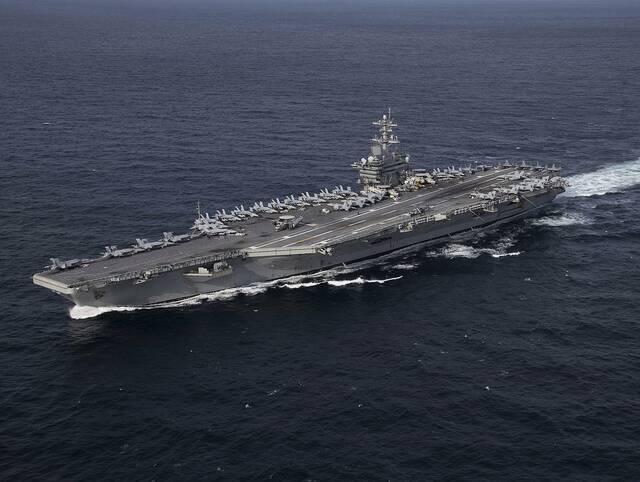
The aircraft carrier USS Abraham Lincoln (CVN-72) left the Middle East on August 20, 2026, after nine months at sea, and is expected back in San Diego around mid-September. Roughly 5,000 sailors and Marines are aboard. The Japan-based USS George Washington took over the station. Families and members of Congress had raised concerns about food, sanitation and mental health during a deployment stretched by the war with Iran. Sources: CBS News, USNI News, NPR, Forbes.
The context
The USS Abraham Lincoln turned for home on August 20, 2026, ending a Middle East mission that had already run months past its planned end. The carrier and its roughly 5,000 sailors and Marines are expected back in San Diego around mid-September, close to ten months after leaving the pier on November 21, 2025.
What made this deployment different was not the departure but everything after it. The Lincoln reached the region in January 2026, weeks before the war with Iran began in February. From then on it was the principal American air platform in theatre, launching thousands of sorties in support of US operations while the Strait of Hormuz crisis pushed oil prices to their highest August levels in years. With no relief carrier available, the mission kept being extended. The ship made exactly one port call in the whole deployment, a single day at Guam in December 2025.
By early August the strain had become public. Relatives of crew members described food shortages, sanitary problems and worsening mental health aboard, and a sailor from the embarked air wing went overboard on August 3 and was recovered by helicopter. The Navy has said little about the specifics. Admiral Brad Cooper, who commands US Central Command, addressed the crew in mid-August to confirm that relief was on the way and acknowledged publicly that long deployments hit people differently.
The relief came in the form of the USS George Washington, the carrier forward-deployed to Japan, which moved into the region and took over the station. That handover is what freed the Lincoln to sail.
What happens next is fairly predictable and still worth waiting for: a three-week transit, a homecoming date announced only days in advance, and a pier in San Diego full of families. For the crew, the more consequential part starts after that, with the post-deployment stand-down and the medical and mental health screening that follows a mission of this length. Sources: CBS News, USNI News, NPR, Forbes, US Pacific Fleet.