Iran and the Strait of Hormuz (2026)
UPDATE (Aug 17): The 60-day US-Iran nuclear MOU, signed in June, expired today with no successor deal or renewal planned. US-Iran diplomatic engagement is now without a legal framework. The Strait of Hormuz shipping corridor (negotiated via Oman, August 5) remains operationally in place. Brent crude trades around $79-81/barrel. Earlier: ADNOC reported 15 of its vessels hit since February 28. Sources: JustSecurity, Reuters, Euronews, Al Jazeera.
The context
August 17, 2026, US-Iran nuclear MOU expires with no successor deal. The 60-day Memorandum of Understanding on nuclear talks and sanctions relief, signed electronically between the US and Iran in June 2026, expired today with no new agreement, no renewal, and no further negotiations planned as of this date. The expiry closes the formal diplomatic framework that had underpinned the ceasefire period, though the Strait of Hormuz shipping corridor arrangement negotiated by Oman on August 5 remains operationally in place. The broader nuclear programme and the ~$24 billion asset unfreeze tied to the deal are now without a legal basis. The collapse of the MOU marks a significant hardening of the diplomatic impasse that began when the original ceasefire failed in early July. Sources: JustSecurity Early Edition, Reuters, August 17, 2026.
August 1-7, 2026, a managed reopening takes shape while ships keep getting hit. The most consequential development of the week is diplomatic. On 5 August, Iran and Oman reached an understanding on the geographic coordinates of shipping routes through the Strait, three days after Iranian Foreign Minister Abbas Araghchi said on 2 August that the two countries were close to an agreement to manage traffic. Officials on both sides have been careful to say this is not a full reopening. In parallel, the US, Iran and Oman are negotiating an interim arrangement under which inbound vessels would transit Iran’s territorial waters and outbound vessels would use Oman’s, coordinated with Tehran. The US pause in strikes is what made the talks possible.
The attacks did not stop while the diplomacy advanced. On 31 July at 23:30 UTC, the Bermuda-flagged LNG carrier Gaslog Shanghai, loaded with Qatari cargo, was struck near its engine room about 11 nautical miles northeast of Limah, lost all power and was disabled; the crew was unhurt. On 3 August at 22:00 UTC, the Liberian-flagged bulk carrier Minoan Pioneer was hit roughly 20 nautical miles northeast of Khasab, Oman: engine room struck, complete blackout, a fire in the accommodation block, and the third engineer missing. Two days later the ship was still stationary with the fire burning. On 7 August, ADNOC disclosed that 15 of its vessels had been attacked by missiles or drones in the Strait since 28 February. Kuwait’s defence ministry also reported on 1 August that it had detected and intercepted Iranian drones entering its airspace.
Commercially, some flow has returned. Iraq exported more than 30 million barrels of crude through the Strait between 4 July and 4 August, and 62 Indian-crewed vessels completed transits while over 4,000 Indian seafarers were repatriated from the region. Markets have priced the de-escalation: Brent traded around $79.43 on 5 August and near $81 later in the week, well below the $89.53 of 29 July and far from the $118-120 peak of March 2026. The picture as of 8 August is a crisis that is being managed rather than resolved: a negotiated corridor, no ceasefire, and shipping still being hit. Sources: Reuters, Euronews, Al Jazeera, Seatrade Maritime, Maritime Executive, Bloomberg, Asharq Al-Awsat, Kuwait Times, Trading Economics.
July 25–29, 2026, US pauses airstrikes; fragile standoff, no ceasefire. The United States paused its airstrikes against Iran on July 25–26 for two consecutive days. President Trump stated the halt was made “at the request of Iran’s regime,” warning strikes would resume without a new agreement. However, Iranian officials publicly stated on July 27 that there are “no current negotiations with the US,” highlighting the fragility of the pause. No formal ceasefire is in place: the earlier Memorandum of Understanding (MOU) brokered in June remains effectively dead. Pakistan and Qatar are actively pressing for a return to negotiations. The Strait of Hormuz remains severely disrupted, transit traffic had dropped to roughly 10–21 vessels per day in late July (vs. a pre-war baseline of 88–140 per day). Brent crude rose to approximately $89.53/barrel as of July 29, up from ~$78–80/barrel at the time of the previous update, reflecting ongoing supply disruption. The situation remains highly volatile. Sources: CNN, NPR, Al Jazeera, Washington Post, Washington Times.
July 21, 2026, ninth consecutive day of US strikes; peace talks dead. US CENTCOM has conducted daily strikes on Iranian military targets since July 12, entering its ninth consecutive day of operations as of July 21. Peace talks that had been underway, mediated with international support, have completely collapsed, with both sides unable to reach any agreement over the Strait of Hormuz closure dispute. Iran continues to assert the Strait is closed; the US and allied navies deny this and are conducting escort operations to keep the waterway navigable for commercial shipping. Brent crude is trading in the $78–80/barrel range. The UN Secretary-General continues to urge maximum restraint. The situation remains highly volatile, check live news sources for the latest developments. This is not a ceasefire or a resolution update: the conflict is ongoing. Sources: Research based on CNBC, CNN, Al Jazeera, NPR cumulative reporting.
July 7–9, 2026, Ceasefire collapses: Iran attacks vessels, US strikes resume
Iran’s IRGC attacked at least three commercial vessels transiting the Strait of Hormuz on July 7, 2026, directly violating the June 17 “Islamabad Memorandum” ceasefire. The vessels struck included the Al Rekayat, a Qatari-owned LNG tanker (engine-room fire, risk of explosion), and the Wedyan, a Saudi-flagged supertanker significantly damaged in the attack. Qatar formally blamed Iran.
July 11–13, 2026, Third wave of US strikes; Iran declares Strait ‘closed’
On July 11, the IRGC attacked a Cyprus-flagged container ship transiting the Strait of Hormuz; one crew member was reported missing. US forces launched new retaliatory strikes the same day. On July 12, US CENTCOM conducted its largest single strike package yet, hitting approximately 140 Iranian targets including missile and drone sites, naval capabilities, ammunition storage facilities, communication networks, and coastal surveillance locations. Iran retaliated by striking US military facilities in Jordan, Kuwait, Bahrain, and Oman. Iranian state media then declared the Strait of Hormuz “closed until further notice”; CENTCOM denied the closure and stated it was conducting continued operations to ensure freedom of navigation. Oman’s government drafted a tentative proposal for two separately controlled shipping lanes to manage traffic through the Strait. UN Secretary-General Guterres urged both sides to “exercise maximum restraint.” Brent crude rose 3.5% to $78.67/barrel on July 12–13; WTI rose 3.4% to $73.87/barrel. Sources: CNBC, CNN, Bloomberg, Al Jazeera, NPR.
July 7–9, 2026, Ceasefire collapses: Iran attacks vessels, US strikes resume
US CENTCOM launched strikes on over 80 targets inside Iran on July 7, and conducted a second wave of strikes against approximately 90 military targets on July 8, including Iranian air defense systems, command-and-control networks, coastal radar sites, anti-ship missile capabilities, and over 60 IRGC small boats in and around the Strait. Iranian state media confirmed strikes on Kharg Island (Iran’s primary crude oil export terminal), Bandar Abbas, Sirik, and Qeshm Island.
Speaking at the NATO summit in Ankara, Turkey, President Trump declared the June MOU ceasefire “over”, stating peace talks were “a waste of time” and threatening the possible seizure of Kharg Island. Iran’s IRGC retaliated on July 8 with drone and missile strikes targeting US military facilities in Bahrain (NSA Bahrain/Juffair, Sheikh Isa Air Base) and Kuwait (Ali Al Salem Air Base, Camp Arifjan). Kuwait and Bahrain both reported their air defenses intercepted the majority of incoming projectiles with no casualties confirmed.
Crude oil prices surged on July 8: Brent rose 6.3% to $78.80/barrel and WTI rose 6.4% to $75.00/barrel, reversing the recovery from the ~$92/barrel June peak that had followed the now-collapsed ceasefire. US military action is continuing as of July 9. Sources: CNBC, CNN, NBC News, Al Jazeera, NPR, Washington Post.
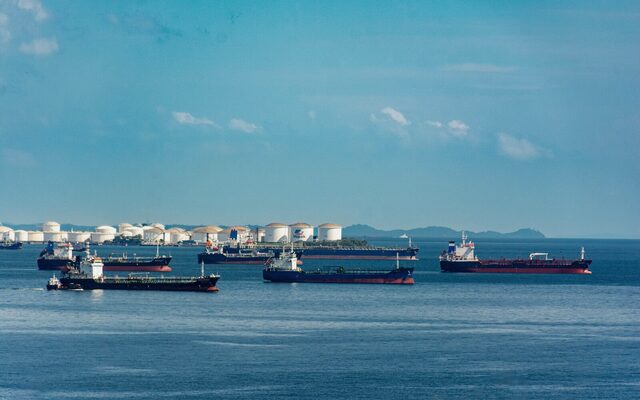
The Strait of Hormuz is the world’s single most important oil chokepoint, a narrow passage between Iran and Oman through which roughly 20% of all globally traded oil flows every day. Iran fully blockaded the strait during the 2026 war, one of the largest single supply shocks in oil-market history. A US-Iran Memorandum of Understanding (MOU) signed electronically around June 15, 2026 commits Iran to reopening the Strait within 30 days (~July 15 target).
The backdrop: Iran announced its intention to close the strait on June 1, 2026. U.S. forces shot down Iranian drones and struck coastal radar sites on June 5; Iran responded with ballistic missiles toward Kuwait and Bahrain. The blockade sent tanker traffic to near-zero and pushed Brent crude toward $92/barrel. The June 14–15 peace deal framework, mediated with G7 support, reversed that trajectory. Oil markets fell sharply on the MOU news as traders priced in the return of Gulf supply.
June 19–21 update: The planned formal signing ceremony in Geneva on June 19 was cancelled after fresh clashes between Israel and Iran-backed Hezbollah in Lebanon derailed the logistics. Iran’s delegation held back, citing the ongoing Lebanon fighting; Iran also renewed its threat to close the Strait. VP Vance, who had initially postponed his trip, travelled to Switzerland on June 20–21 for new technical-level talks with Iranian negotiators led by parliamentary Speaker Qalibaf and Foreign Minister Araghchi. The MOU framework is still in place, but formal ratification and the next phase of nuclear negotiations are stalled pending a calmer environment in Lebanon. US oil sanctions relief and the ~$24 billion asset unfreeze are contingent on the deal’s implementation.
Everything here is a structural explainer based on verified, dated facts, not a live news feed. This is a fast-moving situation; cross-check against current news before relying on any specific claim, especially oil prices, Strait traffic, and diplomatic status.
Your searches: us israel iran military conflict 2026, iran israel war 2026, iran israel war 2026