datastats / SIGNAL
enfresde
LIVE
← ALL SIGNALS
datastats / Culture
Culture ▲ Rising Trend score 72 · Published November 22, 2026 · Updated November 22, 2026

Spanish Christmas Lottery 2026 (El Gordo): Date, Time, Prizes and Taxes

Spain's Christmas Lottery, El Gordo, is drawn on Tuesday, December 22, 2026, from 9 a.m. Madrid time at the Teatro Real, with the San Ildefonso school children singing out the numbers. The state operator issues 205 series, seven more than in 2025: 205 million tickets (décimos) at 20 euros each, worth 4.1 billion euros, 70% of which (2.87 billion) goes back as prizes. The top prize pays 400,000 euros per décimo, or 328,000 after Spain's 20% tax on the amount above 40,000 euros. Sources: Loterías y Apuestas del Estado, Spanish Tax Agency, Noticias de Navarra, El Independiente.
By · datastats
INTEREST INDEX
72 +1% · 24h
Spanish Christmas Lottery 2026 (El Gordo): Date, Time, Prizes and Taxes
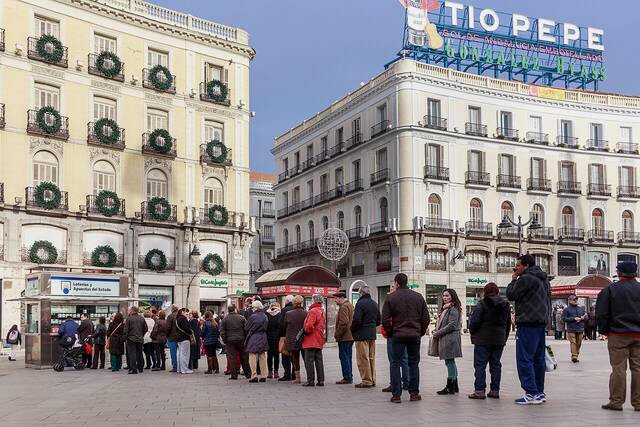
Barcex · CC BY-SA 3.0
30-DAY PEAK
77
modeled window
90-DAY AVG
45
trending up
TREND SCORE
72
+1% · 24h
TRACKED QUESTIONS
11
from public queries
INTEREST OVER TIME
Momentum trajectory
PEAK 77
30d ago15dtoday

The context

Spain’s Christmas Lottery, El Gordo (“the fat one”), is drawn on Tuesday, December 22, 2026, at the Teatro Real in Madrid. The ritual starts at 9 a.m. Madrid time when children from the San Ildefonso school take the stage and begin singing out numbers and prizes, a sound that plays on TVs and radios across Spain for the whole morning. For many Spaniards, the end of the draw, around 1 p.m., is the real start of the holidays.

The 2026 edition is the largest yet. The state operator, Loterías y Apuestas del Estado, issues 205 series of 100,000 numbers, seven more than in 2025: that is 205 million tickets at 20 euros, or 4.1 billion euros, with 70%, about 2.87 billion euros, returned as prizes. What makes the draw unique is that each number is printed 205 times over and shared out among friends, families, bars and offices, so a single winning number can spread money across an entire village.

The prize ladder is unchanged. El Gordo pays 400,000 euros per décimo, the second prize 125,000, the third 50,000, the two fourth prizes 20,000 and the eight fifth prizes 6,000. Below them sit the 1,794 pedrea prizes of 100 euros per décimo, small prizes for numbers next to or sharing digits with the top three, and the reintegro, which hands back the 20-euro stake to one number in ten.

Spain takes its share: prizes are tax-free up to 40,000 euros per décimo, and the rest is taxed at 20% at source, so a top-prize décimo is worth 328,000 euros in hand. Winners have three months to claim, at lottery outlets for prizes up to 2,000 euros and at partner banks above that.

If December 22 brings nothing, Spain’s second big holiday draw, El Niño, follows on January 6, 2027. Either way, the odds of any one décimo landing El Gordo are 1 in 100,000: it is best enjoyed as a tradition, with money you can afford to lose. Sources: Loterías y Apuestas del Estado, Spanish Tax Agency, Noticias de Navarra, El Independiente, Newtral, OKDIARIO.

People also ask

11 questions · sorted by search share

Tuesday, December 22, 2026. The Sorteo Extraordinario de Navidad is held, as every year, at the Teatro Real opera house in Madrid and is broadcast live on Spain's public channel La 1 (RTVE) and streamed on the official Loterías y Apuestas del Estado website. Sources: Loterías y Apuestas del Estado, Noticias de Navarra.

At 9:00 a.m. Madrid time (CET), which is 8:00 a.m. in London and the Canary Islands and 3:00 a.m. in New York. The draw is run by children from Madrid's San Ildefonso school, who sing out every number and prize. It lasts about four hours and usually ends between 12:30 and 1:30 p.m. Madrid time. Sources: OKDIARIO, Spanish lottery retailers.

20 euros for a décimo, the tenth-share ticket most people buy. A full ticket (a billete, or one series) is 10 décimos, so 200 euros. Many Spaniards also hold smaller shares, called participaciones, sold by clubs, bars and workplaces. Sources: Loterías y Apuestas del Estado, Noticias de Navarra.

400,000 euros per décimo (4 million euros per full series). The second prize pays 125,000 euros per décimo, the third 50,000, each of the two fourth prizes 20,000 and each of the eight fifth prizes 6,000. In total, the 2026 draw pays out 2.87 billion euros, 70% of the 4.1 billion euros of tickets issued. Sources: Loterías y Apuestas del Estado, El Independiente, Noticias de Navarra.

Not because of the jackpot, which is modest next to Powerball or EuroMillions, but because of the total prize pool. In 2026 Spain issues 205 million décimos, seven series more than in 2025, and the same number is sold to thousands of people at once, so a single winning number can make a whole town rich. Sources: Loterías y Apuestas del Estado, Noticias de Navarra.

The pedrea ("stone shower") is the 1,794 numbers that each win 1,000 euros per series, or 100 euros per décimo. The reintegro refunds your 20 euros if the last digit of your number matches that of El Gordo, which happens to one number in ten. Numbers just before and after the top three prizes, and those sharing their hundreds or last two digits, also win smaller amounts. Sources: Newtral, El Independiente, Bankinter.

Yes, in Spain. Prizes are tax-free up to 40,000 euros per décimo; anything above is taxed at a flat 20%, withheld when the prize is paid. A winning El Gordo décimo therefore pays 328,000 euros net (72,000 euros withheld). Foreign players may also have to declare the prize in their own country, depending on local rules. Sources: Spanish Tax Agency, Newtral.

Yes. Anyone can buy a décimo at an official Spanish lottery outlet or on the official Loterías y Apuestas del Estado website, and tourists buy them in Madrid all autumn. Be wary of unofficial resellers: only a genuine paper décimo or an official electronic ticket proves you own a prize. Sources: Loterías y Apuestas del Estado.

Use the official search tool of Loterías y Apuestas del Estado (website and app) from December 22, or the official prize list published when the draw ends. Keep the original décimo in good condition: it is the only proof needed to claim. Sources: Loterías y Apuestas del Estado.

Three months from the day after the draw. Prizes up to 2,000 euros per décimo can be cashed at any lottery outlet; larger ones at the operator's partner banks. Unclaimed prizes go to the Spanish Treasury. Sources: Loterías y Apuestas del Estado, El Debate.

With 100,000 numbers in play, a single décimo has a 1 in 100,000 chance of the top prize and a 1 in 10 chance of at least getting its 20 euros back. It is a game of chance and a Spanish tradition, not an investment. Sources: Loterías y Apuestas del Estado.

INTEREST BY REGION
Where it's trending
United States
100
France
73
India
71
United Kingdom
58
Brazil
35
Germany
32
Canada
29
Japan
24