datastats / SIGNAL
enfresde
LIVE
← ALL SIGNALS
datastats / Tech
LIVE
Tech ▲ Rising Trend score 88 · Published September 7, 2026 · Updated September 7, 2026

iPhone Ultra vs Galaxy Z Fold 8

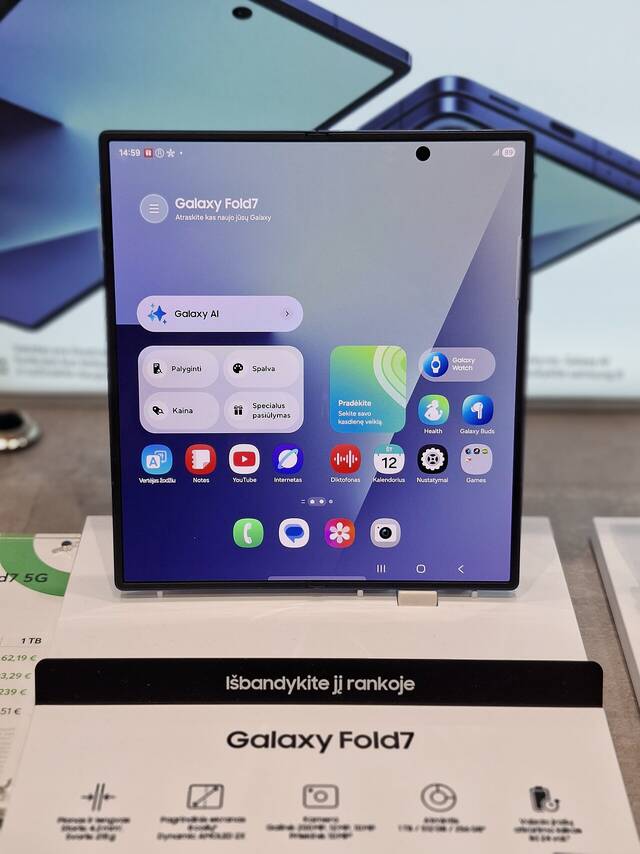
A side-by-side of Apple's expected first foldable, widely reported as the iPhone Ultra, against the Samsung Galaxy Z Fold 8 that has been on sale since July 22, 2026 at $1,900. The Samsung is a shipping product with a 7.6-inch inner screen, Snapdragon 8 Elite Gen 5 and a 201g body. The Apple is reported at 7.8 inches inside, an A20 Pro chip and $2,099 to $2,299, and has not been announced. One of these two you can buy today. Sources: SamMobile, 9to5Google, MacRumors, Macworld.
By · datastats
INTEREST INDEX
88 +10% · 24h
iPhone Ultra vs Galaxy Z Fold 8
Matabalt · CC0
30-DAY PEAK
95
modeled window
90-DAY AVG
61
trending up
TREND SCORE
88
+10% · 24h
TRACKED QUESTIONS
10
from public queries
INTEREST OVER TIME
Momentum trajectory
PEAK 95
30d ago15dtoday

The context

This is a comparison with an unusual asymmetry, and it is worth stating plainly before any table of specifications: only one of these two phones exists. The Samsung Galaxy Z Fold 8 was announced on July 22, 2026, went on sale on August 5, and costs $1,900. The iPhone Ultra is Apple’s expected first foldable, widely reported for the September 9, 2026 keynote, and every number attached to it is a leak.

On paper the two are closer than the price gap suggests. Both are reported to use a 5.5-inch cover display. Inside, Apple is said to run 7.8 inches against Samsung’s 7.6, at 120Hz on both. The meaningful difference is not size but shape: Apple’s inner screen is reported near 4:3, a wide passport format, where Samsung folds a taller, narrower panel. Apple appears to be building a small tablet, Samsung a phone that gets bigger. Under the glass, Samsung confirms a Snapdragon 8 Elite Gen 5 with up to 16GB of RAM, a 4,800mAh battery and 201g on the scale. Apple is reported at A20 Pro, 2nm, 12GB, with a titanium and aluminium frame and no published weight.

Cameras deserve a flag for both. Samsung leads with a 50MP main and 50MP ultrawide. Apple is reported with two 48MP sensors. Neither has a confirmed telephoto, which at these prices is the single weakest part of the foldable pitch: a conventional flagship costing half as much will out-zoom either one.

Then price, where the gap is real. Samsung’s $1,900 is a published figure. Apple’s reported $2,099 to $2,299 start, with high storage past $3,000, would make the iPhone Ultra the most expensive iPhone ever by some distance and put it a few hundred dollars above a rival that has seven previous generations of hinge engineering behind it.

The practical advice is simple. If you want a foldable today, the Galaxy Z Fold 8 is the only one of these you can actually buy, and it is a mature eighth-generation product. If you are committed to iOS, waiting until September 9 costs you nothing and replaces every leak on this page with a specification sheet.

People also ask

10 questions · sorted by search share

Today, only one of them is buyable. The Galaxy Z Fold 8 has been on sale since July 22, 2026 at $1,900, with reviews, real weights and a known hinge. The iPhone Ultra has not been announced and is expected on September 9, 2026. If you are already in Apple's ecosystem and can wait two weeks, wait, because you lose nothing by seeing the real product. If you are on Android or need a foldable now, the Samsung is the only real answer.

Samsung's is confirmed: $1,900 for the 256GB Galaxy Z Fold 8. Apple's is not. A September 3, 2026 report puts the iPhone Ultra between $2,099 and $2,299, with top configurations past $3,000. That is roughly a $200 to $400 gap at the entry point, in Samsung's favour. Treat the Apple number as a leak until the keynote. Sources: 9to5Google, MacRumors.

Both are reported to use a 5.5-inch cover display. Inside, the iPhone Ultra is reported at 7.8 inches against the Galaxy Z Fold 8's 7.6 inches, so Apple would be marginally larger. Shape matters more than that 0.2 inches: Apple's inner panel is reported close to 4:3, a wide passport format, while Samsung's is taller and narrower. Apple would feel more like a small tablet, Samsung more like a big phone. Sources: Macworld, SamMobile.

The Galaxy Z Fold 8 runs the Snapdragon 8 Elite Gen 5 for Galaxy with up to 16GB of RAM, both confirmed. The iPhone Ultra is reported to use the A20 Pro on TSMC's 2nm process with 12GB of RAM, unconfirmed. On raw RAM Samsung wins on paper, though iOS and Android manage memory differently enough that the number alone tells you little. Sources: SamMobile, MacRumors.

Samsung's are confirmed: a 50MP main and 50MP ultrawide leading the array. Apple's are reported as two 48MP sensors, wide and ultra-wide, plus a 24MP front camera. The notable point for both is what is missing at these prices: no telephoto has been confirmed on either. If you shoot a lot of zoom, a conventional flagship still beats both foldables. Sources: SamMobile, MacRumors.

Samsung publishes a number: 201g, which it markets as the lightest book-style foldable available. Apple has published nothing, and no credible leak gives a weight for the iPhone Ultra. Reporting does say Apple uses a titanium and aluminium frame specifically to control weight, which suggests it is a concern rather than a solved problem. Source: SamMobile.

If Apple follows its usual pattern, pre-orders open September 11 or 12 and retail availability lands September 18, 2026, after the September 9 keynote. The Galaxy Z Fold 8, by contrast, was announced on July 22 and has been in shops since August 5, 2026. Sources: MacRumors, iDropNews, SamMobile.

Apple has reportedly spent years on a hinge designed to make the crease effectively invisible, but nobody outside Apple has held the device, so the claim is untested. Samsung's Z Fold 8 is documented as having a slimmer crease than its predecessor plus improved anti-reflective coating. One is a measured improvement on a real product, the other is a promise. Sources: Macworld, SamMobile.

Samsung commits publicly to seven years of updates for the Galaxy Z Fold 8, which ships with Android 17 and One UI 9. Apple does not publish a fixed support window, but iPhones have historically received five to seven years of iOS updates, so the two are broadly comparable. Sources: SamMobile, Apple.

Be honest about the trade. You pay roughly double a normal flagship, you carry a heavier device, and on current reporting neither of these two confirms a telephoto camera. What you get is a screen that unfolds into something close to a tablet. That is genuinely useful for reading, split-screen work and maps, and close to pointless if you mostly message and scroll. If the tablet-in-a-pocket idea does not already appeal to you, an iPhone 18 Pro Max or a Galaxy S26 Ultra gives you better cameras for less money.

True or false?

6 rumors fact-checked, with sources
False
You can compare these two phones properly today.

No. The Galaxy Z Fold 8 has been on sale since July 22, 2026. The iPhone Ultra has not been announced, so every Apple figure below is a leak. (SamMobile, MacRumors)

Unverified
The iPhone Ultra will be more expensive than the Galaxy Z Fold 8.

Reported at $2,099 to $2,299 against Samsung's confirmed $1,900, so roughly $200 to $400 more. Credible, but Apple has published no price. (MacRumors, 9to5Google)

Unverified
The Apple foldable opens into a wider screen than Samsung's.

Apple's inner display is reported near 4:3, a passport shape, against Samsung's taller format. Both are said to use a 5.5-inch cover screen. (Macworld, SamMobile)

False
Samsung's foldable is heavier because it has been around longer.

The opposite of the usual assumption: Samsung markets the Z Fold 8 as the lightest book-style foldable at 201g. Apple has published no weight at all. (SamMobile)

Unverified
Neither phone has a telephoto camera.

Reported iPhone Ultra cameras are two 48MP sensors with no telephoto mentioned; the Z Fold 8 is led by 50MP main and 50MP ultrawide. Confirmed for neither device that a tele is included. (MacRumors, SamMobile)

True
The Galaxy Z Fold 8 will get software updates for seven years.

Samsung commits to seven years of updates, shipping with Android 17 and One UI 9. Apple does not publish a fixed support window but has historically matched or beaten that. (SamMobile)

INTEREST BY REGION
Where it's trending
United States
100
India
65
France
60
United Kingdom
56
Germany
41
Brazil
38
Japan
16
Canada
14
Sources
Public-source data, structured and editorially reviewed.