datastats / SIGNAL
enfresde
LIVE
← ALL SIGNALS
datastats / Sport
LIVE
Sport ▲ Rising Trend score 62 · Published August 19, 2026 · Updated August 19, 2026

Backyard Ultra: What It Is and How the Format Works

Backyard Ultra is the last-runner-standing ultramarathon format where competitors must complete a 4.1667-mile (6.7056 km) loop every hour, on the hour, until only one is left. The 2026 Backyard Ultra World Team Championship runs October 17, 2026, with 1,000+ runners from 70+ countries.
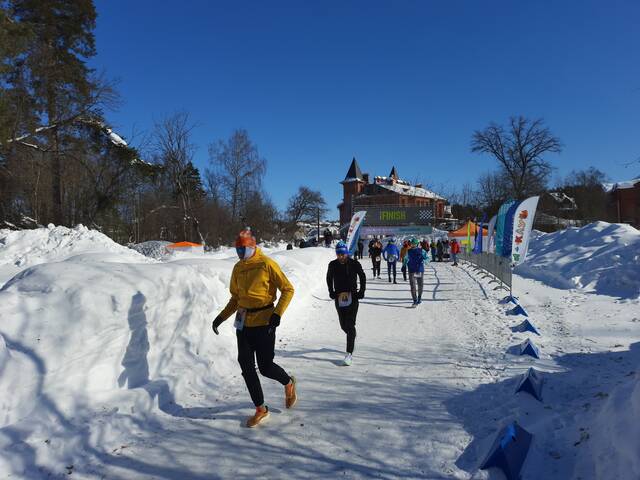
By · datastats
INTEREST INDEX
62 +5% · 24h
Backyard Ultra: What It Is and How the Format Works
Kalendar · by-sa
30-DAY PEAK
69
modeled window
90-DAY AVG
35
trending up
TREND SCORE
62
+5% · 24h
TRACKED QUESTIONS
8
from public queries
INTEREST OVER TIME
Momentum trajectory
PEAK 69
30d ago15dtoday

The context

The backyard ultra is one of endurance sport’s stranger, and more compelling, formats: a race with no finish line, just a bell that rings every hour until only one runner is still standing. Invented by Gary “Lazarus Lake” Cantrell, the same mind behind the Barkley Marathons, it strips ultrarunning down to its rawest form: run 4.1667 miles, rest until the hour, repeat.

That simplicity is exactly why the format has exploded globally over the past decade. Unlike most major ultras, a backyard ultra needs no mountain range, technical singletrack or elaborate logistics, just a flat loop that can be measured out almost anywhere, which has let hundreds of local and national races spring up on every continent.

The format’s biggest stage is the annual World Team Championship, where national teams of up to 15 runners compete simultaneously at host venues around the world, their combined lap counts determining the winning country. The 2026 edition takes place October 17, with the flagship event at Big’s Backyard Ultra in Bell Buckle, Tennessee, and satellite races from Australia to continental Europe, expecting well over 1,000 competitors across more than 70 countries.

What makes the format so watchable is its psychological brutality: there’s no pacing strategy that beats the clock, no taper, no negotiating with the format. Runners who look fresh after 12 hours can be gone by hour 40, while others who seem to be struggling early quietly grind out lap after lap until they’re the last one left. It’s also produced some of ultrarunning’s most dramatic finishes, including events with no official winner at all, when the final two competitors both fail to complete the same lap.

People also ask

8 questions · sorted by search share

A backyard ultra is an ultramarathon format in which runners must complete a fixed loop of 4.1667 miles (6.7056 km) in under one hour, then start the next identical loop exactly on the hour, repeating indefinitely. There's no set finish line or distance. A runner who fails to complete a lap in time, or isn't ready to start the next one, is eliminated. The winner is the last person still running; if the final two runners both stop at the same time, there's officially no winner at all.

It was created by Gary "Lazarus Lake" Cantrell, the same race director behind the notoriously brutal Barkley Marathons. Unlike Barkley, the backyard ultra was designed to be simple and cheap to organize, needing no mountains, technical trails or heavy permits, just a flat loop and a clock, which is a big part of why the format has spread to hundreds of races worldwide since its debut at Big's Backyard Ultra in Tennessee.

Each loop is exactly 4.1667 miles (6.7056 km), a distance chosen so that running 24 loops in 24 hours adds up to precisely 100 miles. Runners get whatever time is left in the hour after finishing a loop to eat, rest, treat injuries or sleep, before the bell sends everyone out again.

You're eliminated. Missing the 60-minute cutoff for a loop, or not being in the starting corral when the next hour's bell rings, ends your race immediately, no partial credit, no second chances. This is what makes the format brutal mentally as much as physically: the clock never stops, even to sleep.

The race continues until only one runner completes a loop that no one else finishes. That runner must then complete one final "victory lap" alone to be declared the winner. If the last two competitors both drop out or fail to finish the same lap, the event officially has no winner at all, a rule that has occasionally produced controversial, winner-less finishes at major events.

It's the fourth edition of the global team format, scheduled for October 17, 2026, with the flagship Last Man Standing race hosted at Big's Backyard Ultra in Bell Buckle, Tennessee. More than 1,000 runners from over 70 countries compete simultaneously at satellite venues worldwide (Australia hosts its team at Red's Backyard Ultra in Kembla Grange, NSW), with each country fielding up to 15 athletes. A nation's score is the combined loop total of its team; the highest total wins the World Team title. Sources: bigsbackyardultra.com, autra.asn.au.

Records in this format are unusually contested because outside assistance disqualifies a result. American Harvey Lewis has held some of the sport's most recognized marks at Big's Backyard Ultra. A widely reported 123-lap performance by a Russian runner in mid-2026 was voided by race organizer Lazarus Lake after video evidence showed non-competitors on the course, which counts as outside aid under the format's rules. Given how often marks get disputed, treat any single record claim with caution until it's confirmed by the race's official body.

A standard ultramarathon has a fixed distance (50K, 100 miles, etc.) and everyone races to finish it as fast as possible. A backyard ultra has no fixed distance at all, it's pure elimination and endurance, structured entirely around the clock rather than the course. That structure is also what makes it accessible to organize: no need for mountains or a huge crew, just a 4.1667-mile loop and a bell.

INTEREST BY REGION
Where it's trending
United Kingdom
100
India
62
United States
61
Brazil
50
France
42
Germany
41
Japan
30
Canada
30
Sources
manual_validated
Public-source data, structured and editorially reviewed.