COP31 Antalya 2026: Dates, Venue, Who Is Going and What Is at Stake
COP31, the UN climate conference, runs from November 9 to 20, 2026 at the Antalya Expo Center in Türkiye, with a World Leaders' Summit on November 11-12. It is the first COP with split leadership: Türkiye's environment minister Murat Kurum is COP President, while Australia's Chris Bowen is President of Negotiations with "exclusive authority" over the talks. In September Kurum said the two are "not co-presidents" and that the final decision lies with the presidency. A pre-COP was held in Fiji and Tuvalu on October 5-8. Key issues: weak national climate plans (NDCs), climate finance, adaptation and the fossil fuel transition left open at COP30 in Belém. Sources: Wikipedia, Climate Home News, AFP/France 24, Yeni Şafak, PINA, C2ES.
The context
COP31 in Antalya: November 9-20, 2026
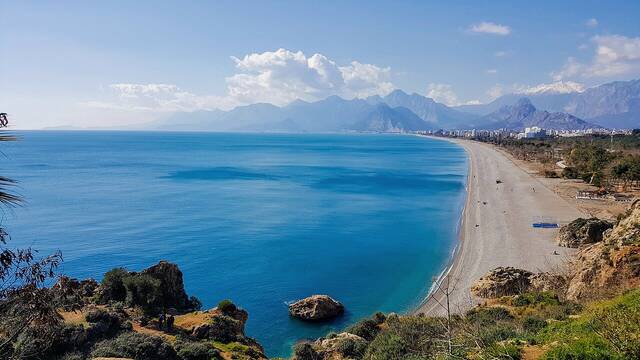
COP31, the 31st UN Climate Change Conference, opens on November 9, 2026 at the Antalya Expo Center on Türkiye’s Mediterranean coast and is due to close on November 20. Heads of state and government meet on November 11-12 for the World Leaders’ Summit, a break with past COPs where leaders gathered on the opening days. President Erdoğan, UN Secretary-General António Guterres and Australian Prime Minister Anthony Albanese are scheduled to speak at its opening ceremony.
The summit is unusual before it even starts. Türkiye and Australia both bid to host it, and the stand-off was only broken at COP30 in Belém in November 2025: Türkiye hosts and holds the presidency under environment minister Murat Kurum, while Australia’s Chris Bowen is President of Negotiations with “exclusive authority” over the formal talks. The arrangement has already produced friction. On September 10, Kurum said the two countries are “not co-presidents” and that the final decision rests with the COP31 presidency, while Australia insists the partnership works “seamlessly”. Both sides say they cooperate well, but observers worry the ambiguity could distract from the substance.
Australia’s side of the deal included a pre-COP in the Pacific. Ministers met in Nadi, Fiji, on October 5-8, with a leaders’ visit to Tuvalu, one of the countries most exposed to sea-level rise. The meeting endorsed the Taku Pakasoa Declaration, which calls for keeping 1.5°C within reach, grant-based climate finance and a transition away from fossil fuels, but few leaders from outside the region made the trip.
On substance, COP31 inherits the open files of Belém: national climate plans that, according to the UN’s latest synthesis, would only cut emissions about 12% below 2019 levels by 2035, against roughly 60% needed for 1.5°C; a goal to triple adaptation finance by 2035; a new just transition mechanism to be made operational; and a fossil fuel roadmap that never made it into the formal decision. Kurum has acknowledged that 1.5°C itself is out of reach and that “around 1.5C” would count as success. The United States, which left the Paris Agreement on January 27, 2026, has announced no participation. The next COP, COP32, is set for Addis Ababa in 2027.
Sources: Wikipedia, Climate Home News, AFP/France 24, Yeni Şafak, PINA, C2ES, UNFCCC, E&E News, Carbon Brief.