2026 Europe heatwave
UPDATE (Aug 15): France's fifth heat episode is expected to end this weekend as violent storms sweep across the Pyrenees and Massif Central. Météo-France forecasts a significant temperature drop from August 15-16. Road traffic is exceptionally heavy across France on August 15 (Assumption of Mary public holiday, peak summer return). Copernicus confirmed June+July 2026 as the hottest on record for Western Europe (21.62°C avg, +2.79°C above norm). Italy saw all-27-city bollino rosso in early August. EU wildfire area exceeded 254,000 ha. Sources: Météo-France, Copernicus, CNews, lautomobiliste.fr.
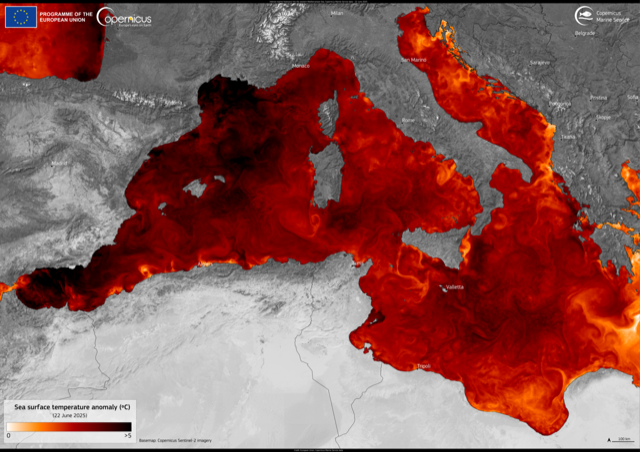
The context
In late May 2026, a monstrous high-pressure heat dome locked itself over Western and Central Europe, dragging scorching air straight from North Africa and sending temperatures 10–16°C above what is normal for the time of year. The UK shattered its own spring temperature record twice in 48 hours, Kew Gardens hit 34.8°C on 25 May, then 35.1°C on 26 May. Ireland logged its hottest-ever May day at Shannon (30.6°C). France obliterated over 1,350 heat records. Portugal, Spain, and southern France baked at 35–38°C.
This is trending hard because it is unprecedented this early in the year, late May is not when Europe expects to fight heatwaves. The timing blindsided infrastructure, public health systems, and outdoor events alike, with disruption reported as far as Roland-Garros in Paris.
Scientists are unequivocal: the frequency and ferocity of these events is driven by climate change. The UN has projected that the next five years will continue to break records. This is not a one-off anomaly, it is the leading edge of a hotter baseline.
At least 40 deaths have been linked to the heatwave as of June 23, according to health authorities, many involving drowning accidents as people sought to cool off in rivers and lakes. The heatwave is now forecast to ease gradually from June 24, with temperatures expected to return to seasonal norms by the weekend. Emergency protocols, cooling centres, public hydration stations, outdoor-event bans, remain in force until the alert is formally lifted. If you are in an affected area, follow local authority guidance: stay hydrated, avoid the midday sun, check on elderly neighbours, and never leave children or animals in parked cars.
June 21, 2026, France on orange alert. The same heat system that battered Europe in May returned for a June episode. Météo-France issued orange heat alerts covering 53 departments, warning temperatures could reach 37–42°C. The impact was immediate: dozens of French cities cancelled their Fête de la Musique outdoor concerts, including Poitiers, Brive-la-Gaillarde, Argenteuil, and Chevilly-Larue. The Fête du Vélo in Anjou, due to gather 25,000 cyclists along the Loire, was also called off.
June 22, 2026, confirmed historic event. The situation escalated sharply. Météo-France upgraded 49 departments to vigilance rouge, the highest alert level, reserved for conditions dangerous to the entire population including healthy adults. This is an unprecedented count in the history of the French alert system. Temperatures reached 41–44°C across western and southern France, with Haute-Garonne recording 44°C. The previous night’s national average of 21.4°C already matched the July 2019 canicule, historically one of France’s deadliest heat events. Emergency heat protocols were activated nationwide: cooling centres were opened, outdoor events cancelled, and citizens urged to check on elderly neighbours. Meteorologists described June 22, 2026 as among the most severe early-summer heatwave days in France’s recorded history.
June 23, 2026, peak intensity. The night of June 22 into June 23 shattered yet another record: the national minimum average temperature reached 21.6°C, the hottest night ever recorded in France, marginally eclipsing the previous evening’s 21.4°C. During the day on June 22, France had also recorded its highest-ever national average maximum temperature: 37.8°C, the hottest afternoon in the country’s meteorological history. On June 23, the heat dome reached its peak over the Île-de-France region, with Paris registering 41°C and the capital’s surrounding departments placed under vigilance rouge. Centre-Val de Loire and the Rhône valley also remained under the highest alert. Health authorities maintained emergency protocols: cooling centres across the country remained open and citizens were urged to hydrate, avoid outdoor exposure during peak hours, and check on vulnerable neighbours.
June 25, 2026, still no relief. Contrary to earlier forecasts that the heatwave would ease on June 24, the event has intensified further: 72 departments are now under vigilance rouge, up from 54 on June 23, and temperatures are reaching 38–44°C across central and western France. Approximately 35 million people remain in red-alert zones. More than 2,000 schools have been closed. Authorities report at least 13 drowning deaths and additional elderly fatalities linked to the heatwave. Outdoor public gatherings across much of France remain banned. Relief is now expected to arrive on Friday 26 June, as the blocking high-pressure system finally weakens. Until then: stay indoors during the 11:00–18:00 peak, use cooling centres, and check on elderly neighbours. Source: Connexion France / sortiraparis.com / Météo-France.
June 27, 2026, heatwave easing. The relief arrived broadly on schedule. As of June 26-27, red alerts have been lifted across most French departments as the blocking high-pressure system finally broke down, temperatures are falling back toward seasonal averages, and emergency protocols are being stood down progressively. The total confirmed death toll linked to the event stands at least 40, many involving drowning and heat-related illness among elderly residents. The 2026 heatwave, which peaked across June 22-25, will be studied as a landmark event: the first time so many French departments simultaneously reached the highest alert level, and the hottest early-season episode in France’s recorded history. Summer is not over, and forecasters warn that July and August remain the peak months for heat risk, this event should be taken as a warning signal rather than a one-off. Source: Météo-France.
July 7, 2026, second wave: orange alert for Île-de-France. Two weeks after the historic June peak, a new heat episode has triggered fresh alerts. Météo-France placed Île-de-France (Paris and surrounding departments) under vigilance orange from noon on July 7, warning of elevated temperatures that pose a risk to vulnerable populations. The alert is less severe than the June red alerts but underscores that the 2026 season’s heat risk is not over. Simultaneously, a wave of wildfires has broken out in southern France: more than 800 hectares have burned in Hérault and Aude (July 7-9), driven by dry conditions and southern winds, with firefighters mobilised across both departments. Prefectures have issued fire-risk alerts and access restrictions in affected forest areas. If you are in Île-de-France, follow the standard precautions: stay hydrated, avoid outdoor exertion during the hottest hours (noon to 18:00), and check on elderly or vulnerable neighbours. Sources: Météo-France, sortiraparis.com.
July 9-21, 2026, Spain wildfires: 13 dead, 12,000 hectares. The same heatwave system driving France’s alert sequence has fuelled two catastrophic wildfires in Spain, making this the deadliest fire season in modern Spanish history. The Almería wildfire (Andalusia), which broke out on July 9 near Los Gallardos, has killed at least 13 people, the deadliest wildfire in Andalusian history and the third-deadliest in all of Spain’s recorded history, with 17+ injured, 10 still missing, and over 1,600 people evacuated. Simultaneously, the Zaragoza/Cinco Villas wildfire (Aragon) has burned approximately 12,000 hectares with a perimeter of 60 km, forcing the evacuation of six settlements including Ores, Asin, Luesia, Malpica de Arba, and Uncastillo (Zaragoza) and Petilla de Aragon (Navarra). More than 400 firefighters and 19 aircraft have been deployed across both fires. In total, nearly 50,000 hectares have burned across Spain in 2026, well above recent annual averages. Sources: Wikipedia, 2026 Almería wildfire; IndexBox; Euronews.
July 22-23, 2026, Gironde wildfire kills two firefighters near Bordeaux. One of 2026’s most deadly wildfires struck the Gironde département (near Bordeaux) on July 22, igniting in the Saumos and Le Porge area near Lacanau, the same coastal pine-forest corridor that saw devastating fires in 2022. As of July 23, the fire had burned more than 2,400 hectares, with more than 10,000 people evacuated from surrounding communities. Two French firefighters were killed while battling the blaze, making this the first firefighter fatalities of the 2026 season in France. More than 500 firefighters supported by aircraft were deployed; the fire’s proximity to Bordeaux-Mérignac airport caused temporary airspace disruptions. The deaths sparked an immediate political response, with the interior minister paying tribute and calling for an extraordinary safety review. Simultaneously in Italy, a firefighter was killed battling a wildfire in Sicily, underscoring the continent-wide toll the 2026 fire season is taking. EU-wide, approximately 254,000 hectares have burned across Europe in 2026 as of late July, well above the 10-year average for this point in the season. Sources: Le Monde, Euronews, EFFIS (European Forest Fire Information System).
July 13-15, 2026, third wave: vigilance rouge in 26 departments. France has entered a third distinct heat episode in six weeks. Météo-France placed 26 departments under vigilance rouge (red alert) from July 13, including Paris and the entire Île-de-France region, describing the heat as of “rare and exceptional intensity.” The Eiffel Tower closed its upper floors to visitors during afternoon peak hours on July 11 and again on July 13, a precautionary measure not previously applied during the first two waves. Fireworks displays and firefighters’ balls (bals des pompiers) were cancelled across scores of municipalities on July 13-14, including the traditional Bastille Day celebrations, as authorities prioritised public safety over festivities. The red alerts are expected to ease on the morning of July 15. Standard heat precautions remain in force: stay indoors during peak hours (11:00-18:00), use public cooling centres, stay hydrated, and check on elderly or isolated neighbours. Sources: Météo-France, CNews, Sortiraparis.
August 5, 2026, UK heat health alerts and drought food warning. The 2026 European heat season has extended its reach to the British Isles. The UK Health Security Agency (UKHSA) issued heat health alerts for eight regions of England with temperatures forecast to exceed 30°C. The alerts, activating health protocols for hospitals and care homes, come alongside a separate and more sustained crisis: Britain is facing potential food supply strain after a prolonged drought has stressed agricultural output across parts of England. Farmers and food-supply analysts have flagged concerns over reduced crop yields for autumn harvests, particularly for vegetables and cereals. The combination of a heat alert sequence and drought-driven supply pressure marks a new phase in the 2026 European heat season, one where the knock-on effects on food systems are becoming as visible as the immediate health impacts of temperature spikes. Sources: UKHSA.
August 1-8, 2026, Italy hits an unprecedented alert level. Italy is now the epicentre. On 3 August, 25 of the 27 cities in the health ministry’s monitoring network were placed on bollino rosso, the maximum alert, with all 27 projected to reach that level within the week, a first in the history of the network. The list runs from Rome, Milan, Naples and Turin to Florence, Bologna, Venice, Palermo and Cagliari. Daytime peaks pass 40°C, with up to 44°C possible inland in Sardinia, but the defining feature of this episode is nocturnal: minimum temperatures that refuse to drop below 25°C across central and northern Italy, what meteorologists there are calling super-tropical nights, which block the body’s overnight recovery and make the wave dangerous even for healthy adults. This is Italy’s fourth distinct heatwave since late May. The backdrop is a persistent drought: the River Po is at record low levels and Lombardy’s rice harvest is under threat.
August 8, 2026, France enters a fifth heat episode. Météo-France placed 12 departments on orange heat alert for Saturday 8 August, with a further 33 departments on yellow for heat and/or storms. The peak sits in the southern half of the country, with around 38°C in the southwest and the Rhône valley. After a slight dip on the Monday, temperatures are forecast to climb again to 30-35°C and locally 40°C, which is 8 to 10°C above seasonal norms. That makes five distinct heat episodes in France before mid-August, after late May, 21-27 June, 7 July and 13-15 July.
Spain stays under an AEMET special warning. The extreme heat episode that began on 29 July has persisted into August, with 40 to 42°C inland across the southern half of the peninsula, 39 to 41°C in the Ebro valley, and a marked rise in the Canary Islands where southern valleys on La Palma, Tenerife and Gran Canaria approach 39-40°C. AEMET’s main concern is the fire risk: the combination of extreme heat, very low humidity and gusty southerly winds pushes the danger index to critical levels and makes aerial firefighting harder. Spain has now burned more than 221,000 hectares in 2026, the worst season in its modern history. Sources: Italian Health Ministry, Météo-France, AEMET, EFFIS.
August 9-10, 2026, Western Europe breaks cumulative temperature record. The EU’s Copernicus Climate Change Service confirmed on 11 August that June and July 2026 combined were the hottest on record for Western Europe, with an average temperature of 21.62°C, roughly 2.79°C above the 1991–2020 norm, surpassing the previous record set during the devastating 2022 European summer. July 2026 was also the hottest month ever recorded globally for the world’s non-polar oceans. The record-breaking summer has produced widespread drought, contributed to Europe’s worst wildfire season in modern history, and delivered thousands of projected heat-related deaths across the continent. The UK and France are now bracing for what would be their fifth distinct heatwave since May, the fifth wave of the season would be unprecedented in the meteorological records of both countries. The heat is expected to rebuild in southeastern France through this week, with temperatures approaching 38-40°C possible across the southwest and the Rhône valley. Sources: Copernicus Climate Change Service, NBC News, CNN, Washington Post, Euronews.
August 15, 2026, Fifth heat episode ending; violent storms, holiday chaos. France’s fifth heat episode of the summer is expected to break this weekend as a cold front pushes through, bringing violent thunderstorms across the Pyrenees, Massif Central, and much of southern France. Météo-France has forecast a sharp drop in temperatures from August 15-16, with hail, heavy rain, and strong gusts forecast to sweep through from the south. The relief is real but abrupt: the same storm system bringing the cool air also carries significant lightning and hail risk. Separately, August 15 is the Feast of the Assumption (a French public holiday), historically the heaviest travel day of the entire summer: road authorities classified the national traffic situation as red/black, with massive congestion expected on the A7 (Lyon-Marseille, both directions), the A10 (Paris-Bordeaux), and cross-border routes to Spain. Travellers were advised to avoid driving between 07:00 and 18:00. If you are in southern France on August 15: stay alert to storm warnings (Météo-France app), carry a rain layer, and expect major road delays. The heatwave season is not definitively over; September can still bring late heat episodes, though the worst intensity appears to have passed. Sources: Météo-France, CNews, lautomobiliste.fr, meteo-paris.com.
Your searches: North Africa wildfires 2026: Algeria, Morocco, Tunisia, France and Spain wildfires July 2026: 300,000+ evacuated
As the heat dome intensified, the same tinder-dry conditions helped fuel the Fontainebleau Forest Fire 2026, one of the season’s most alarming blazes.
Further south, the same blistering heat helped ignite the Spain Wildfires 2026, which tore through parched forests along the Mediterranean coast.