datastats / SIGNAL
enfresde
LIVE
← ALL SIGNALS
datastats / Sport
Sport ▲ Hot Trend score 66 · Published September 27, 2026 · Updated September 27, 2026

Munich Olympic Bid: Germany Picks Munich for 2036, 2040 or 2044

Munich is Germany's candidate to host the Summer Olympics and Paralympics in 2036, 2040 or 2044. The German Olympic Sports Confederation (DOSB) chose Munich over Cologne-Rhine-Ruhr by 91 votes to 50 on September 26, 2026, after Hamburg and Berlin dropped out. The IOC aims to elect the 2036 host in mid-2029. Sources: DOSB, Reuters, Al Jazeera, IOC.
By · datastats
INTEREST INDEX
66 +14% · 24h
Munich Olympic Bid: Germany Picks Munich for 2036, 2040 or 2044
Wladyslaw Sojka · FAL
30-DAY PEAK
68
modeled window
90-DAY AVG
39
stable
TREND SCORE
66
+14% · 24h
TRACKED QUESTIONS
11
from public queries
INTEREST OVER TIME
Momentum trajectory
PEAK 68
30d ago15dtoday

The context

Germany has chosen Munich as its candidate for a future Summer Olympics and Paralympics. At an extraordinary assembly in Baden-Baden on September 26, 2026, the German Olympic Sports Confederation (DOSB) backed Munich’s project by 91 votes to 50 over a Cologne-led Rhine-Ruhr bid. The target is the 2036, 2040 or 2044 Games, with the year still to be decided.

The domestic race started with four contenders. Hamburg was knocked out by a referendum on May 31, 2026, when 54.9% voted no. Berlin pulled out two days before the vote after the Left party, which opposes the bid, won the state election. The DOSB’s evaluation had Munich and Cologne-Rhine-Ruhr almost tied, so the final vote was closely watched, not least as a contest between Bavaria’s premier Markus Söder and North Rhine-Westphalia’s Hendrik Wüst, who pledged to back Munich afterwards.

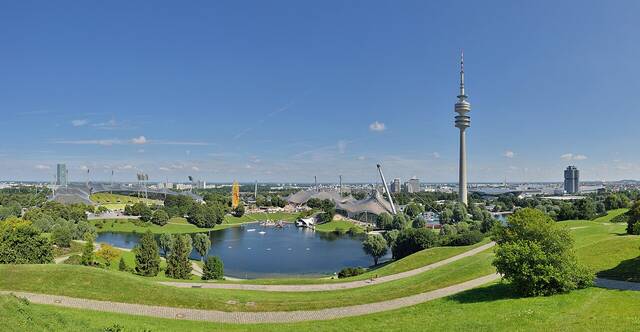
Munich’s case rests on public support and legacy. Residents approved the bid with 66.4% in October 2025, and the concept reuses the 1972 Olympiapark and Olympiastadion wherever possible, adding temporary arenas and a new Olympic Village in the north-east of the city. There is no total budget yet; temporary venues alone are estimated at around €930 million.

The bid now enters the IOC’s process: a shortlist for 2036 in March 2027 and an election in mid-2029. Ahmedabad and Doha are seen as the strongest 2036 rivals, and the centenary of Berlin 1936 is one reason Germany keeps 2040 and 2044 open. Sources: DOSB, Reuters, Al Jazeera, IOC, GamesBids, sportschau.de, City of Munich.

People also ask

11 questions · sorted by search share

Munich. At an extraordinary general assembly in Baden-Baden on Saturday, September 26, 2026, the German Olympic Sports Confederation (DOSB) selected Munich as Germany's candidate to host the Summer Olympic and Paralympic Games. German President Frank-Walter Steinmeier and DOSB President Thomas Weikert announced the result live on German TV. Sources: DOSB, Reuters, Al Jazeera.

Munich won a secret ballot in the first round, 91 votes to 50, against a Cologne-led bid from the Rhine-Ruhr region. Votes were held by the 42 Olympic sports federations (three each), the DOSB executive board and individual DOSB members, 141 votes in total. The DOSB's own evaluation had the two projects almost level: 87.03 points for Munich, 85.02 for Cologne-Rhine-Ruhr. Sources: sportschau.de, GamesBids.

Not specifically. Munich's referendum and the DOSB process cover the Summer Games of 2036, 2040 or 2044, and Germany has not yet chosen a target year. The DOSB says it will decide based on the international competition and its talks with the IOC. Headlines calling it a "Munich 2036" bid are getting ahead of the process. Sources: DOSB, sportschau.de.

The IOC plans to elect the 2036 host in mid-2029. Under its revised process, the IOC Executive Board will pick a shortlist from the ongoing *Continuous Dialogue* in March 2027 for a *Strategic Dialogue* stage, then open a *Targeted Dialogue* with one or more preferred hosts in late 2028, before a vote by the IOC Session. No timeline exists yet for 2040 or 2044. Sources: IOC, NBC Sports, GamesBids.

Ahmedabad (India) and Doha (Qatar) have the most advanced campaigns for 2036. Other possible bidders for 2036 or later include Istanbul, Budapest, Santiago, South Korea, Saudi Arabia, South Africa, Egypt, Spain and Italy, according to GamesBids. How many will formally enter is not yet known. Sources: GamesBids, ZDF.

Hamburg was eliminated by a referendum on May 31, 2026, when 54.9% of voters rejected an Olympic bid (turnout 49.6%). Berlin withdrew its "Berlin+" project two days before the DOSB vote, after the Left party, which opposes the bid, came first in the Berlin state election. Sources: hamburg.de, Reuters, ZDF.

Yes. In a citizens' referendum on October 26, 2025, 66.4% (305,349 votes) backed a bid for the 2036, 2040 or 2044 Summer Games, against 33.6%. Turnout was 42%, a record for a Munich referendum. It reversed the 2013 vote in which Munich rejected a 2022 Winter Olympics bid. Sources: City of Munich (official result), ZDF.

The plan reuses the 1972 Olympic legacy: the Olympiastadion for the opening and closing ceremonies and athletics, plus the Olympiahalle and Olympiapark, the rowing course at Oberschleißheim and the equestrian site at Riem, with temporary arenas at the trade fair and the Theresienwiese. The city says about 90% of venues are within 30 km of the Olympiapark. Football would be played partly in Stuttgart and sailing held in Kiel. Sources: City of Munich, Abendzeitung, ZDF.

No total budget has been published yet. Early figures include about €930 million for temporary venues, up to €99 million for the rowing course and €50 million for the shooting range, plus transport projects such as an €1.2 billion metro extension to a new Olympic Village in north-east Munich. Critics say the funding of that infrastructure is still unclear. Source: Abendzeitung München.

2036 would mark 100 years since the Berlin 1936 Games, staged by the Nazi regime as propaganda. When a German 2036 bid was first floated in 2021, then Interior Minister Horst Seehofer called it "unthinkable". That is one reason the DOSB has kept 2040 and 2044 on the table. Having Munich rather than Berlin as the candidate softens the issue but does not remove it. Sources: Around the Rings, Cicero.

Yes, the 1972 Summer Olympics, the last Summer Games held in Germany, remembered also for the attack on the Israeli team. Munich later failed twice with Winter Games bids: 2018 (lost to Pyeongchang) and 2022 (stopped by a local referendum). Germany has mounted several unsuccessful Olympic bids since 1972. Sources: Al Jazeera, GamesBids.

True or false?

6 rumors fact-checked, with sources
True
Munich is officially Germany's Olympic candidate.

Yes, chosen by the DOSB assembly on September 26, 2026, by 91 votes to 50 over Cologne-Rhine-Ruhr. (DOSB, Reuters)

Unverified
Munich will host the 2036 Olympics.

Neither the year nor the award is decided. Munich is only Germany's national candidate; the IOC expects to elect the 2036 host in mid-2029. (IOC)

False
Germany has already chosen which Olympics to target.

No, 2036, 2040 and 2044 all remain open, depending on the competition and IOC talks. (DOSB)

True
Munich voters approved the Olympic bid.

Yes, 66.4% voted yes in the October 26, 2025 referendum, on a record 42% turnout. (City of Munich)

False
Berlin lost the German vote to Munich.

Berlin withdrew two days before the vote; Munich's only opponent was Cologne-Rhine-Ruhr. (Reuters, ZDF)

False
The IOC will pick the 2036 host this year.

No, a shortlist is due in March 2027 and the election in mid-2029. (IOC)

INTEREST BY REGION
Where it's trending
United States
100
India
80
United Kingdom
78
France
73
Germany
35
Japan
34
Brazil
30
Canada
29
Sources
reuters
Public-source data, structured and editorially reviewed.