Saxony-Anhalt Election 2026: Date, Polls and Candidates
Saxony-Anhalt votes for its ninth state parliament on Sunday, September 6, 2026. Voters get two votes across 41 constituencies, with a 5 percent threshold. Sven Schulze (CDU) has been state premier since January 2026, succeeding Reiner Haseloff. Polls put the AfD, led by Ulrich Siegmund, at 41 to 43 percent, ahead of the CDU on 23 to 26. Mecklenburg-Vorpommern votes two weeks later, on September 20. Sources: Landtag Sachsen-Anhalt, pollytix, INSA.
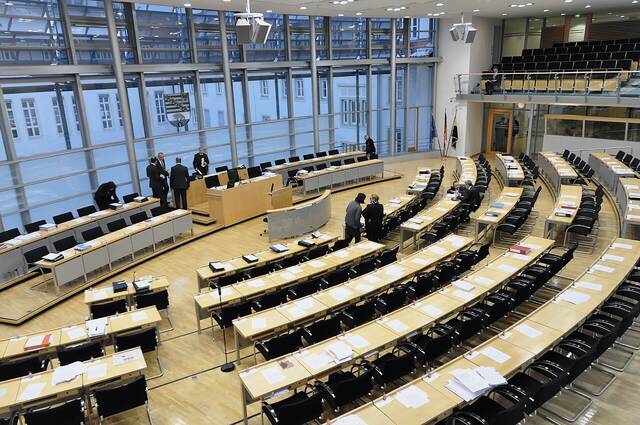
The context
Saxony-Anhalt elects its ninth state parliament on Sunday, September 6, 2026. On paper it is a routine German state election: two votes per elector, 41 constituencies, a 5 percent threshold, seats distributed by the Hare/Niemeyer method, a chamber of at least 83 members. Politically it is being watched well beyond the state’s borders, because polling points to a result with no real precedent at state level.
The incumbent premier is Sven Schulze of the CDU, in office since January 2026. He took over early from Reiner Haseloff, who had run the state since 2011 and announced in August 2025 that he would not stand again as lead candidate. Schulze now leads the CDU into the vote carrying the 2021 result behind him, when his party won 37.1 percent.
The current numbers look different. A pollytix survey from August 12, 2026 places the AfD on 43 percent, the CDU on 23, Die Linke on 13, the SPD on 7, the Greens on 5, the BSW on 4 and the FDP on 2. An INSA poll two days earlier had the AfD on 42. The party’s lead candidate is its parliamentary group chair, Ulrich Siegmund. Polls are snapshots with margins of error, but the order of magnitude has held steady across several institutes.
That pushes the question of who can actually form a government to the centre of the campaign. The CDU, SPD and FDP coalition governing since 2021 would lose its majority on today’s numbers. The AfD, for its part, could only govern with an absolute majority or a partner: the CDU’s national incompatibility resolution rules out coalitions and comparable cooperation with both the AfD and Die Linke, and the other parties in the chamber have ruled out working with the AfD as well. Both arithmetically and politically, the evening of September 6 is open.
Part of the context is how the security services classify the party. The Office for the Protection of the Constitution in Saxony-Anhalt has listed the AfD’s state branch as a confirmed right-wing extremist organisation since November 7, 2023, citing activity directed against the guarantee of human dignity and the democratic principle in Germany’s Basic Law. The party rejects that assessment. Two weeks after Saxony-Anhalt, Mecklenburg-Vorpommern votes on September 20. Sources: Landtag Sachsen-Anhalt, State Statistical Office, pollytix, INSA, wahlrecht.de, Saxony-Anhalt Ministry of the Interior, correctiv.org.