← ALL SIGNALS
datastats / Money
LIVE
Money ▲ Hot Trend score 73 · Published June 4, 2026

Cash stuffing

Cash stuffing is the TikTok-fueled revival of grandma's envelope trick, and it's quietly beating fancy budgeting apps at their own game.
By · datastats
INTEREST INDEX
73 +5% · 24h
Cash stuffing
Kurrency Kween Budgets · by
30-DAY PEAK
80
modeled window
90-DAY AVG
46
stable
TREND SCORE
73
+5% · 24h
TRACKED QUESTIONS
20
from public queries
INTEREST OVER TIME
Momentum trajectory
PEAK 80
30d ago15dtoday

The context

Why cash stuffing is everywhere right now

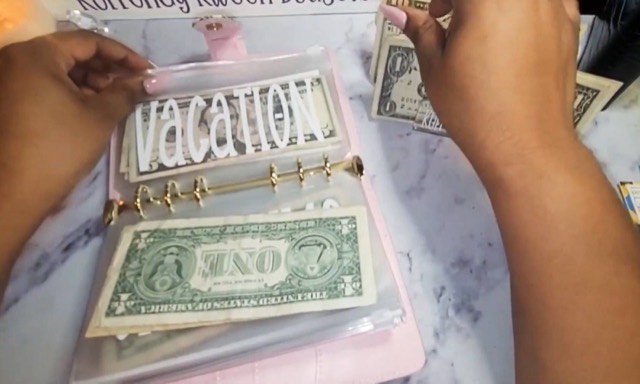
Inflation, credit card debt hitting record highs, and a generation of young adults drowning in “invisible” digital spending created the perfect storm. TikTok’s #cashstuffing community poured in, turning what was once a frugal boomer habit into a full-blown aesthetic, colour-coded envelopes, satisfying “stuffing” videos, and very public accountability.

The method itself is ancient. Financial educators have preached envelope budgeting for decades, Dave Ramsey built an empire on it. But TikTok made it visual, social, and frankly entertaining in a way no spreadsheet ever could. When you watch someone divide £800 into labelled envelopes in 60 seconds, budgeting stops feeling like homework.

The timing is no accident. After years of tap-and-go contactless payments, a lot of people genuinely lost track of what they were spending. Cash stuffing reintroduces friction, that slight pain of handing over a physical note, which research consistently shows reduces impulse purchases.

It’s not a magic bullet. Cash doesn’t earn interest, it can be lost or stolen, and it does nothing for your Netflix subscription or mortgage. But as one tactic inside a broader financial plan, the core idea is sound and the barrier to entry is basically zero: you need cash, envelopes, and a pen.

General information only, not personalised financial advice. No strategy guarantees results; always verify specifics with a qualified financial professional or official source.

People also ask

20 questions · sorted by search share

Sort of, it depends on your specific weak spot. If you chronically overspend on discretionary categories like takeaways, clothing, or nights out, cash stuffing's built-in hard stop is genuinely powerful. But it's one tactic, not a complete financial plan, and it won't help with online bills, savings growth, or debt repayment on its own. Think of it as a training wheel, not a destination.

Not entirely, physical cash is the one financial asset with zero fraud protection. If your envelopes are lost, stolen, or destroyed in a fire, that money is simply gone with no recourse. Unlike a bank account, there is no insurance or recovery mechanism. Keep large cash amounts secured (a home safe at minimum) and never carry all your envelopes at once.

Cash stuffing for monthly expenses means withdrawing your entire discretionary budget in cash at the start of each month and dividing it across labelled envelopes, groceries, fuel, dining out, entertainment, and so on. Fixed recurring bills (rent, utilities, subscriptions) are typically handled separately via bank transfer, since cash isn't practical there. The envelopes cover only the variable spending you can physically control.

No, holding large amounts of cash is not illegal in itself in most countries. However, carrying unusually large sums can attract scrutiny from law enforcement or customs, and in some jurisdictions authorities can seize cash under civil asset forfeiture laws if they suspect it's linked to criminal activity, even without a conviction. The legal threshold for mandatory reporting varies by country, so check the rules where you live. Keeping the bulk of your budget in a bank and only withdrawing what you need for your envelopes sidesteps most of this friction entirely.

A widely cited rule of thumb is enough to cover one to two weeks of essential expenses, think food, fuel, and basic utilities, as an emergency buffer in case of banking outages or natural disasters. Beyond that, keeping large sums at home increases your risk of theft or loss with no protection. This is general background information, not personalised financial advice; a qualified professional can help you determine the right amount for your situation.

Cash stuffing means physically withdrawing your spending money and "stuffing" it into labelled envelopes, one per budget category, groceries, fuel, fun, etc. It's a tangible, hands-on version of a budget: when an envelope is empty, spending in that category stops until the next budgeting period. The term became the dominant label for this practice after it exploded on TikTok.

Yes, for the right person, in the right categories. The psychological mechanism is real: spending physical cash hurts more than tapping a card, which curbs impulse purchases. The hard limit of an empty envelope is also more emotionally concrete than a number in a banking app. It does not work for online or recurring bills, it earns no interest on your money, and it requires consistent discipline to maintain. It works best as part of a broader financial strategy, not as a standalone fix.

In the United States, federal law requires banks and financial institutions to file a Currency Transaction Report (CTR) for any cash transaction, deposit, withdrawal, or exchange, exceeding $10,000 in a single day. This is a reporting requirement under the Bank Secrecy Act, not a prohibition: the transaction itself is perfectly legal. Deliberately breaking large amounts into smaller transactions to avoid the threshold is called "structuring" and is itself illegal, so don't try to game it. Other countries have similar reporting thresholds under their own anti-money-laundering frameworks.

Dave Ramsey has been a vocal, decades-long champion of the envelope cash system, it's a cornerstone of his "Baby Steps" personal finance programme. His position is that using physical cash forces you to feel the spending, which reduces waste and helps people get out of debt faster. He is specifically critical of credit cards, arguing the psychological detachment of card spending leads to chronic overspending for most people. Cash stuffing's TikTok boom is essentially a viral, aestheticised version of what Ramsey has been teaching since the 1990s.

No, a single $2,000 cash deposit is well below the $10,000 federal reporting threshold in the US and is routine for bank tellers. That said, banks do use software to flag patterns of unusual activity regardless of amount, and repeated cash deposits that seem inconsistent with your account history can prompt internal reviews. For someone using cash stuffing and occasionally depositing leftover cash, there is nothing suspicious about it.

Cash stuffing is a budgeting method where you withdraw your spending money in cash and divide it into physical envelopes labelled by category, groceries, fun, transport, and so on. Once an envelope is empty, you stop spending in that category. It's a TikTok-driven revival of the classic envelope budgeting system that personal finance educators have advocated for decades.

Cash stuffing is an envelope-based budgeting system: at the start of each budgeting period (usually monthly or bi-weekly), you withdraw your planned discretionary spending as cash and physically divide it into labelled envelopes, one per spending category. You spend only from the relevant envelope for each purchase. When an envelope hits zero, spending in that category is done for the period, full stop. The tactile nature of handling physical cash is the whole point, it makes spending feel real and limits feel concrete.

The cash stuffing method is a structured approach to the envelope budgeting system: plan your budget categories, calculate how much each gets per period, withdraw the total in cash, and stuff the correct amount into each labelled envelope. Some practitioners use printed trackers, decorative binders, or colour-coded systems to stay organised. The method is deliberately low-tech, its power comes from the physical, tangible constraints of real money, not from any app or algorithm.

Cash stuffing envelopes are the physical containers at the heart of the method, each one is labelled with a spending category (e.g., "Groceries," "Fuel," "Entertainment") and holds the exact cash budgeted for that category each period. They can be plain paper envelopes, decorative ones sold specifically for the purpose, or slots in a budget binder. The envelope is both the tool and the limit: empty envelope, no more spending.

The "cash stuffing business" refers to the cottage industry that has grown up around the trend, creators sell pre-designed budget binders, decorative envelopes, printed trackers, and cash stuffing kits on platforms like Etsy and TikTok Shop. Some influencers monetise their cash stuffing content directly through brand deals and platform revenue. It's a classic example of a personal finance trend spinning off a small-business ecosystem, though the core method itself requires nothing more than plain envelopes and a pen.

Cash stuffing is used to control discretionary spending, the variable, day-to-day expenses where people most commonly overspend, like groceries, dining out, clothing, entertainment, and personal care. It creates hard, category-specific spending limits that are enforced by the simple physical reality of an empty envelope. It is not typically used for fixed bills, savings, or investments, which are better handled through automated bank transfers.

Cash stuffing enforces a budget by turning abstract numbers into physical cash in physical envelopes, it makes spending limits tangible and impossible to accidentally ignore. Psychologically, it creates spending awareness and friction that digital payments eliminate. Practically, it prevents category overspending by making the boundary literal: no cash left in the envelope means the spending stops.

The cash stuffing envelopes business is a small but real niche market: sellers, mostly independent creators and small Etsy shops, produce and sell decorative, pre-labelled, or customisable envelope sets and budget binders designed specifically for the cash stuffing method. The TikTok trend created demand almost overnight, and entrepreneurs were quick to supply it. It's a low-barrier business to start, which is why it proliferated rapidly alongside the trend itself.

Most cash stuffing envelopes are designed to fit standard banknotes comfortably, so they typically run around 4 × 9 inches (roughly A6 or DL size in metric countries), similar to a standard business or pay envelope. Budget binder inserts are often sized to fit an A5 or letter-sized binder. There is no single official standard; the size just needs to be large enough to hold a stack of notes without folding them, and small enough to organise neatly.

INTEREST BY REGION
Where it's trending
United States
100
India
79
Germany
62
United Kingdom
61
France
49
Brazil
45
Canada
37
Japan
31
Sources
manual_validated
wikipedia_export
Public-source data, structured and editorially reviewed.