datastats / SIGNAL
enfresde
LIVE
← ALL SIGNALS
datastats / Tech
LIVE
Tech ▲ Rising Trend score 76 · Published August 20, 2026 · Updated August 20, 2026

MoM-BH*-1, the first black hole star ever found

Astronomers using the James Webb Space Telescope have identified MoM-BH*-1, the first object ever classified as a "black hole star" (a quasi-star): a black hole of roughly 100,000 solar masses buried inside a cloud of gas about as wide as our Solar System. Reported in Nature in August 2026, it lies in the constellation Cetus and is seen as it was some 660 million years after the Big Bang. Sources: Nature, MIT, Sci.News, Interesting Engineering.
By · datastats
INTEREST INDEX
76 +3% · 24h
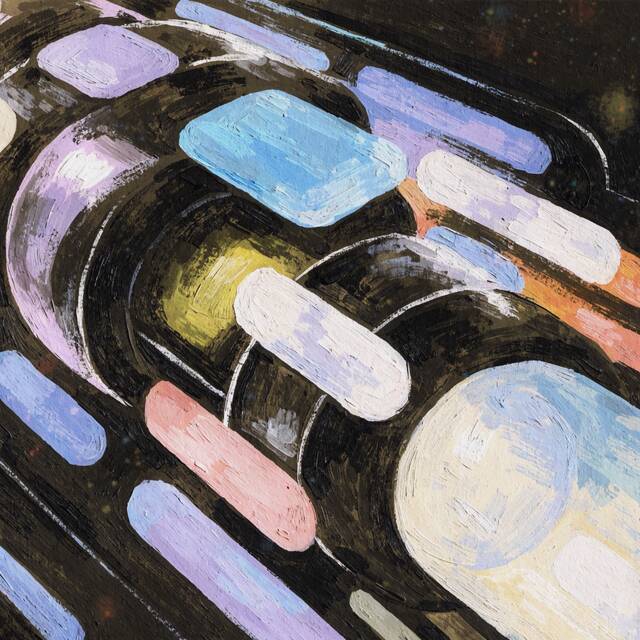
MoM-BH*-1, the first black hole star ever found
AI-generated illustration
30-DAY PEAK
81
modeled window
90-DAY AVG
49
trending up
TREND SCORE
76
+3% · 24h
TRACKED QUESTIONS
10
from public queries
INTEREST OVER TIME
Momentum trajectory
PEAK 81
30d ago15dtoday

The context

Astronomers have finally put a name to one of the strangest things the James Webb Space Telescope keeps finding in the early universe. The object, catalogued as MoM-BH*-1, has been identified as the first “black hole star” ever observed: a supermassive black hole wrapped inside a colossal, dense envelope of gas that glows like a single, impossibly bright star. The result is published in the journal Nature.

The numbers are hard to picture. The black hole at the core holds roughly 100,000 times the mass of the Sun, while the gas structure around it is about as wide as our entire Solar System. Together they shine some 100 billion times brighter than a typical star, enough to outshine the whole galaxy the object belongs to. Rohan Naidu, an astrophysicist at MIT and one of the study’s authors, called it “one in a billion”.

Part of what makes MoM-BH*-1 so significant is where it came from. It was picked up during JWST’s MoM survey, a programme searching for the oldest and most distant galaxies, and it sits in the constellation Cetus. The light we are seeing left it when the universe was only about 660 million years old, a period astronomers are still struggling to explain, because black holes there already look far too massive for the time available.

That is where the discovery pays off. A black hole feeding from inside a huge cloud of gas can grow far faster than one waiting for material to drift in, which offers a plausible route to the giant black holes seen in the very early cosmos. The object was also one of the mysterious “little red dots” that Webb has been spotting since its first deep images, so the finding does double duty: it explains what at least some of those dots are, and it turns the quasi-star, a theoretical creature sketched out decades ago, into something astronomers can actually point a telescope at.

People also ask

10 questions · sorted by search share

MoM-BH*-1 is a distant object spotted by the James Webb Space Telescope and identified as the first ever "black hole star", a hybrid in which a supermassive black hole sits wrapped inside a vast, dense cloud of gas. It was found during the MoM survey, a JWST programme hunting for the oldest and most distant galaxies. The study appears in the journal Nature. Sources: Nature, MIT.

A black hole star, also called a quasi-star, is a theoretical object in which a black hole grows at the heart of an enormous envelope of gas, which glows like a single gigantic star while the black hole feeds on it from the inside. Astronomers had predicted such objects for years, but until now none had ever been observed. MoM-BH*-1 is the first candidate to be formally placed in that category. Sources: Nature, Sci.News.

It turned up in data from the James Webb Space Telescope, collected as part of the MoM survey, which was looking for the earliest galaxies in the universe. The object had already been catalogued as one of JWST's puzzling "little red dots", but a closer analysis of its light revealed the signature of a black hole cocooned in gas rather than an ordinary galaxy. Sources: Nature, Interesting Engineering.

It lies in the direction of the constellation Cetus, the Whale, a large southern-sky constellation. Because it belongs to the very early universe, it is far too faint and far too distant to be seen with amateur equipment: only a space telescope like JWST can pick it out. Sources: Sci.News, Space Daily.

The light JWST collected left the object when the universe was roughly 660 million years old, so we are seeing it as it existed less than 5 percent of the way into cosmic history. Everything astronomers describe about it is a snapshot of that ancient era, not of what may be there today. Sources: Nature, Sci.News.

The black hole at its centre weighs about 100,000 times the mass of the Sun, and the glowing gas structure around it is roughly as large as our entire Solar System. The whole object shines around 100 billion times brighter than a typical star, bright enough to outshine the galaxy that hosts it. Sources: Nature, MIT.

"Little red dots" is the nickname astronomers gave to a population of small, compact, very red sources that JWST kept finding in the early universe. Their nature has been debated since the telescope's first deep images. MoM-BH*-1 was one of them, and identifying it as a black hole star gives the strongest clue yet as to what many of these dots really are. Sources: Nature, Interesting Engineering.

One of the biggest open questions in astrophysics is how supermassive black holes got so massive so quickly after the Big Bang. A black hole growing inside a huge reservoir of gas offers a fast track: it can feed continuously instead of waiting for material to fall in. MoM-BH*-1 turns that idea from theory into an observed object. Sources: Nature, MIT.

The work comes from the team behind JWST's MoM survey and is published in Nature. Rohan Naidu, an astrophysicist at MIT and one of the study's authors, described the object as "one in a billion", underlining how rare such a find is. Sources: Nature, MIT.

No. The object sits billions of light-years away in the early universe and has no physical effect on Earth whatsoever. Its interest is purely scientific: it tells astronomers how black holes and galaxies grew when the cosmos was young. Sources: Nature, Sci.News.

INTEREST BY REGION
Where it's trending
United States
100
India
81
United Kingdom
65
Brazil
55
France
38
Germany
33
Australia
16
Nigeria
14
Sources
Public-source data, structured and editorially reviewed.