The UN Security Council
The UN Security Council is the world's most powerful — and most gridlocked — body for maintaining international peace, built on a veto system that makes every permanent member a potential one-country blockade.
The context
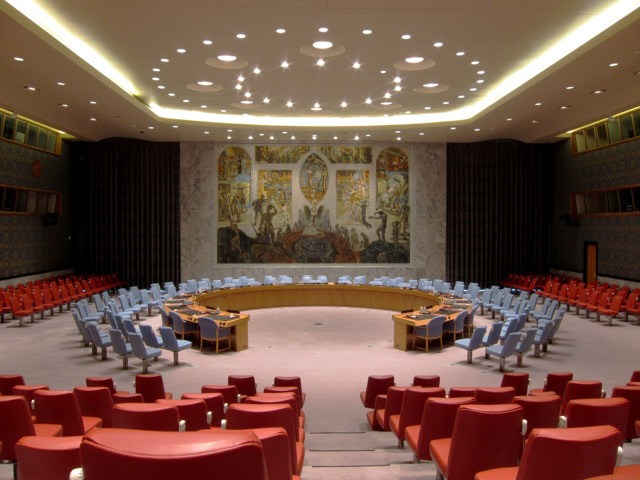
The UN Security Council (UNSC) is back in the headlines as global tensions spike across multiple flashpoints simultaneously, pushing the body’s structural limitations — and the raw power of the veto — into sharp public focus. Searches are surging as people try to understand who actually sits at that famous horseshoe table, who’s in charge right now, and whether the Council can do anything meaningful when its most powerful members disagree.
The Council was created by the UN Charter in 1945, at the end of World War II, with the explicit goal of preventing another global catastrophe. Its 15-member structure — 5 permanent seats plus 10 rotating elected seats — was a deliberate political bargain: the great powers of the era got permanence and a veto in exchange for joining at all.
That veto is the single most consequential design choice in modern multilateral diplomacy. Any one of the five permanent members (the P5) can kill any substantive resolution, no matter how many other nations support it. A abstention or absence, however, does not count as a veto — a nuance that has mattered in some of history’s most critical votes.
The presidency of the Council rotates monthly among its 15 members in alphabetical order, which means it changes hands 12 times a year — a procedural fact that regularly generates fresh search spikes when a new country, or a high-profile figure representing one, takes the chair.
Public interest in the UNSC tends to surge precisely when it appears unable to act: the veto makes the Council a mirror of geopolitical divisions rather than an arbiter above them, and that tension — between its enormous formal authority and its frequent practical paralysis — is what keeps it permanently in the news.
People also ask
- Why is the un security council meeting today?
- Has the US left the UN Security Council?
- What 5 countries are part of the UN Security Council?
- Who is the current President of the UN Security Council?
- Who will be President of the UN Security Council in 2026?
- Which countries have never been on the UN Security Council?
- Why did Melania chair the UN Security Council?
- Can the Security Council be overruled?
- Who un security council?
- Who is un security council president?
- Who are un security council members?
- Who is un security council head?
- Who is the united nations security council?
- Who is the united nations security council president?
- Who are the united nations security council members?
- Who are the un security council permanent members?
- Which countries un security council?
- Who are the un security council's five permanent members?
- What un security council?
- What's the united nations security council?
- Why is the un security council meeting today?#
- The UNSC meets on both scheduled and emergency bases throughout the year, addressing active crises, ceasefire proposals, sanctions reviews, and peacekeeping mandates. Because the verified facts provided don't include a specific dated meeting or agenda item, the precise reason for any meeting happening today cannot be confirmed here — check the official UN website (un.org) for the live programme. What is uncontroversial: when the Council convenes urgently, it is almost always because a member state has requested an emergency session over a breaking security crisis.
- Has the US left the UN Security Council?#
- No. The United States remains a permanent member of the UN Security Council. Permanent seats are enshrined in the UN Charter and cannot be resigned or reassigned without a Charter amendment — a process that itself requires P5 unanimous agreement. The US has withdrawn from or suspended participation in various UN agencies and agreements over the years, but leaving the Security Council is a structurally different and far more consequential act that has not occurred.
- What 5 countries are part of the UN Security Council?#
- The five permanent members — the P5 — are China, France, Russia, the United Kingdom, and the United States. These seats have been held continuously since the Council's founding in 1945 (with China's seat transferring from the Republic of China to the People's Republic of China in 1971). Each P5 member holds an unconditional veto over any substantive resolution.
- Who is the current President of the UN Security Council?#
- The Council presidency rotates monthly among all 15 members in alphabetical order, so the answer changes every month. The verified facts provided do not include the specific current month or presidency, and stating a name here risks being instantly outdated. For the confirmed, up-to-the-minute answer, the UN's official website publishes the presidency calendar in real time at un.org/securitycouncil.
- Who will be President of the UN Security Council in 2026?#
- The monthly presidency follows a publicly scheduled rotation among whichever 15 countries hold seats that year — the five permanent members plus the 10 non-permanent members elected by the General Assembly for that term. The full 2026 schedule will be confirmed once the non-permanent membership for that year is finalised, which happens via General Assembly elections. The UN publishes the rotation calendar well in advance at un.org/securitycouncil.
- Which countries have never been on the UN Security Council?#
- Many of the UN's 193 member states have never held a non-permanent seat — particularly small island nations, some newer states, and countries that have been diplomatically isolated. However, no comprehensive official list of "never served" countries is included in the verified facts here, so citing specific names as confirmed would risk error. What is certain: the 10 non-permanent seats are distributed by regional group, so regions with more countries than seats will always have members waiting their turn — or never getting one.
- Why did Melania chair the UN Security Council?#
- The verified facts provided do not include any confirmed event of Melania Trump chairing a UN Security Council session, and stating the reasons for such an event as fact without sourcing would risk spreading misinformation. If this is a reference to a specific recent occurrence after the knowledge cutoff, treat any details not from a verified source with caution. It is standard practice for heads of state or senior government officials — including first ladies in representational roles — to attend or preside over high-profile UN sessions when their country holds the rotating presidency, but this specific claim cannot be confirmed here.
- Can the Security Council be overruled?#
- Sort of — but not in the way most people imagine. No body in the UN system can formally strike down a Security Council resolution. However, the General Assembly can pass non-binding resolutions that express the collective political will of all 193 member states, creating significant diplomatic pressure even if they carry no enforcement power. The "Uniting for Peace" procedure (Resolution 377, 1950) also allows the General Assembly to convene an emergency special session when the Council is deadlocked by a veto — again, non-binding, but politically potent.
- Who un security council?#
- The UN Security Council is made up of 15 member states: the five permanent members (China, France, Russia, the UK, and the US) and 10 non-permanent members elected by the General Assembly for staggered two-year terms. It has no single leader — the presidency rotates monthly. It is an intergovernmental body, not a person.
- Who is un security council president?#
- The presidency rotates monthly among all 15 current Council members, meaning a new country takes the chair every month. There is no permanent president. The current month's president can always be confirmed at un.org/securitycouncil, as the verified facts here do not include the specific date of this query.
- Who are un security council members?#
- The Council has 15 members at any given time: the five permanent members (China, France, Russia, the United Kingdom, and the United States) plus 10 non-permanent members elected by the General Assembly. Non-permanent members serve two-year terms and are chosen by regional group, ensuring geographic representation. The elected seats change on a rolling basis, so the full current list is best verified at un.org.
- Who is un security council head?#
- There is no permanent head or secretary-general of the Security Council — the role of presiding officer, called the President of the Security Council, rotates monthly among member states. The UN Secretary-General (currently António Guterres, though successors may follow) participates in Council meetings but is a separate position and does not "head" the Council.
- Who is the united nations security council?#
- The United Nations Security Council is the principal organ of the UN tasked with maintaining international peace and security. It is composed of 15 member states — not individuals — and was established by the UN Charter in 1945. Think of it less as a "who" and more as the world's most powerful diplomatic forum, with the unique authority to authorise sanctions and the use of force.
- Who is the united nations security council president?#
- The presidency is a rotating monthly role held by whichever of the 15 member states is chairing the Council that month — it cycles through all members alphabetically. There is no fixed individual who permanently holds this title. For the current month's president, un.org/securitycouncil is the authoritative source.
- Who are the united nations security council members?#
- The five permanent members are China, France, Russia, the United Kingdom, and the United States. The remaining 10 seats are held by elected non-permanent members serving two-year terms, drawn from Africa, Asia-Pacific, Latin America and the Caribbean, Eastern Europe, and Western Europe and Other Groups. The current elected members change regularly — the UN's official site carries the live roster.
- Who are the un security council permanent members?#
- The five permanent members — universally called the P5 — are China, France, Russia, the United Kingdom, and the United States. These five were the principal Allied victors of World War II and have held their seats since the Council's founding in 1945. Each holds an unconditional veto: a single "no" vote from any one of them kills any substantive resolution, regardless of how the other 14 members vote.
- Which countries un security council?#
- The five permanent members are China, France, Russia, the United Kingdom, and the United States. The other 10 seats rotate among UN member states elected by the General Assembly for two-year terms, with seats allocated by world region to ensure broad geographic representation. The full current membership list — permanent and elected — is maintained at un.org/securitycouncil.
- Who are the un security council's five permanent members?#
- China, France, Russia, the United Kingdom, and the United States — the P5. All five were founding members of the UN in 1945 and all five hold the veto. No new permanent member has ever been added, despite decades of reform proposals from countries like India, Germany, Japan, and Brazil arguing the current composition no longer reflects the world's power structure.
- What un security council?#
- The UN Security Council is the executive decision-making body of the United Nations, responsible for international peace and security. Unlike the General Assembly — where every country gets a vote but resolutions are non-binding — the Security Council can issue legally binding decisions, authorise military force, and impose sanctions. Its authority is vast on paper; in practice, the P5 veto means it can be paralysed when major powers disagree.
- What's the united nations security council?#
- It is the most powerful body within the United Nations system — a 15-member council with the legal authority to authorise sanctions, peacekeeping missions, and military action under international law. Established by the UN Charter in 1945, it was designed so that the great powers of the post-WWII era would have enough control to stay engaged, while still operating within a multilateral framework. The trade-off — giving five countries a permanent veto — remains the defining and most contested feature of the entire global security architecture.