The International Criminal Court (ICC)
The ICC is the world's only permanent court for humanity's worst crimes — but its power is only as strong as the states willing to back it.
The context
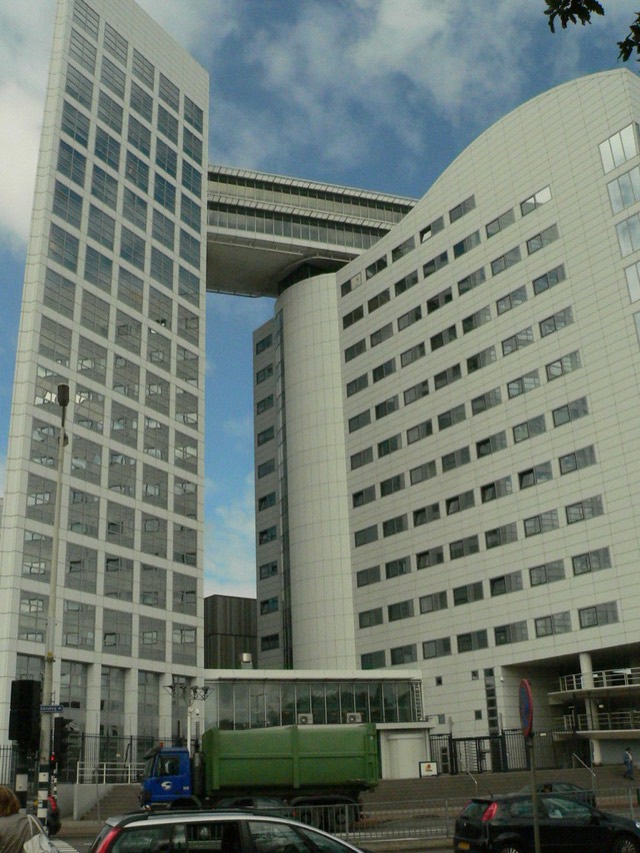
The International Criminal Court (ICC) is a permanent international tribunal seated in The Hague, Netherlands. Created by the Rome Statute — adopted in 1998, in force since 2002 — it was a landmark moment: for the first time, individual people, not just states, could be held criminally accountable for the gravest offences under international law.
The Court’s jurisdiction covers four core crimes: genocide, crimes against humanity, war crimes, and the crime of aggression. It steps in only when national courts are unwilling or unable to prosecute — a design principle known as complementarity, which keeps the ICC as a court of last resort, not a global police force.
Around 125 states are parties to the Rome Statute, making it one of the broadest multilateral criminal justice frameworks ever built. Yet some of the world’s most powerful nations — including the United States, China, India, and Russia — are not members and do not accept the Court’s jurisdiction, which is a permanent tension at the heart of the institution.
The ICC trends repeatedly in the news because it sits at the intersection of law, geopolitics, and some of the world’s most active conflicts. When the Court issues arrest warrants or opens investigations touching on powerful states or their allies, it triggers sharp international debate about sovereignty, accountability, and whether international justice can ever be truly universal.
People also ask
- Why is the US not in the ICC?
- What are the 4 crimes of the ICC?
- Which countries are in the ICC?
- Does the ICC have any real power?
- Does the ICC have a death penalty?
- Is the ICC higher than the Supreme Court?
- Can a US citizen be tried by the ICC?
- What happens if a country doesn't cooperate with the ICC?
- Which country is not an ICC member?
- Can the ICC make arrests?
- Which countries refuse to join the ICC?
- Does the ICC have jurisdiction over US citizens?
- Which countries left the ICC?
- Who are the 12 full members of the ICC?
- Who is the current president of the ICC?
- How many people has the ICC convicted?
- Has the ICC ever charged the US?
- Has the ICC done anything?
- How many criminals has the ICC convicted?
- Who runs the ICC?
- Why is the US not in the ICC?#
- The US signed the Rome Statute under President Clinton in 2000 but never ratified it, and President Bush formally unsigned it in 2002. Washington's core objection is sovereignty: US officials and military personnel could theoretically be prosecuted by a court outside American jurisdiction. Congress reinforced this position by passing the American Servicemembers' Protection Act, which restricts US cooperation with the ICC. The US position is that its own robust domestic justice system makes ICC oversight unnecessary.
- What are the 4 crimes of the ICC?#
- The ICC has jurisdiction over exactly four crimes: **genocide** (acts intended to destroy a national, ethnic, racial, or religious group), **crimes against humanity** (widespread or systematic attacks against civilian populations), **war crimes** (serious violations of the laws of armed conflict), and the **crime of aggression** (the use of armed force by one state against another in violation of the UN Charter). These are considered the most serious crimes under international law — the floor below which no civilization should fall.
- Which countries are in the ICC?#
- Approximately 125 states are parties to the Rome Statute, spanning every continent. African, Latin American, and European states make up the bulk of membership. Notable members include most EU countries, the UK, Canada, Australia, Japan, and the majority of sub-Saharan African nations. For the current and complete official list, the ICC's own website is the authoritative source, as membership can change.
- Does the ICC have any real power?#
- Yes — but it is structurally limited. The ICC can issue arrest warrants, conduct trials, and hand down sentences of up to 30 years (or life imprisonment in extreme cases). What it cannot do is enforce those powers itself: it has no police force and depends entirely on member states to arrest suspects and cooperate with investigations. When powerful non-member states or uncooperative members are involved, the Court's reach shrinks dramatically. Real power, yes; universal power, no.
- Does the ICC have a death penalty?#
- No. The ICC's maximum sentence is life imprisonment, reserved for cases of extreme gravity. More commonly, sentences run up to 30 years. The exclusion of the death penalty was a deliberate choice during the Rome Statute negotiations, reflecting the abolitionist consensus among the treaty's founding states.
- Is the ICC higher than the Supreme Court?#
- No — and the question itself contains a category error. The ICC and a national Supreme Court operate in entirely separate legal systems. The ICC is not a court of appeal over any domestic court; it cannot overturn national rulings. It only steps in under the complementarity principle — when a national justice system fails to act. For a US citizen, the US Supreme Court remains the apex of domestic law; the ICC has no authority over it.
- Can a US citizen be tried by the ICC?#
- In theory, yes — but only in very specific and contested circumstances. The ICC can potentially claim jurisdiction if a US citizen commits a covered crime on the territory of an ICC member state, or if the UN Security Council refers a situation. The US government firmly contests this interpretation and has taken legislative steps to shield its nationals. In practice, no US citizen has been tried by the ICC, and any attempt to do so would trigger a major diplomatic confrontation.
- What happens if a country doesn't cooperate with the ICC?#
- The Court can formally find a state in non-compliance and refer the matter to the Assembly of States Parties — or, in cases referred by the UN Security Council, to the Security Council itself. Beyond that, the ICC has no enforcement mechanism of its own. Non-cooperation means suspects remain free, evidence goes ungathered, and sentences go unenforced. It is one of the Court's most fundamental structural weaknesses and a recurring source of criticism.
- Which country is not an ICC member?#
- Several major powers are not ICC members, most notably the United States, China, India, and Russia. Beyond those four, a significant number of states across Asia and the Middle East have not joined. The US, Russia, and China are permanent members of the UN Security Council — meaning the three most powerful veto-holders in the world sit outside the Court's reach.
- Can the ICC make arrests?#
- The ICC can issue arrest warrants, but it cannot execute them directly — it has no police force. Arrests depend entirely on member states choosing to detain and surrender a suspect when that person is on their territory. Non-member states have no legal obligation to cooperate at all. This gap between the power to indict and the power to arrest is the single biggest operational constraint the Court faces.
- Which countries refuse to join the ICC?#
- The most prominent holdouts are the United States, China, India, Russia, and a number of countries across Southeast Asia and the Middle East. Their reasons vary: concerns about national sovereignty, protection of military personnel, geopolitical interests, or ideological objections to the Court's legitimacy. Some states signed the Rome Statute but never ratified it; others never engaged with the process at all.
- Does the ICC have jurisdiction over US citizens?#
- This is genuinely disputed. The ICC asserts it can have jurisdiction over nationals of non-member states in specific circumstances — chiefly when an alleged crime occurs on the territory of a member state. The US government rejects this reading as an overreach. The legal debate is real, but the practical reality is that the US has actively legislated against ICC jurisdiction over its citizens, making prosecution a political near-impossibility under current conditions.
- Which countries left the ICC?#
- Burundi completed a withdrawal from the ICC in 2017, becoming the first state to formally leave. The Philippines withdrew in 2019. South Africa, Gambia, and Russia also initiated withdrawal processes at various points but did not complete or reversed them. The withdrawals — particularly the African ones — were accompanied by accusations that the Court disproportionately targeted African leaders, a charge the ICC disputes.
- Who are the 12 full members of the ICC?#
- The ICC does not have a category of "12 full members" — approximately 125 states are parties to the Rome Statute, all with equal standing. The number 12 may be a confusion with other international bodies or with the Court's bench of 18 judges. For the complete list of member states, the ICC's official website is the only reliable source.
- Who is the current president of the ICC?#
- The ICC is governed by 18 judges who elect a President from among themselves to a three-year term. As of the most recent widely reported information, Judge Tomoko Akane of Japan holds the presidency, elected in 2021. However, judicial presidencies rotate and this may have changed — for the confirmed current holder, the ICC's official site is the authoritative source.
- How many people has the ICC convicted?#
- The ICC has secured a relatively small number of convictions since its founding in 2002 — a figure that remains in the low double digits across more than two decades of operation. Critics cite this as evidence of inefficiency; defenders argue that building complex international criminal cases from scratch, against defendants who are often heads of state or militia leaders in active conflict zones, is extraordinarily difficult. The exact current tally is best verified directly with the ICC, as cases are ongoing.
- Has the ICC ever charged the US?#
- No US citizen has ever been formally charged by the ICC. The Court has opened preliminary examinations touching on situations involving US military personnel — most notably in Afghanistan — but no charges against Americans have been brought. The US responded to the Afghanistan examination with travel bans and sanctions against ICC officials, a level of pressure that illustrates how politically charged even preliminary scrutiny of the US can become.
- Has the ICC done anything?#
- Yes, demonstrably. The ICC has completed multiple trials, issued dozens of arrest warrants, and secured convictions including against warlords and militia commanders for war crimes and crimes against humanity. It has also acquitted defendants, demonstrating procedural independence. Its detractors argue the output is thin relative to the scale of global atrocities and the Court's budget; its defenders argue it has established a credible deterrent and a body of international criminal law that did not exist before 2002.
- How many criminals has the ICC convicted?#
- The ICC has convicted a number of individuals in the low double digits since it began operations — a modest tally for over 20 years of work, though each case involves years of complex investigation and trial. Convictions have included militia leaders and commanders found guilty of war crimes and crimes against humanity, primarily in African conflicts. The precise current number is subject to ongoing proceedings and is best confirmed via the ICC's official case database.
- Who runs the ICC?#
- The ICC is run by three main organs: the **Judiciary** (18 independent judges elected by member states), the **Office of the Prosecutor** (an independent body that investigates and prosecutes cases), and the **Registry** (which handles administration and court management). Overall policy direction sits with the **Assembly of States Parties**, where all member states have a vote. No single country controls the Court — its independence from member-state governments is a founding principle, though one that is tested regularly in practice.