The World Health Organization (WHO)
The WHO is back at the center of global politics — and the debate over whether the world's most powerful nation belongs in it has never been louder.
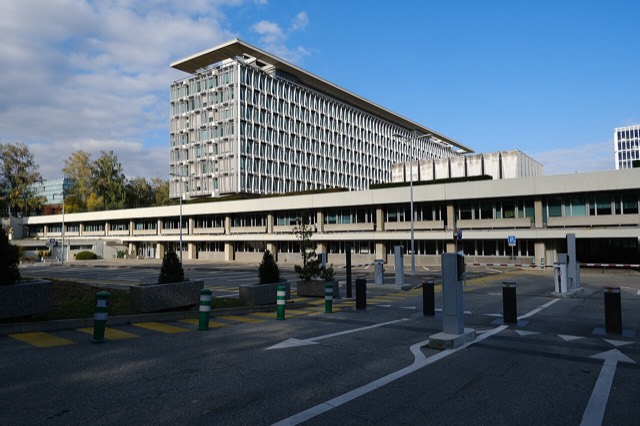
The context
The World Health Organization is the United Nations’ specialized agency for international public health, founded on April 7, 1948 — a date now commemorated annually as World Health Day. With 194 member states, six regional offices, and a network of country offices, it is the closest thing the world has to a global health authority, setting standards, coordinating emergency responses, and publishing the data that governments and researchers rely on.
Its funding model is a frequent flashpoint: only a minority of its budget comes from mandatory membership dues (“assessed contributions”); the majority flows from voluntary contributions made by member states and private donors. That dependency on discretionary funding gives large contributors significant informal leverage — and gives critics ammunition when they argue the organization’s priorities can be influenced by who is writing the biggest checks.
The WHO has no enforcement power. It can issue guidance, declare public health emergencies, and pressure governments diplomatically — but it cannot compel a sovereign state to act. That structural limitation is both its greatest weakness and, for sovereignty-minded governments, a key argument for staying inside it rather than ceding any ground to it.
The organization periodically surges back into public debate when a major health crisis hits, or when a powerful member state signals it may reduce its engagement or withdraw entirely. The United States has historically been the WHO’s largest single financial contributor, which means any shift in Washington’s posture — regardless of its direction — sends immediate shockwaves through the agency’s budget and global health programs.
The current wave of search interest reflects exactly that tension: questions about U.S. membership status, the financial consequences of withdrawal, and the WHO’s legitimacy are all spiking together, a sign that the organization’s place in American foreign policy is once again a live and contested question.
People also ask
- When was the world health organization who founded?
- How much does the US owe the who?
- Is the world Health Organization a good or bad thing?
- Why do we need the world Health Organization?
- What is the world health organization who and why is it important?
- What is the main role of the world Health Organization (WHO)?
- Why did the US leave the Who?
- Which countries are not in WHO?
- WHO is the world Health Organization?
- What does taking us out of the world Health Organization do?
- What are some criticisms of the WHO?
- What is Bill Gates' role in the world Health Organization?
- How many countries are under the who?
- What are the 4 functions of the WHO?
- What is the Trump order to withdraw from WHO?
- Is the USA still a member of the World Health Organization?
- What does "withdrawing from who" mean?
- Is the US no longer a member of the Who?
- What happens if the US leaves WHO?
- Is the USA not a member of WHO?
- When was the world health organization who founded?#
- The WHO was founded on April 7, 1948, the date its constitution entered into force — now celebrated every year as World Health Day. It was established as a specialized agency of the newly formed United Nations, built on the ruins of earlier international health bodies that predated World War II.
- How much does the US owe the who?#
- The precise figure of any outstanding U.S. arrears to the WHO is not confirmed in the verified facts available here, so stating a specific number would risk fabrication. What is well-established is that the U.S. has historically been the WHO's single largest contributor, and any gap between assessed dues and actual payments becomes a point of diplomatic and budgetary contention whenever withdrawal is debated. For verified current figures, the WHO's published financial statements are the authoritative source.
- Is the world Health Organization a good or bad thing?#
- Sort of — it depends entirely on which track record you're weighing. Supporters point to concrete wins: the eradication of smallpox, the near-elimination of polio, and the global health standards that underpin everything from vaccine safety to food labeling. Critics, including some governments, argue its dependence on voluntary funding compromises its independence, and that its response to certain outbreaks has been too slow or too deferential to powerful member states. The WHO is a real institution with real achievements and real structural flaws — not a villain, not a savior.
- Why do we need the world Health Organization?#
- Infectious diseases do not respect borders, and no single country — not even the wealthiest — has the surveillance network, the relationships, or the data infrastructure to track global health threats alone. The WHO exists to fill that coordination gap: setting common standards, sounding early alarms on outbreaks, and channeling technical support to lower-income countries that would otherwise be blind spots in global health security. A world without it would not be a safer world; it would just be one where the coordination happens more slowly, more chaotically, and with fewer countries at the table.
- What is the world health organization who and why is it important?#
- The WHO is the United Nations' specialized agency for international public health, created in 1948 and now counting 194 member states. Its importance lies in three hard-to-replace functions: it is the world's primary norm-setter for health standards, the lead coordinator when pandemics or health emergencies cross borders, and the most comprehensive publisher of global health data. Without it, the international community would lack a common language and a shared operational framework for responding to health crises.
- What is the main role of the world Health Organization (WHO)?#
- The WHO's core mandate covers four areas: setting international health norms and guidelines, coordinating responses to epidemics and health emergencies, collecting and publishing global health data, and providing technical support to member countries. It acts as the rule-maker, the early-warning system, the scorekeeper, and the technical advisor for global public health — all in one institution. What it is not is an enforcement body; it can recommend, but it cannot compel.
- Why did the US leave the Who?#
- The U.S. has initiated withdrawal proceedings more than once, most prominently under President Trump — first in 2020, reversed by President Biden in 2021, and raised again in Trump's second term. The stated reasons have centered on allegations that the WHO mishandled the early stages of major outbreaks, concerns about undue influence by certain member states, and objections to the scale of U.S. financial contributions relative to perceived influence. These are the positions of those advocating withdrawal; the WHO and its defenders dispute both the factual basis and the strategic logic of leaving.
- Which countries are not in WHO?#
- With 194 member states, the WHO's membership covers the overwhelming majority of the world's recognized nations. A small number of territories and states with contested international recognition are not full members. The specific current list of non-members is not confirmed in the verified facts here, and given how infrequently this changes, the WHO's own official membership roster is the only reliable real-time source.
- WHO is the world Health Organization?#
- The WHO is the specialized United Nations agency responsible for international public health, headquartered in Geneva, Switzerland. It was established in 1948, operates through six regional bureaus and numerous country offices, and is governed by its 194 member states through a World Health Assembly that meets annually. Its director-general is its public face, but the agency's actual power is collective — and constrained.
- What does taking us out of the world Health Organization do?#
- U.S. withdrawal would immediately strip the WHO of its largest single source of funding, creating a significant budget shortfall that would hit disease surveillance programs, emergency response capacity, and technical assistance to lower-income countries hardest. For the U.S., it would mean losing a seat at the table where international health standards are set — standards that affect everything from drug approvals to pandemic preparedness protocols. Proponents of withdrawal argue it creates leverage for reform; opponents argue it simply cedes influence to other large member states while the problems remain.
- What are some criticisms of the WHO?#
- The most documented structural criticism is funding dependency: because voluntary contributions dwarf assessed dues, large donors can effectively steer priorities, which raises legitimate questions about institutional independence. Critics across the political spectrum have also questioned the speed and candor of its communications during major outbreaks, arguing the organization has at times been too cautious in challenging powerful member states. A third persistent critique is bureaucratic slowness — the WHO's consensus-driven governance can make rapid, decisive action difficult precisely when speed matters most.
- What is Bill Gates' role in the world Health Organization?#
- Bill Gates has no official role or position within the WHO. The Bill & Melinda Gates Foundation is, however, one of the largest non-state voluntary contributors to the WHO's budget, which is a matter of public record in the organization's financial reports. That financial relationship has fueled speculation — widely circulated but not substantiated by verified evidence — about undue influence over WHO priorities; the WHO and the Foundation both describe the relationship as a standard donor partnership subject to governance oversight.
- How many countries are under the who?#
- The WHO has 194 member states, making it one of the most broadly representative international bodies in the world. It operates not through authority over those countries — it cannot issue binding orders — but through technical cooperation, norm-setting, and shared data. Membership means a seat at the table and access to the agency's resources, not subordination to it.
- What are the 4 functions of the WHO?#
- The WHO's mandate broadly breaks into four functions: setting health norms and standards (guidelines on everything from drug safety to disease classification), leading and coordinating international responses to health emergencies and epidemics, collecting and disseminating global health data and research, and providing direct technical support and capacity-building to member countries. These four roles are complementary — the data informs the standards, the standards guide the emergency response, and the technical support helps countries implement all of it.
- What is the Trump order to withdraw from WHO?#
- In his second term, President Trump signed an executive order directing the United States to initiate withdrawal from the WHO — mirroring a move he made in 2020 during his first term, which was rescinded by President Biden in January 2021. Under the WHO's constitution, formal withdrawal requires one year's notice and that a country be current on its financial obligations. The specific details, timing, and current legal status of the most recent order are not fully confirmed in the verified facts available here, and should be checked against current reporting.
- Is the USA still a member of the World Health Organization?#
- The current membership status of the United States is not definitively confirmed in the verified facts available here, precisely because the situation is actively evolving. What is established is that withdrawal is not instantaneous — the WHO constitution requires a formal notice period of one year. Whether that process has been completed, paused, or reversed as of now should be verified against the latest news.
- What does "withdrawing from who" mean?#
- Withdrawing from the WHO means a country formally notifies the organization of its intent to leave, triggering a mandatory one-year notice period under the WHO's constitution — during which the country must also be current on its financial contributions. After that year, the country loses its membership, its vote in the World Health Assembly, and its formal access to WHO technical programs. It does not mean the country stops being affected by global health events; it just means it is no longer at the table shaping how the world responds to them.
- Is the US no longer a member of the Who?#
- This cannot be confirmed with certainty from the verified facts available here, as the situation is actively in flux. The WHO's constitutional rules mean withdrawal takes at least a year from formal notification, so the answer hinges on exactly when any notice was filed and whether it has been acted upon or reversed. Check current, reliable news sources for the definitive real-time status.
- What happens if the US leaves WHO?#
- The immediate consequence would be a major funding gap — the U.S. has been the WHO's largest single contributor, and losing that revenue would force cuts across surveillance, emergency response, and country-support programs. Strategically, the U.S. would forfeit its vote in setting global health standards that other countries, and the international pharmaceutical and food industries, are bound by. Other large member states would gain proportionally more influence in filling the vacuum — which is either a feature or a bug depending on your geopolitical perspective.
- Is the USA not a member of WHO?#
- This cannot be stated as confirmed fact right now — the U.S.'s membership status is the subject of active political and legal process, and the verified facts here do not include a confirmed final outcome. What is clear is that any withdrawal is not immediate under WHO rules; a one-year notice period is required. The safest answer: check the latest reporting, because this is a genuinely live question.