Marc Bloch enters the Panthéon — June 23, 2026
On June 23, 2026, French historian and Resistance martyr Marc Bloch (1886–1944) was formally entered into the Panthéon in Paris, alongside his wife Simonne. The solemn national ceremony, presided over by the President of the Republic at 21h, honours 'the work, teaching and courage' of one of the most influential historians of the 20th century — co-founder of the Annales school of history and a man who gave his life fighting Nazi occupation. Bloch was arrested by the Gestapo in March 1944 and shot on June 16, 1944, aged 57.
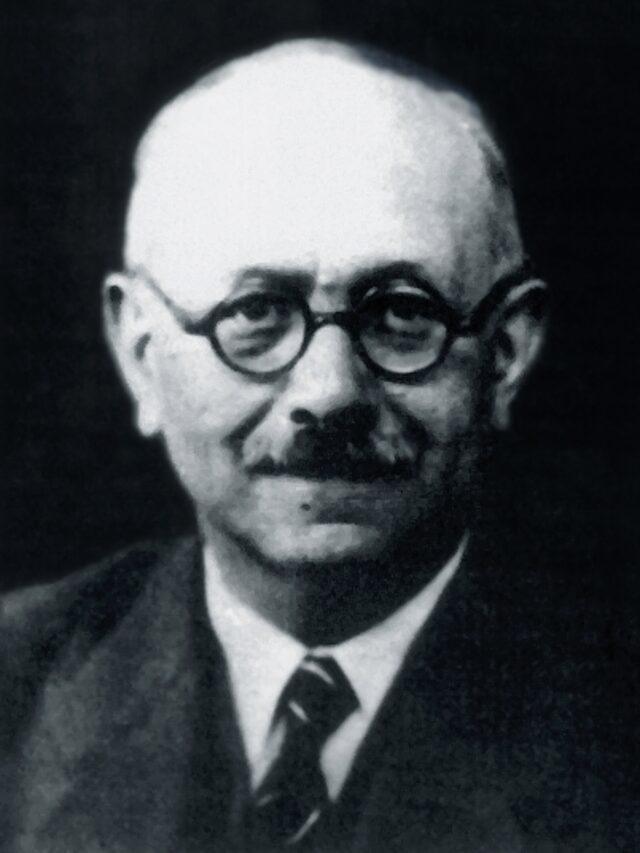
The context
On the evening of June 23, 2026, France held one of its most solemn ceremonies of national recognition: the panthéonisation of Marc Bloch and his wife Simonne. The ceremony, presided over by the President of the Republic at the Panthéon on the Left Bank of Paris, brought together the political class, historians, and members of the public in tribute to a man who was both a towering intellectual figure and a martyr of the French Resistance.
Marc Bloch (1886–1944) spent his life in two worlds he refused to separate. As a scholar, he co-founded the Annales school of history with Lucien Febvre in 1929, launching a revolution in historical thought that shifted focus from political events and individual actors to long-term social forces, economic structures, and collective mentalities. ‘Feudal Society’ (1939–1940) and the posthumous ‘The Historian’s Craft’ remain foundational texts in the discipline. As a citizen, he fought in both World Wars, was captured, and joined the French Resistance under the Occupation. He was arrested by the Gestapo in March 1944, imprisoned and tortured, and shot alongside 27 other Resistance members near Lyon on June 16, 1944 — seven weeks before Paris was liberated.
His entry to the Panthéon, 82 years after his execution, is an act of late but deeply felt national gratitude. Simonne Bloch, his wife and a fellow member of the Resistance network, enters alongside him — a recognition that the moral courage of the Occupation era was rarely a solitary act. The date of the ceremony — June 23, 2026 — carries its own weight: exactly eight days after the 82nd anniversary of Bloch’s death, and in a year when France and Europe continue to grapple with questions of memory, democracy, and resistance that Bloch himself addressed in his wartime writings.
People also ask
- Who is Marc Bloch?
- How did Marc Bloch die?
- What is the Annales school of history?
- Why is Marc Bloch entering the Panthéon in 2026?
- What is the Panthéon in Paris?
- Who are the other recent Panthéon entries?
- Where was the ceremony held and when?
- What did Marc Bloch write that was most important?
- Is Marc Bloch buried in the Panthéon?
- Who is Marc Bloch?#
- Marc Bloch (1886–1944) was one of the most important French historians of the 20th century. He co-founded the Annales school of historical thought with Lucien Febvre — a movement that revolutionised how historians understand societies by focusing on long-term social and economic patterns rather than political events. His major works include 'Feudal Society' (1939–1940) and the posthumous 'The Historian's Craft'. He was also a decorated soldier in both World Wars and an active member of the French Resistance.
- How did Marc Bloch die?#
- Marc Bloch was arrested by the Gestapo in March 1944 for his Resistance activities. After months of imprisonment and torture, he was shot along with 27 other Resistance members near Lyon on June 16, 1944 — one week after the Allied landings at Normandy. According to accounts from survivors, Bloch helped calm a younger prisoner before the execution with the words: 'Vive la France.' He was 57 years old.
- What is the Annales school of history?#
- The Annales school — named after the journal 'Annales d'histoire économique et sociale', which Bloch co-founded in 1929 with Lucien Febvre — transformed Western historical scholarship. Instead of focusing on political history and great men, it championed the study of geography, economics, collective mentalities, and long-term social change. It remains one of the most influential schools of thought in the humanities worldwide.
- Why is Marc Bloch entering the Panthéon in 2026?#
- The decision was made by the French President of the Republic to honour Bloch's dual legacy: his extraordinary contribution to historical scholarship and his moral courage as a Resistance martyr. The panthéonisation took place on June 23, 2026, alongside his wife Simonne — recognising that Resistance work was often a family commitment.
- What is the Panthéon in Paris?#
- The Panthéon is a neoclassical monument on the Left Bank of Paris, originally built as a church and repurposed during the French Revolution as a mausoleum for distinguished French citizens. Figures interred there include Voltaire, Rousseau, Victor Hugo, Marie Curie, Simone Veil, and Jean Moulin. Entry to the Panthéon is one of the highest civic honours France can bestow.
- Who are the other recent Panthéon entries?#
- Recent notable panthéonisations include Simone Veil (2018), Maurice Genevoix (2020), and Joséphine Baker (2021 — the first Black woman to receive the honour). The Panthéon currently holds approximately 80 individuals. Marc Bloch joins this select group as the latest representative of French intellectual and Resistance heritage.
- Where was the ceremony held and when?#
- The solemn national ceremony took place on June 23, 2026, beginning at 21h (9pm), at the Panthéon on the rue Soufflot in Paris's 5th arrondissement. It was presided over by the President of the Republic. Members of the public could attend from the top of rue Soufflot and the parvis of the Panthéon, subject to security checks.
- What did Marc Bloch write that was most important?#
- Bloch's most celebrated works are 'La Société féodale' (Feudal Society, 1939–40), a landmark study of medieval European social organisation, and 'Apologie pour l'histoire ou Métier d'historien' (The Historian's Craft), written in the final years of his life and published posthumously. His essay 'L'Étrange Défaite' (Strange Defeat), written after France's collapse in 1940, is a searing analysis of French society's failings that remains widely read today.
- Is Marc Bloch buried in the Panthéon?#
- The panthéonisation is a formal national ceremony in which the remains and memory of Marc and Simonne Bloch are symbolically transferred into the Panthéon as a mark of national recognition. The ceremony's primary significance is as a public statement of France's gratitude for their sacrifice and contribution to scholarship and freedom.