Women's Basketball World Cup 2026: USA Beat France for Fifth Straight Title
The United States won the 2026 FIBA Women's Basketball World Cup in Berlin, beating France 97-79 in the September 13 final for a fifth consecutive title and a 12th overall. Breanna Stewart scored 22 points and became the first two-time MVP of the tournament. Spain took bronze, beating hosts Germany 81-58. The expanded 16-team edition ran September 4 to 13 across the Berlin Arena and the Max-Schmeling-Halle. Sources: FIBA, NBA, ESPN, Olympics.com.
The context
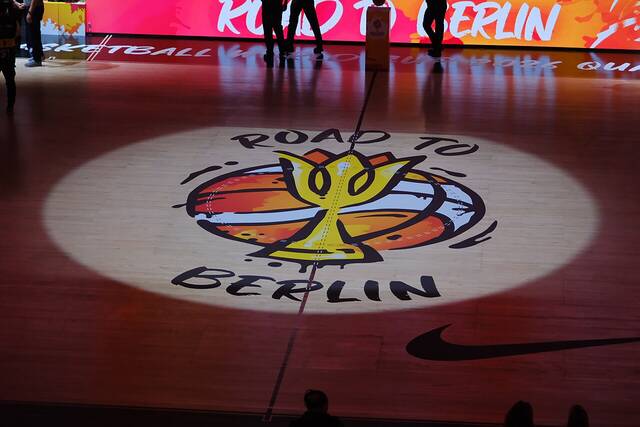
The FIBA Women’s Basketball World Cup returns to Germany for the first time since 1998, and it arrives bigger than it has ever been. From September 4 to 13, 2026, sixteen nations play in Berlin, four more than at the last edition in Sydney, across two arenas: the roughly 14,000-seat Berlin Arena, which also stages the whole knockout round, and the Max-Schmeling-Halle, which takes two of the four groups in the first week.
The draw produced one genuinely difficult group and three that are readable. Group D puts the United States, the four-time defending champions, with China, who lost the 2022 final 83-61, alongside Italy and the Czech Republic. Group A hands hosts Germany a workable path against Japan, Spain and Mali. Group B is France’s to control, with Hungary, South Korea and Nigeria. Group C pairs Australia and Belgium with Puerto Rico and Turkey.
The format is simple and unforgiving: a single round robin in each group, the top two through, then straight knockout. Quarter-finals on September 10, semi-finals on September 12, bronze and gold on September 13. Half the field goes home after five days.
The competitive question is the same one this tournament has asked for over a decade: is anyone ready to beat the Americans. The United States have won four World Cups in a row and have not lost a game that mattered at this event since 2006. Australia have been the most persistent challenger, China have the size and the discipline to make a second consecutive final, and the European group of France, Spain and Belgium is deep enough that at least one of them should reach the last four. For Germany, hosting is the point: a quarter-final in a full Berlin Arena would count as a successful tournament. Sources: FIBA, visitBerlin, Eventim, berlin.de, Wikipedia.
How it finished
The United States won a fifth straight World Cup, their twelfth in all, beating France 97-79 in the Berlin final on September 13. It was not comfortable for long stretches: France led by as much as 14 points before an American second half settled it. Breanna Stewart scored 22 points with 9 rebounds and became the first two-time MVP in the history of the tournament, with Jackie Young adding 18 points on 4 of 7 shooting from three.
Spain took bronze, beating the hosts 81-58 with 22 points from the 20-year-old Iyana Martin, a third third-place finish for Spain after 2010 and 2018. The semi-finals on September 12 had gone United States 76-66 Spain and France 86-64 Germany, the latter ending the host run in front of a full Berlin Arena.
Germany finished fourth, which reframes the preview above: the target was a quarter-final, and they made the last four. The All-Star Five was Stewart, Jackie Young, Gabby Williams of France, Iyana Martin of Spain and Leonie Fiebich of Germany. The final itself was a rematch of the Paris 2024 Olympic gold medal game, and it ended the same way. Sources: FIBA, NBA, ESPN, Olympics.com, MPR News.