← PEOPLE
datastats / News
LIVE
News

Michael Osterholm

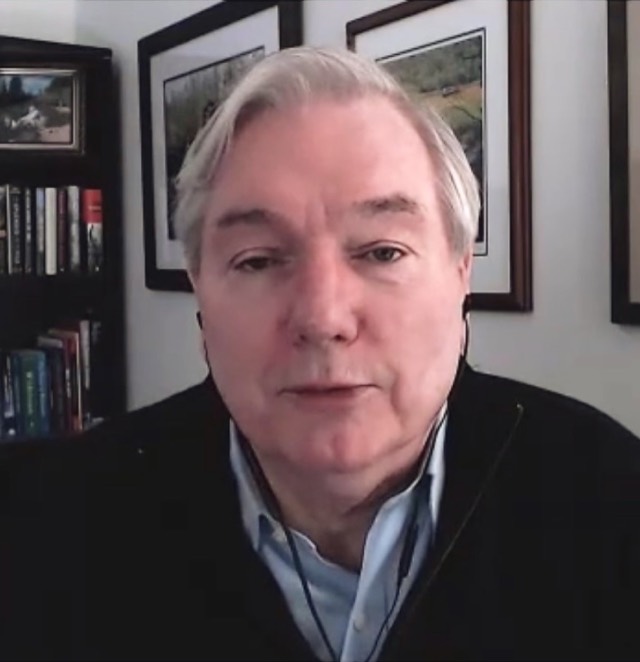
Michael Osterholm is one of America's most blunt and credentialed infectious-disease experts, the kind of scientist who tells you exactly how bad the outbreak is before the headlines catch up.
By · datastats · Updated June 15, 2026
Michael Osterholm

Who Is Michael Osterholm?

Michael T. Osterholm is an epidemiologist and Director of the Center for Infectious Disease Research and Policy (CIDRAP) at the University of Minnesota, a position he has held since founding the center in 2001. He spent nearly two decades as Minnesota’s State Epidemiologist and has advised multiple U.S. presidential administrations, the Department of Homeland Security, and the World Health Organization on pandemic preparedness.

Osterholm rose to mainstream fame during the COVID-19 pandemic as one of the few scientists willing to give unvarnished, worst-case-scenario assessments on national television, often months before official bodies caught up. His 2017 book Deadliest Enemy: Our War Against Killer Germs (co-authored with Mark Olshaker) read like a prophecy once COVID-19 arrived.

He briefly served on President-elect Joe Biden’s COVID-19 Advisory Board in late 2020, lending him rare bipartisan visibility. His podcast, The Osterholm Update: COVID-19, accumulated millions of downloads during the pandemic’s peak years.

People search for Osterholm to get a reality-check from someone with genuine field credentials, not talking points. He is a Distinguished Teaching Professor at the University of Minnesota’s School of Public Health, holds a Ph.D. in Environmental Health, and has authored more than 300 peer-reviewed publications.

His name has also become a touchstone in broader public-health debates, from vaccine hesitancy to pandemic treaty negotiations, keeping him consistently relevant in search trends well beyond the acute COVID years.

People also ask

Osterholm is based in the Minneapolis–Saint Paul metro area of Minnesota, where he works at the University of Minnesota. He has been publicly associated with the Twin Cities region throughout his career. His precise residential address is private and has not been publicly disclosed.

Michael Osterholm is American. He was born in the United States and has spent his entire academic and public-health career working within U.S. institutions, primarily in Minnesota.

Michael Osterholm was born on September 4, 1951, making him 73 years old as of 2025. He has remained professionally active well past traditional retirement age, which itself says something about how seriously the field takes him.

Michael Osterholm's height has not been officially reported or confirmed in any reliable public source. No verified figure is available, and any number circulating online should be treated as speculation.

Osterholm's personal net worth has never been publicly disclosed and no reliable source has reported a verified figure. He is a tenured university professor and director of a nonprofit research center, not a tech billionaire, so estimates claiming specific large figures are almost certainly fabricated. Treat any number you see online with skepticism.

Yes, Michael Osterholm is married. He has referenced his family in public interviews, but he keeps the details of his personal life appropriately private.

Osterholm has not made his spouse's name or personal details a matter of public record, and no reliable media source has published that information with his consent. Out of respect for that privacy boundary, and consistent with responsible reporting on public figures, we won't speculate beyond what is confirmed.

The term 'riprap' (also spelled rip rap) comes from an old nautical and engineering word describing the sound or action of water rushing over loose broken stone. It refers to the rough, irregular surface of rocks used to stabilize shorelines, embankments, and foundations. The 'rip' and 'rap' elements are both old English onomatopoeic words for striking or tearing, combined, they evoke the chaotic tumbling of loose stone. Note: this question is unrelated to Michael Osterholm; it appears to have been mixed into this page by accident.

Michael Osterholm is a U.S. epidemiologist, professor, and the founding director of CIDRAP at the University of Minnesota. He served as Minnesota's State Epidemiologist for nearly 20 years, has advised the White House and WHO on pandemic preparedness, and became a household name during COVID-19 for his early, unflinching risk assessments.

His primary affiliation is CIDRAP (Center for Infectious Disease Research and Policy) at the University of Minnesota, which he founded and directs. He has also been affiliated with the World Health Organization as an advisor, served on the U.S. Department of Homeland Security's advisory council, and briefly sat on President Biden's COVID-19 Advisory Board in 2020. He is a Distinguished Teaching Professor at the University of Minnesota School of Public Health.

By revenue and scale, Mayo Clinic (headquartered in Rochester, Minnesota) is widely cited as the largest nonprofit hospital system in the United States. NewYork-Presbyterian and Cleveland Clinic are also perennial contenders at the top of that list. Note: this question has no direct connection to Michael Osterholm.

The word 'claptrap' originated in 18th-century theater: it literally meant a 'trap' (device or trick) to catch ('clap') applause from an audience. Over time it drifted to mean empty, showy, or insincere language designed purely to impress. It first appeared in print around 1727. Again, unrelated to Osterholm, this appears to be a stray question.

In a hospital context, RAP most commonly stands for Resident Assessment Protocol, a structured clinical process used in long-term and post-acute care facilities to evaluate a patient's condition and guide care planning. It can also stand for Risk Assessment Protocol depending on the institution. The specific meaning varies by department and country.

It's SITREP, and it's the same word both times, so the question is likely asking how to spell or say it. SITREP is a military-origin acronym for Situation Report, now widely used in emergency management, public health, and corporate crisis communications. It is always written as one word: SITREP (all caps in formal usage, 'sitrep' in casual writing).

In nursing and long-term care, RAP stands for Resident Assessment Protocol. It is part of the Minimum Data Set (MDS) process used in nursing homes and skilled nursing facilities to identify care issues, such as falls risk, cognitive decline, or nutritional problems, and trigger a structured care-planning response.

In healthcare broadly, RAP (Resident Assessment Protocol) is a standardized clinical tool that flags potential patient problems identified through a formal assessment, prompting clinicians to investigate further and document a care plan. In some billing contexts, RAP also stood for Request for Anticipated Payment under Medicare home health billing rules, though that specific usage was phased out in the U.S. around 2021.

'Siprep' does not appear to be a standard or widely recognized acronym in public health, the military, or general use, it may be a mishearing or misspelling of SITREP (Situation Report). If it refers to a niche institutional acronym, the specific organization's documentation would be the authoritative source. The closest established term is SITREP.

Osterholm is a Scandinavian surname of Swedish or Norwegian origin. It breaks down into 'öster' (east) and 'holm' (small island or elevated land surrounded by flat or marshy terrain), a common place-name construction in Sweden and Norway. The name likely originated as a locational surname indicating someone who came from an eastern islet or settlement.

Yes, formally. On May 5, 2023, WHO Director-General Tedros Adhanom Ghebreyesus declared that COVID-19 no longer constitutes a Public Health Emergency of International Concern (PHEIC), effectively ending the WHO's highest-level pandemic alert. However, the WHO was careful to note that the virus had not disappeared and that COVID-19 remains an ongoing global health issue, just no longer at emergency tier.

John Snow, the 19th-century British physician, not the fictional king, is universally recognized as the father of epidemiology. His meticulous mapping of cholera cases during the 1854 Broad Street outbreak in London, and his deduction that contaminated water (not 'bad air') was the cause, established the foundational methods of modern epidemiology. It was detective work before germ theory even existed.

Related topics
News Trending now
Iran–Israel War 2026
News Trending now
Charlie Kirk
News Trending now
The G7 and G20
News Trending now
Gas Prices and the 2026 Oil Shock
News Trending now
Keir Starmer resigns as UK Labour leader
News People
Alex Jones
News People
Andy Burnham
News People
Barack Obama