Adidas
Adidas is a global sportswear giant worth billions, born from a bitter family feud in a small Bavarian town — and it has never quite shaken the drama since.
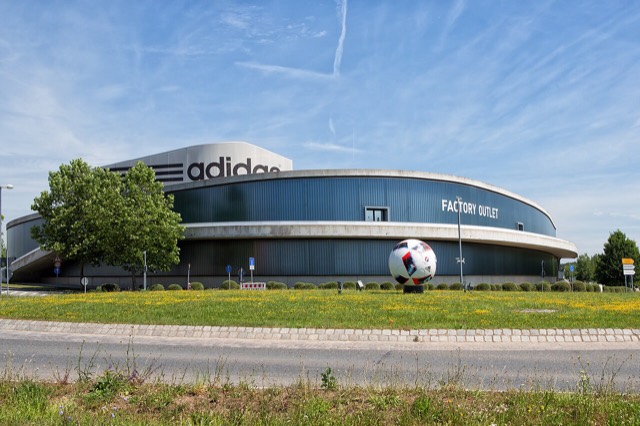
Adidas is the largest sportswear manufacturer in Europe and the second-largest in the world, trailing only Nike. Founded in 1949 by Adolf “Adi” Dassler in Herzogenaurach, Germany, the brand built its empire on performance athletics before becoming one of the most culturally dominant fashion labels on earth. The three stripes are as recognizable as any logo in history.
But Adidas is not just a feel-good underdog story. The brand’s history is soaked in a real family war, a catastrophically expensive Kanye West divorce, persistent boycott pressure over factory labor conditions, and a long, humbling attempt to catch Nike’s revenue. The public keeps searching for answers that the brand’s PR team carefully avoids.
The questions people ask about Adidas fall into three buckets: money (why is it so expensive, who’s richer), culture (the Samba craze, German identity, the Puma split), and controversy (boycotts, Ye/Kanye fallout, labor concerns). This page answers all of them — without the spin.
Adidas’s headquarters remain in Herzogenaurach, the same German town where the Dassler brothers once refused to speak to each other across the river. That origin story — petty, personal, and extremely consequential for global sportswear — tells you more about the brand than any earnings call ever will.
People also ask
- Why is Adidas so expensive?#
- Adidas prices are driven by three real costs: premium materials and R&D (their Boost and Lightstrike foam tech isn't cheap to develop), high-profile endorsement deals with athletes and artists that get baked into every price tag, and calculated scarcity on hype models that lets them charge whatever the market will bear. Beyond cost, Adidas sells identity — wearing the three stripes signals cultural fluency, and that perceived value lets them price well above commodity sneakers. The honest answer is that the 'expensive' models are priced for margin and aspiration, not just manufacturing cost.
- What is the controversy with Adidas?#
- The biggest recent controversy is the Adidas–Ye (Kanye West) split in October 2022, after Ye made a series of widely reported antisemitic statements. Adidas terminated the Yeezy partnership — the brand's most profitable line — and was left holding roughly €500 million in unsold Yeezy inventory, taking a massive hit to profits. Beyond Ye, Adidas has faced recurring criticism over labor conditions in its supply chain in Asia, allegations of systemic racism from its own Black employees (including a 2021 open letter signed by hundreds of staff), and ongoing scrutiny over how it handles athlete and influencer relationships.
- Who is more expensive, Adidas or Nike?#
- Nike. On average, Nike's flagship models — especially in the Jordan and running performance lines — carry higher retail prices than comparable Adidas products. A standard Nike Air Max or Jordan 1 typically retails higher than a comparable Adidas Ultraboost or Stan Smith. That said, on the ultra-premium and collab end, Adidas Yeezys and Pharrell collabs have historically traded for eye-watering resale prices that rival or beat Jordan-brand hype releases.
- Why adidas samba is expensive?#
- The Samba was a neglected indoor soccer shoe for decades, retailing cheaply — then culture happened. A wave of stylist picks, street-style photographers, and endorsements from figures like Bella Hadid and Rosalía turned it into the sneaker of the moment around 2022–2024, and Adidas responded by leaning into limited drops and premium materials on certain colorways. When demand explodes and supply is intentionally restricted, the price follows — that's not coincidence, it's the playbook. The base Samba is still relatively affordable; the expensive ones are collabs and limited editions that Adidas deliberately keeps scarce.
- Why adidas shoes are so expensive?#
- Same structural reasons as the brand overall: proprietary cushioning technology (Boost, Lightstrike), leather and premium textile uppers on flagship models, and a marketing and endorsement budget that runs into the billions annually. Adidas also spends heavily on sustainability initiatives like Parley ocean plastic partnerships, costs that show up in retail pricing. But the bluntest truth is that Adidas charges what the brand equity allows — you're paying for the three stripes as much as the shoe.
- Who owns Adidas company?#
- Adidas AG is a publicly traded company listed on the Frankfurt Stock Exchange, so no single person 'owns' it outright. The largest institutional shareholders are major asset managers — BlackRock and others — as is typical for a DAX-listed blue chip. The Dassler family, who founded the brand, no longer holds a significant public stake. The company is run by a management board, with Bjørn Gulden serving as CEO since January 2023 after being brought in to stabilize the brand following the Yeezy fallout.
- Why is everyone buying sambas?#
- Because fashion decided so, and Adidas was smart enough not to kill the moment with overproduction. The Samba hit a perfect cultural inflection point: it's retro without being niche, it pairs with everything from wide-leg trousers to dresses, and it got co-signed by the right people at the right time. Social media, particularly TikTok and Instagram street style accounts, turned it into a uniform for the 'quiet luxury' and 'clean girl' aesthetics. Adidas kept supply tight enough to sustain the craze rather than flood the market — a lesson they learned the hard way from overexposing other silhouettes.
- Who's richer, Adidas or Nike?#
- Nike, and it's not close. Nike's annual revenue is roughly $50+ billion; Adidas sits around €22–24 billion (approximately $25 billion). Nike's market capitalization has consistently been more than double that of Adidas. Adidas is a formidable global brand, but in pure financial terms, Nike operates in a different weight class.
- Is Adidas still being boycotted?#
- There are multiple active and historical boycott calls against Adidas, so the answer is: it depends on which one. The most prominent recent call came from Jewish advocacy groups and some consumers following Adidas's initially slow response to Ye's antisemitic statements — though the brand did eventually terminate the Yeezy deal entirely. Separately, labor rights groups have periodically called for boycotts over working conditions in Adidas's Asian supply chain. Neither boycott has visibly collapsed the brand's sales, but both remain live conversations in their respective communities.
- Who's richer, Nike or Adidas?#
- Nike, decisively. With revenues consistently above $50 billion and a market cap that has historically exceeded $100 billion, Nike is in a league above Adidas, whose revenue sits roughly half that. Nike also generates significantly higher profit margins. The gap has actually widened in recent years, in part because the Yeezy fallout hit Adidas's bottom line hard in 2023.
- Is Reebok still owned by Adidas?#
- No. Adidas sold Reebok to Authentic Brands Group (ABG) in 2022 for approximately €2.1 billion — a fraction of the €3.8 billion it paid to acquire the brand back in 2006. The Adidas–Reebok marriage was widely considered one of the worst acquisitions in sportswear history: the brands competed for the same consumers, Reebok lost market share throughout the partnership, and Adidas never figured out how to make the two portfolios work together.
- Why adidas and puma split?#
- Adidas and Puma were never one company — they were born from a split. Brothers Rudolf and Adolf Dassler co-founded Gebrüder Dassler Schuhfabrik in Herzogenaurach in the 1920s, but a bitter personal falling-out (accounts vary: post-WWII denunciations, wife feuds, genuine hatred) caused them to divide the factory in 1948. Adolf founded Adidas in 1949; Rudolf founded Puma shortly after. The two brothers reportedly never reconciled, and for decades the town of Herzogenaurach was literally divided: residents worked for one company or the other, and social mixing was taboo.
- Is adidas on the boycott list?#
- Adidas appears on several boycott lists maintained by labor rights and consumer advocacy organizations, primarily over supply chain labor concerns in countries like Cambodia, Vietnam, and Bangladesh. It also appeared on boycott lists circulated by some Jewish groups during the Ye controversy. Whether Adidas is 'on the list' depends entirely on which list you're consulting — the brand is far from uniquely targeted, but it is not clean.
- Why is Adidas falling?#
- Adidas's most acute fall was financial, triggered primarily by the termination of the Yeezy partnership — Yeezy had been contributing roughly €1.5–2 billion in annual revenue and significant profit margins, all of which evaporated overnight. On top of that, Adidas overproduced inventory during the post-pandemic demand surge and was left with mountains of unsold stock. Culturally, the brand also spent years chasing Nike's performance credibility while simultaneously trying to own fashion, and ended up slightly confused on both fronts — though the Samba and Gazelle renaissance has helped stabilize the narrative.
- Why is Germany leaving Adidas?#
- Germany's national soccer team ended its partnership with Adidas in 2024 after more than 70 years — one of the most symbolically significant sponsorship breaks in sports history. The DFB (German Football Association) signed with Nike instead, a decision driven by Nike reportedly offering a substantially larger financial package. It was a genuine gut-punch for a brand that had dressed the Nationalmannschaft since 1954's 'Miracle of Bern' World Cup win. For Adidas, it was less an abandonment and more a lost auction.
- Why do Germans love Adidas?#
- National pride, authenticity, and deep cultural embedding over 75+ years. Adidas is genuinely German — founded in Bavaria, headquartered there still, built on engineering precision that aligns with German industrial identity. The brand outfitted Germany through its most iconic soccer moments, and the three stripes became a proxy for national sporting pride. Beyond that, Adidas has a working-class street credibility in Germany that luxury brands don't — it's the brand your grandfather wore and the one your kid wants, which is a rare feat.
- Why is Adidas so cheap right now?#
- If Adidas looks cheap right now, it's likely because you're seeing the result of aggressive discounting on overstock. After the Yeezy termination and a period of overproduction, Adidas was sitting on billions in inventory and pushed significant stock through outlet channels and sales. Some models are also simply more affordable than perception suggests — the Samba halo effect makes the whole brand feel premium even when base models retail at $100 or less. Retailers also regularly discount Adidas to move units in a competitive market.
- Is Adidas German or British?#
- German, unambiguously. Adidas was founded by Adolf Dassler in Herzogenaurach, Bavaria, Germany in 1949. It remains headquartered there to this day. There is no meaningful British claim to the brand — it is about as German as a company gets, deeply embedded in Bavarian culture and German industrial identity.
- Who is bigger, Nike or Adidas?#
- Nike, by every major metric. Nike's annual revenue is roughly twice that of Adidas, its market capitalization is significantly larger, and it controls a greater share of the global sportswear market. Adidas is the clear number two globally and number one in Europe, but 'bigger' belongs to Nike — and has for decades.
- Who came first, Nike or Adidas?#
- Adidas came first. Adolf Dassler registered Adidas in 1949. Nike wasn't incorporated until 1967 (initially operating as Blue Ribbon Sports from 1964). Adidas had nearly two decades of head start, which makes Nike's eventual dominance of the global market all the more remarkable — and all the more irritating, one imagines, from the perspective of Herzogenaurach.