San Fermín 2026
San Fermín 2026 runs in Pamplona, Spain from July 6 to 14. The opening Chupinazo rocket launched at noon on July 6; the festival closes on the night of July 14 with the 'Pobre de mí'. The running of the bulls (encierro) is held every morning at 8:00 from July 7 to 14, over roughly 875 metres to the bullring. First bull run (July 7): Fuente Ymbro bulls, 2 min 16 s, five hurt by falls, none gored. Second bull run (July 8): Cebada Gago bulls, 2 min 26 s, with the festival's first goring.
The context
San Fermín is the patron-saint festival of Pamplona, in Navarre, and one of the best-known popular celebrations in the world. In 2026 it runs from July 6 to 14, with an official program of 516 events: bull runs, bullfights, concerts, parades of giants and big-heads, fireworks and activities for all ages. The fiesta honours Saint Fermín, co-patron of Navarre.
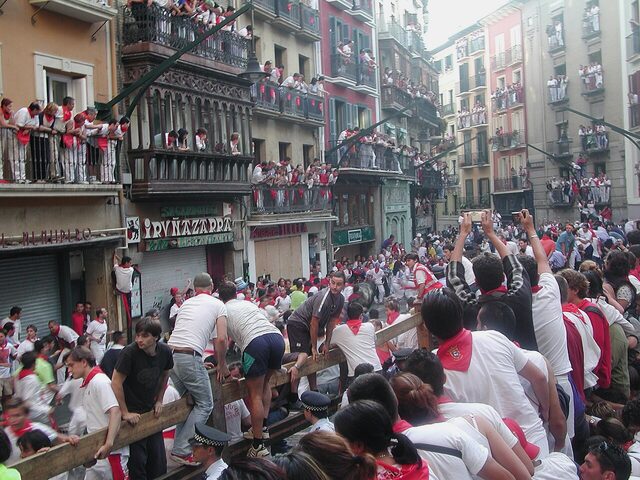
Everything begins at noon on July 6 with the Chupinazo: a rocket fired from the town hall balcony that unleashes nine days of celebration. The city dresses in white and red, neckerchief at the throat, and keeps it on until the night of July 14, when the wistful ‘Pobre de mí’ brings the fiesta to a close.
The centrepiece is the running of the bulls (encierro), held every morning at 8:00 from July 7 to 14. Six fighting bulls and several steers cover roughly 875 metres up the Santo Domingo slope, along Estafeta street and through the alley into the bullring, with runners sprinting ahead. The run lasts only a few minutes but concentrates all the tension and danger of the festival.
In 2026, the first run (July 7) featured Fuente Ymbro bulls: a very fast race of 2 minutes 16 seconds, with five people hurt by falls and none gored. The second run (July 8), with the Cebada Gago herd, was completed in 2 minutes 26 seconds and produced the festival’s first goring, a horn wound to an arm, along with other minor injuries. The herd ran tightly packed and at high speed, leaving runners little room in front of the bulls.
Beyond the bull run, San Fermín is street culture, music and round-the-clock atmosphere. Its international fame owes much to Ernest Hemingway, who immortalised the fiesta in ‘The Sun Also Rises’ (1926) and turned Pamplona into a festive pilgrimage every July.