← PEOPLE
datastats / Music
LIVE
Music

Stromae

Stromae is the Belgian pop polymath who turned pain, grief, and social anxiety into some of the most arresting French-language music of the 21st century.
By · datastats · Updated June 15, 2026
Stromae

Paul Van Haver, the man behind the mask, was born on 12 March 1985 in Brussels, Belgium. He chose the stage name “Stromae” by inverting the syllables of maestro in verlan, the French back-slang used in Brussels and Paris suburbs. The name is a mission statement: he considers himself a craftsman, not just a pop star.

He exploded globally in 2013 with Papaoutai, a devastating, danceable meditation on absent fathers, his own father was killed in the 1994 Rwandan genocide. That song, alongside Formidable, turned him from a Belgian cult figure into an international phenomenon. His second studio album Racine Carrée (2013) sold over three million copies worldwide, a rare achievement for a Francophone artist.

After a very public health breakdown in 2015–2016, he appeared on Belgian TV visibly unwell and later spoke candidly about adverse reactions to an anti-malaria drug that triggered psychiatric episodes, Stromae essentially disappeared for five years. His comeback album Multitude arrived in 2022 and was met with near-universal critical acclaim, reasserting his status as one of the most important artists working in any language.

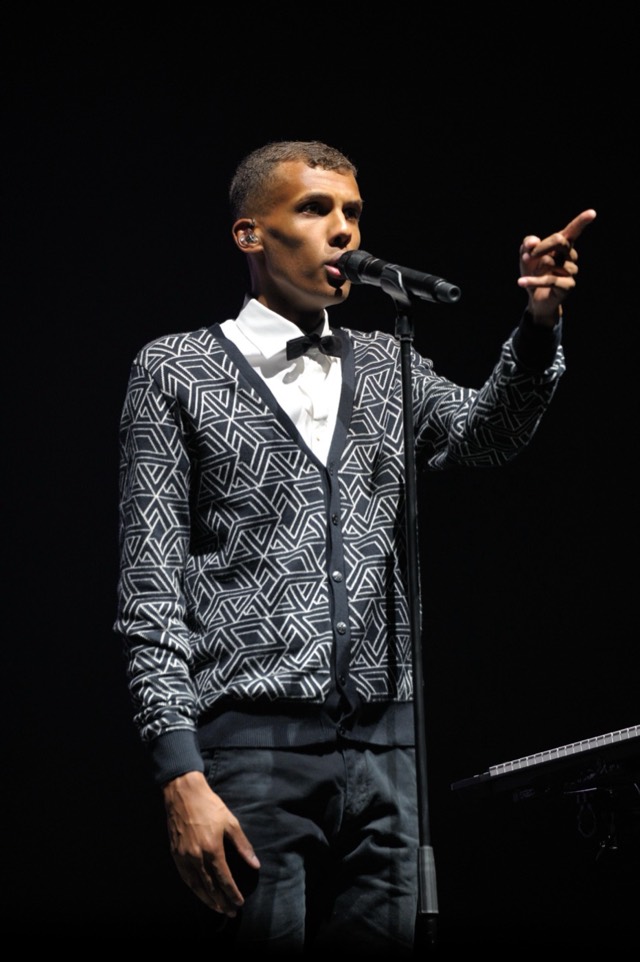
His live shows are theatrical spectacles: elaborate costumes, androgynous styling, choreography that blurs gender lines. He collaborates closely with his wife Coralie Barbier on creative direction and fashion, making their partnership one of the more genuinely integrated artist-spouse creative teams in contemporary pop.

People search for Stromae constantly because he is elusive, visually provocative, emotionally raw, and refuses to behave like a conventional pop star, which, in the algorithm age, makes him irresistible.

People also ask

Stromae is based in Brussels, Belgium, the city where he was born and raised. He has kept his personal address entirely private, so no specific neighbourhood or property details are publicly confirmed.

Stromae is Belgian. He was born in Brussels to a Belgian mother of Flemish descent and a Rwandan father, making him a Belgian national with Rwandan heritage, a dual identity that shapes much of his art.

Stromae was born on 12 March 1985, which makes him 40 years old as of 2025. He has been making music professionally since the late 2000s, meaning he's been at this for roughly half his life.

Stromae is widely reported to stand around 1.87 m (approximately 6 ft 1 in). His striking height is part of what makes his angular, theatrical stage presence so commanding.

Stromae is fluently bilingual in French and Dutch (the two main languages of Belgium), and he is conversant in English. He has performed and given interviews in all three. Some sources mention basic Spanish, but that is not publicly verified to a high standard.

No verified, reliable figure for Stromae's net worth exists in the public record, and any number circulating online should be treated as speculation. What is documented is that *Racine Carrée* sold over three million copies, his global tours were massive, and his 2022 comeback *Multitude* was a commercial and critical hit, so by any reasonable reading, he is a very successful artist.

Stromae and his wife Coralie Barbier have one child together, a son born in 2018. Stromae has spoken about fatherhood, and its absence, as a central theme in his work, most directly in *Papaoutai*.

Stromae is married to Coralie Barbier, a Belgian model and creative director. The two are also genuine professional collaborators, she is deeply involved in the visual identity of his albums and tours.

His wife is Coralie Barbier. She is a model and stylist who co-creates much of Stromae's distinctive visual world, from album artwork to stage costumes. She is not a passive partner; she's a co-architect of the Stromae brand.

Stromae is married to Coralie Barbier and is not publicly reported to be dating anyone else. He is not on the market.

Stromae and Coralie Barbier married in 2015. They had been together for several years before that and have built both a family and a creative partnership since.

In 2015–2016, Stromae cancelled tour dates because of a severe health crisis linked to an adverse reaction to Lariam (mefloquine), an anti-malaria medication he took before travelling to West Africa. The drug triggered intense psychiatric side-effects, including anxiety and depression. He was transparent about this, even appearing visibly distressed in a live television interview that shocked Belgium, then going off the radar entirely to recover.

No. This question likely stems from a viral moment in the music video for *Tout le monde* (2022), in which Stromae portrays both a male and a female version of himself, including a wedding scene between the two versions. It is a piece of art about duality and identity, not a literal event.

No. Stromae is married to Coralie Barbier. Stromae and French singer-songwriter Pomme have collaborated musically, their duet *Ma meuf* from *Multitude* (2022) is a highlight, but there is no credible report of a romantic relationship between them.

Stromae deliberately deconstructs gender through fashion, choreography, and performance as an artistic statement, not as a personal identity declaration. He and Coralie Barbier have spoken about using androgyny to challenge the audience's assumptions and to embody multiple perspectives, most strikingly in *Tous les mêmes* and the *Tout le monde* video. It's intentional provocation, not accident.

Because costume is central to his storytelling. Every outfit, the exaggerated shoulders, the gender-fluid silhouettes, the theatrical makeup, is designed in close collaboration with Coralie Barbier and is specific to a song or concept. He treats visual identity the same way he treats lyrics: nothing is filler. It also keeps him in control of his own image in an industry that would otherwise flatten him.

Stromae has publicly and candidly discussed the severe psychiatric side-effects he experienced after taking the anti-malaria drug Lariam around 2015, which included acute anxiety, depression, and what he described as suicidal ideation. He has also addressed themes of depression broadly in his music. He is not obligated to disclose anything further, and no additional diagnoses are confirmed in the public record.

Yes. Stromae's mother is Belgian of Flemish descent and his father, Pierre Rutare, was Rwandan. His father was killed in the 1994 Rwandan genocide. Stromae is mixed race, Belgian-Rwandan, and that heritage is not background noise in his life; it is a foundational pillar of his identity and his art.

After a health collapse in 2015–2016 forced him off the radar, Stromae made a triumphant return with the album *Multitude* in 2022, followed by a major world tour. He is alive, healthy by his own account, creatively active, and very much back. The five-year silence made the comeback hit harder.

Stromae has not publicly identified as LGBTQ+. He is married to Coralie Barbier, a woman. His androgynous aesthetic and gender-fluid performances are artistic choices he has discussed in interviews as deliberate creative and social commentary, not personal identity statements. Reading the art as autobiography here would be a mistake.

Related topics
Music Trending now
Tay Keith Dead at 29: Grammy-Nominated Producer Behind Sicko Mode
Music Trending now
BTS ARIRANG Tour at Stade de France 2026
Music Trending now
Madonna: Confessions II
Music Trending now
Drake: ICEMAN & 'Janice STFU'
Music Trending now
Ariana Grande: The Eternal Sunshine Tour 2026
Music People
Addison Rae
Music People
Ariana Grande
Music People
Aya Nakamura