Ronnie Coleman
Ronnie Coleman is the greatest bodybuilder who ever lived, eight consecutive Mr. Olympia titles, a body built like a war machine, and a post-career medical saga that turned him into a symbol of both glory and consequence.
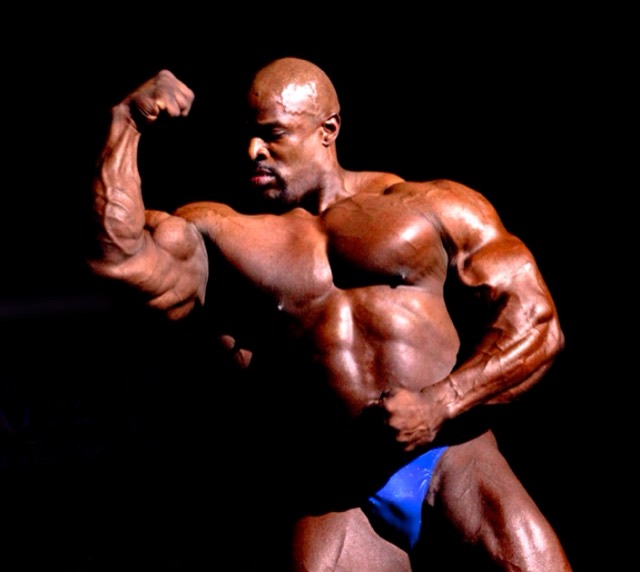
Ronnie Coleman: The King of Bodybuilding
Ronnie Coleman was born on May 13, 1964, in Monroe, Louisiana. He grew up in Bastrop, Louisiana, earned a Bachelor’s degree in Accounting from Grambling State University, and went on to work as a police officer in Arlington, Texas, all while quietly becoming the most dominant bodybuilder the sport has ever produced.
Between 1998 and 2005, Coleman won eight consecutive Mr. Olympia titles, matching (and then breaking) Lee Haney’s record. At his peak, he walked on stage at around 300 lbs of shredded muscle, a combination no one before or since has credibly replicated. His training videos, filmed in a bare-bones gym with ear-splitting screams of “Yeah buddy!” and “Lightweight baby!”, became genuine internet folklore long before social media made that easy.
Away from the stage, Coleman was a competitive powerlifter in everything but name. He trained with weights that most dedicated powerlifters would respect: 800-lb squats, 2,300-lb leg presses, and a deadlift that has been documented at 800 lbs for multiple reps. He did all of this while maintaining the conditioning of a competition bodybuilder, which is why people search for him constantly, the combination feels physically impossible.
The darker chapter began accumulating during and after his competitive career. Years of extreme loading led to catastrophic spinal damage requiring multiple surgeries, by his own count, well over a dozen operations on his back and hips. He has spoken openly about his pain, his surgeries, and his determination to keep walking. That honesty, combined with his undiminished charisma, keeps him one of the most-searched athletes on the internet.
Coleman remains active on social media, runs his own supplement brand (Ronnie Coleman Signature Series), and makes public appearances. He is not a relic, he is a living debate about the price of greatness.