Neil deGrasse Tyson
Neil deGrasse Tyson is America's most recognizable astrophysicist, a Brooklyn-born scientist who turned the cosmos into prime-time entertainment without (mostly) dumbing it down.
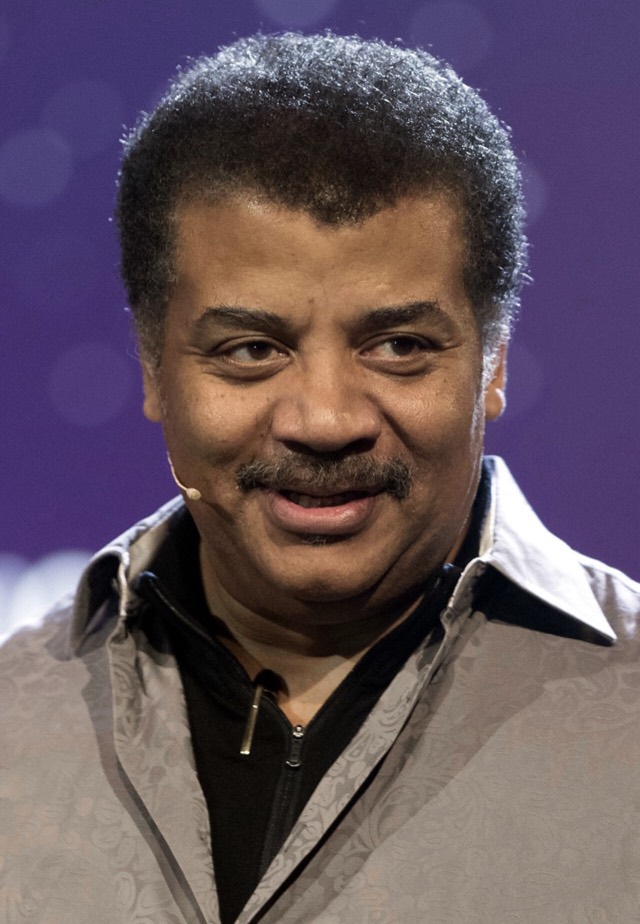
Neil deGrasse Tyson was born on October 5, 1958, in Manhattan and grew up in the Bronx, New York. He earned his B.A. in Physics from Harvard, his M.A. from the University of Texas at Austin, and his Ph.D. in Astrophysics from Columbia University in 1991. He has been the Frederick P. Rose Director of the Hayden Planetarium at the American Museum of Natural History in New York City since 1996, a post he still holds.
Beyond the lab and the lecture hall, Tyson became a household name through television: he hosted NOVA ScienceNow on PBS, rebooted Carl Sagan’s landmark series as Cosmos: A Spacetime Odyssey (2014) and its sequel Cosmos: Possible Worlds (2020), and has been a near-permanent fixture on talk shows, podcasts, and pop-culture panels for two decades. His own podcast, StarTalk, regularly tops science-category charts.
People search for Tyson for wildly different reasons: some want the science, some want the celebrity gossip, some want to settle bar arguments about Pluto (he’s the man most associated with its 2006 demotion to dwarf-planet status, even though the IAU made the official call), and some arrive via controversies that surfaced in 2018. He is one of the few working scientists whose name trends on social media on any given week.
His cultural footprint is enormous partly because he occupies a rare space: credentialed enough to publish and advise NASA, charismatic enough to go viral. That combination makes him a lightning rod, celebrated by science communicators, occasionally criticized by fellow researchers for oversimplification, and scrutinized by the public in ways most PhDs never experience.