Skip to content
datastats

Lost Frequencies

Lost Frequencies is the Belgian DJ who turned a country guitar riff into a global dance-floor anthem and never looked back.

Updated: June 2, 2026

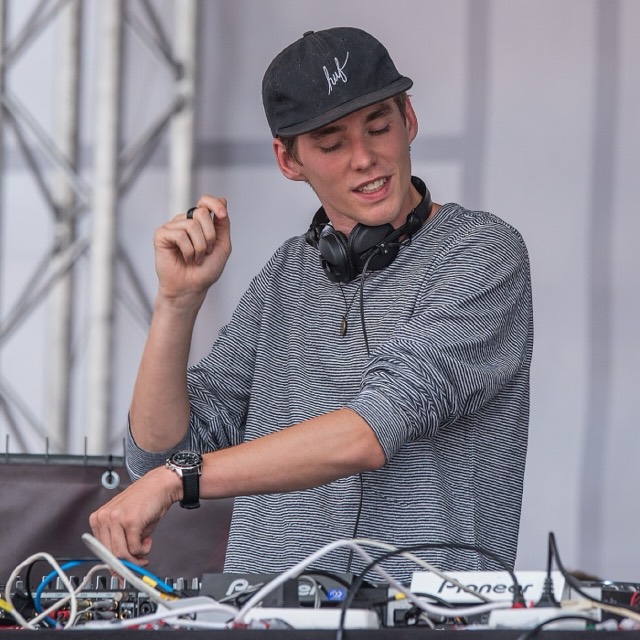
Lost Frequencies is the stage name of Félix De Laet, a Belgian electronic music producer and DJ born on 30 August 1993 in Brussels. He exploded onto the international scene in 2014 with Are You With Me, a deep-house rework of a Easton Corbin country track that topped charts across Europe and reached the top five in the UK, Germany, and Australia. That single alone announced him as one of the most commercially potent producers of his generation.

What makes De Laet stand out in a crowded EDM landscape is his signature sound: warm, melodic deep house built around memorable vocal hooks and organic-feeling guitar or piano lines. He doesn’t chase the brutal drops of mainstream festival EDM — he makes records that work equally well on a Sunday morning playlist and a beach-club dancefloor. That crossover appeal has kept him consistently charting long after one-hit-wonder peers have faded.

Since Are You With Me, he has racked up a string of multi-platinum European hits including Reality (with Janieck Devy), Crazy (with Zonderling), and Beautiful Life (with Sandro Cavazza). His tracks regularly clock hundreds of millions of streams, and he headlines major festivals across Europe — Tomorrowland, Rock Werchter, and beyond.

People search for Lost Frequencies because he occupies a rare sweet spot: credible enough for clubbers, accessible enough for casual radio listeners. His name also brings curious newcomers who discover him through viral TikTok use of his back-catalogue, sending old hits back up the streaming charts years after release.

People also ask

Who is the female singer in Maribou State?#
This is a common mix-up: Maribou State is a UK electronic duo (Chris Davids and Liam Warner) who frequently collaborate with guest vocalists rather than having a permanent female singer. Holly Walker is one of their most recognised collaborators, featuring on tracks like *Tongue* and *Slow Fade*. She is not an official 'member' of the group — she's an independent artist and songwriter based in the UK.
Is EDM in decline?#
Sort of — but the framing is everything. The monolithic 'EDM' bubble of festival-bro culture and superstar DJ excess peaked around 2012–2015 and has since deflated. What replaced it is a more fragmented, genre-fluid scene: melodic house, afro-house, tech house, and hyperpop all thriving independently. Electronic music overall is not declining — it's splintering, maturing, and arguably in better artistic health than during the brostep era.
What is Janieck Devy's real name?#
Janieck Devy performs under his real given name — **Janieck Devy** is the name he is publicly and professionally known by. He is a Dutch singer-songwriter best known for featuring on Lost Frequencies' 2015 hit *Reality*. No widely reported stage-name alias exists for him.
What is lost frequencies real name?#
Lost Frequencies' real name is **Félix De Laet**. He was born and raised in Brussels, Belgium, and adopted the Lost Frequencies alias when he began releasing music professionally around 2014.
How old is lost frequencies?#
Félix De Laet was born on **30 August 1993**, making him 31 years old as of mid-2025. He broke through internationally at just 21, which is part of why his career arc gets so much attention.
Is lost frequencies married?#
There is no widely reported or publicly confirmed information indicating that Félix De Laet is married. He keeps his personal life largely private, and no credible outlets have reported on a marriage. Claiming otherwise would be speculation.
Does lost frequencies have a girlfriend?#
Félix De Laet does not publicly discuss his romantic life in interviews, and no confirmed relationship has been reported by credible sources as of the time of writing. He is notably private on that front compared to many artists of his profile. Anything circulating on fan forums should be treated as unconfirmed.
What language does lost frequencies speak?#
Félix De Laet is from Brussels, Belgium — a bilingual city — so he speaks fluent **French** and **Dutch (Flemish)**, and conducts interviews comfortably in **English** as well. French appears to be his dominant first language given his Brussels background, but he is genuinely multilingual.
Why does DJ Snake wear glasses?#
DJ Snake — real name William Sami Étienne Grigahcine — has never publicly stated a specific medical or stylistic reason for wearing his signature tinted glasses. They have become a core part of his visual identity and brand. Whether they are prescription, protective against stage lighting, or purely aesthetic is something he hasn't confirmed in widely reported interviews, so any definitive answer would be invented.
Why is Marc Rebillet famous?#
Marc Rebillet — nicknamed 'Loop Daddy' — became famous through wildly chaotic, improvised live-looping performances that he streamed on Facebook Live and YouTube, often while wearing a bathrobe. His ability to build full tracks in real time from crowd suggestions, combined with his unhinged comedic energy, made him a viral phenomenon starting around 2017–2018. He represents the anti-corporate, bedroom-genius end of electronic music performance.
Why do ADHD people like EDM?#
Neuroscience and psychology researchers have noted that repetitive, high-stimulus music with strong rhythmic drive can help ADHD brains maintain focus by satisfying the dopamine-seeking tendency that underlies the condition. EDM's predictable structure and consistent BPM can act as a kind of auditory anchor. That said, this is an area of ongoing research — it's a well-discussed pattern, not a clinically prescribed treatment.
Why are Lost Frequencies called Lost Frequencies?#
Félix De Laet has explained in interviews that the name *Lost Frequencies* is a nod to the idea of tuning into something hidden — like searching through radio static for a signal that speaks to you. It reflects the searching, emotional quality he wants his music to have. It also just sounds cool, which in branding is never irrelevant.
How much to hire Lost Frequencies?#
Booking fees for Lost Frequencies are not publicly listed, and agencies do not publish fixed rates — they vary enormously by event type, location, and season. Based on industry reporting on artists at his level of profile (major European festival headliner, multi-platinum streaming numbers), booking fees are widely estimated in the range of **€50,000–€150,000+** per appearance, but this is an industry estimate, not a confirmed figure. Contact his official booking agency, Armada or his management, for actual quotes.
How much are Lost Frequencies worth?#
No verified, publicly reported net worth figure exists for Félix De Laet. Various celebrity net-worth websites throw around figures in the range of several million euros, but these are estimates built on opaque methodology and should not be taken as fact. What is documented: he has accumulated multiple platinum and gold records across Europe, headlines major festivals, and has a substantial streaming catalogue — all of which point to a significant but unconfirmed income.
How much does lost frequencies make per show?#
Per-show earnings are not publicly disclosed by Lost Frequencies or his management, and no credible source has confirmed a specific number. For context, DJs at his commercial tier are widely reported in the industry press to earn anywhere from tens of thousands to six figures per festival headline slot. Treat any precise figure you see online as an educated guess, not a confirmed fact.
What EDM genre is Lost Frequencies?#
Lost Frequencies sits firmly in **melodic deep house** and **tropical house**-adjacent territory. His sound is defined by lush synth pads, vocal-driven hooks, and a deliberately warm, emotive quality — closer to the Kygo or Robin Schulz lane than to techno or big-room EDM. Over time he has pushed toward a broader **melodic house and techno** influence without abandoning his pop-crossover instincts.
How did Lost Frequencies get famous?#
He got famous fast and almost accidentally: in 2014, he reworked Easton Corbin's country track *Are You With Me* into a deep-house record and released it online. Belgian radio picked it up, it went viral across Europe, and it eventually topped charts in over a dozen countries. That single gave him a platform most producers spend a decade trying to build, and he was smart enough to capitalise on it with immediate, consistent follow-up releases.
Who is the Lost Frequencies guy?#
Lost Frequencies is **Félix De Laet**, a Belgian DJ and producer from Brussels, born 30 August 1993. He is the sole artist behind the project — not a duo or collective — though he regularly collaborates with vocalists and co-writers for his releases.
Where is Lost Frequencies dj from?#
Lost Frequencies is from **Brussels, Belgium**. Belgium has a disproportionately outsized electronic music culture relative to its size — it is also the home of Tomorrowland, one of the world's largest dance music festivals — so De Laet comes from a country where dance music is genuinely embedded in the mainstream culture.
Who is Janieck Devy?#
Janieck Devy is a Dutch singer and songwriter who broke through internationally as the featured vocalist on Lost Frequencies' 2015 hit *Reality*, which went multi-platinum across Europe. He subsequently released his own solo material, though he hasn't replicated that chart peak independently. He remains one of the most recognisable voice-behind-the-hook stories in mid-2010s European dance music.

People