Skip to content
datastats

What is OPEC

▲ Hot Trend score: 78 Published: June 5, 2026

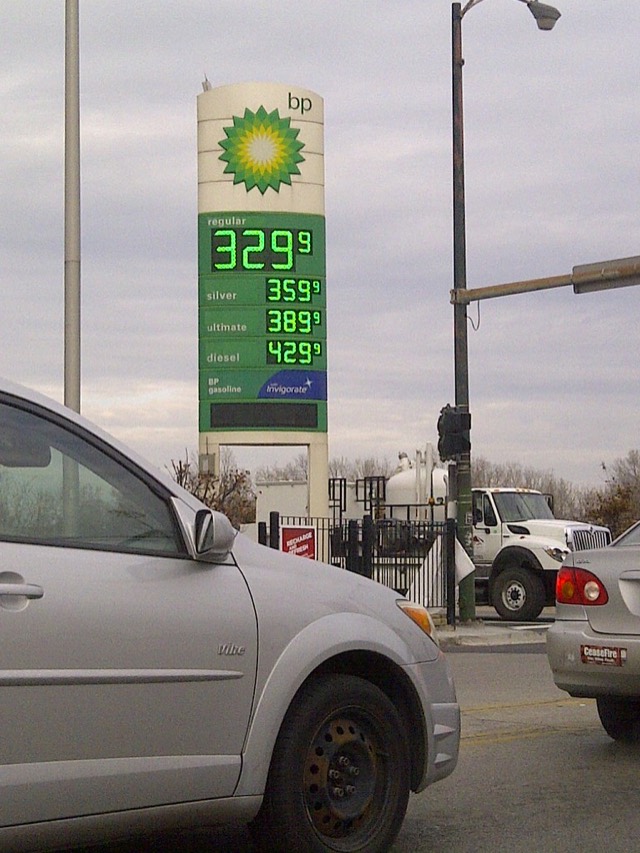
OPEC is the 60-year-old oil cartel that can make gas prices spike or plummet overnight — and with OPEC+ added Russia to that power equation.
The context

Why OPEC is trending right now: Oil markets are rarely quiet for long, and whenever production cuts, price swings, or geopolitical friction dominate energy headlines, searches for “What is OPEC” surge. The expanded OPEC+ alliance — which now ropes in Russia and other major non-member producers — has become a central actor in global energy politics, making it a recurring topic whenever oil prices move sharply.

The origin story: OPEC — the Organization of the Petroleum Exporting Countries — was founded in 1960 in Baghdad by five nations with a simple, blunt mission: coordinate oil production policies and stabilize a market that individual countries couldn’t control alone. Today it counts roughly a dozen members, concentrated in the Middle East, Africa, and South America — including Saudi Arabia, Iraq, Iran, Kuwait, and Nigeria — though the roster shifts as countries join, withdraw, or get suspended.

How it actually works: The core tool is the production quota. Ministers from member states meet regularly and collectively decide to pump more or less oil. More supply generally pushes prices down; less supply pushes them up. That lever over global oil supply gives the group outsized influence over the world economy, energy markets, and the price consumers pay at the pump.

Enter OPEC+: In 2016, OPEC forged a coordination framework with major producers outside the organization — most notably Russia. This expanded bloc, dubbed OPEC+, amplifies the group’s collective market power considerably, since it now covers a far larger share of global oil output than OPEC alone ever did.

The perpetual debate: OPEC sits at the intersection of economics, sovereignty, and geopolitics. Producing nations argue the group brings stability to a volatile commodity market that would otherwise be chaotic. Consuming nations and market-watchers often counter that coordinated output decisions amount to price-fixing. Both positions have serious advocates — and neither is going away.

People also ask

Is opec good or bad?#
It depends — here's why. Producing countries argue OPEC brings order and stable revenue to volatile oil markets; consuming nations and free-market economists argue that coordinating output to influence prices is a textbook cartel arrangement that harms consumers. The honest answer is that OPEC is neither a villain nor a savior — it is a powerful intergovernmental mechanism whose effects depend entirely on where you sit in the global energy chain.
Why is opec needed?#
Oil is a globally traded commodity subject to wild price swings, and individual producing countries — even large ones — have limited power to stabilize it alone. OPEC was created in 1960 precisely to give member states collective leverage: by coordinating production, they can counteract extreme price collapses that would devastate their national budgets. Whether that coordination serves the broader global interest is a separate, contested question.
Why is opec important?#
Because oil still powers most of global transportation and manufacturing, any organization that can meaningfully shift the world's oil supply has macroeconomic reach far beyond energy markets. OPEC's production quota decisions ripple into inflation rates, trade balances, and geopolitical relationships across dozens of countries. That is why its ministerial meetings are tracked as closely as central bank announcements.
What is opec opec+?#
OPEC is the original intergovernmental organization of roughly a dozen oil-exporting countries founded in 1960. OPEC+ is the expanded coordination framework launched in 2016 that brings in major non-member producers — most prominently Russia — to jointly manage production levels. Think of OPEC as the core club and OPEC+ as the broader alliance built around it.
What is opec opec plus?#
Same answer as above: OPEC is the founding organization; OPEC Plus (OPEC+) is the wider production-coordination pact that added big non-member producers like Russia starting in 2016. Together they represent a significantly larger share of global oil supply than OPEC could claim on its own, amplifying the alliance's ability to influence world prices.
What is opec and opec+ in uae?#
The UAE (United Arab Emirates) is a member of OPEC and therefore also participates in OPEC+. As a major Gulf producer, the UAE is allocated a production quota under the joint framework and its oil minister participates in ministerial meetings that set those levels. The UAE has at times publicly pushed for higher individual quotas, making it one of the more vocal voices on internal OPEC+ quota negotiations — though the specifics of any current dispute should be verified against the latest reporting.
What is opec+ vs opec?#
OPEC is the original bloc of roughly a dozen member countries bound by a founding charter going back to 1960. OPEC+ is not a formal organization but a coordination agreement — it layers major non-OPEC producers (Russia being the biggest) on top of the existing structure to align production decisions. OPEC sets internal rules and membership criteria; OPEC+ is a looser alliance with no formal charter, held together by shared interest in oil price stability.
What is opec and opec+ countries?#
OPEC members include Saudi Arabia, Iraq, Iran, Kuwait, the UAE, Nigeria, and several others primarily from the Middle East, Africa, and South America — though membership shifts over time. OPEC+ adds major non-member producers, with Russia being the most significant, alongside others such as Mexico, Kazakhstan, and Azerbaijan. Rather than memorizing a fixed list, think of OPEC as the core and OPEC+ as the expanded ring — both subject to change.
What is opec and opec plus countries?#
The OPEC member states are concentrated in the Middle East (Saudi Arabia, Iraq, Iran, Kuwait, UAE), Africa (Nigeria, and others), and South America (Venezuela and others). OPEC Plus expands that circle to include non-member heavyweights — Russia most prominently — along with producers like Kazakhstan, Mexico, and Azerbaijan. The combined group controls a substantial portion of the world's exportable oil supply.
What is opec what does opec do?#
OPEC — the Organization of the Petroleum Exporting Countries — is an intergovernmental body founded in 1960 in Baghdad to coordinate the oil policies of its member states. Its primary mechanism is the production quota: ministers meet and collectively decide how much oil each country pumps, directly influencing global supply and, by extension, world oil prices. In short, it is the institution through which major oil exporters act as one rather than competing against each other.
What is opec and non opec?#
Non-OPEC producers are simply countries that export significant amounts of oil but are not members of the organization — the United States, Russia, Canada, and Norway are the largest examples. Historically, non-OPEC producers set their output independently, which limited OPEC's ability to control global supply. The OPEC+ framework was created specifically to bridge that gap by bringing key non-OPEC nations into a shared production-management agreement.
What is difference between opec and opec+?#
OPEC is a formal international organization with a charter, established membership criteria, and legal standing — founded in 1960. OPEC+ is an informal coordination framework launched in 2016 that links OPEC members with select non-member producers under a shared production agreement but without formal organizational structure. The difference matters: OPEC countries are bound by membership rules; OPEC+ partners participate voluntarily and can — and sometimes do — deviate from agreed targets.
What is opec and why uae left opec?#
OPEC is the intergovernmental oil-producers' cartel founded in 1960. Regarding the UAE leaving OPEC: the UAE has not formally withdrawn from OPEC as of widely reported public record — it remains a member. There have been publicized tensions over quota allocations, with the UAE pushing for a higher baseline from which its cuts are calculated, but that is an internal dispute, not a departure. If you've seen recent reporting of a formal exit, verify it against a current, reliable news source, as this may be a post-knowledge-cutoff development.
Who is opec and opec plus?#
OPEC is an intergovernmental organization whose members are sovereign oil-exporting nations — not companies or individuals — including Saudi Arabia, Iraq, Iran, Kuwait, UAE, Nigeria, and others. OPEC+ extends that to a coalition of additional sovereign producers, with Russia as the dominant addition. The real decision-makers are the energy or oil ministers of each member state, who convene in ministerial meetings to negotiate and set production quotas.
What is opec and opec+?#
OPEC (Organization of the Petroleum Exporting Countries) is a roughly dozen-member intergovernmental body founded in 1960 in Baghdad to coordinate oil production policy and stabilize markets. OPEC+ is the expanded alliance created in 2016 that adds major non-member producers — led by Russia — to the production-coordination framework. Together they represent the world's most powerful collective influence over global oil supply and, therefore, energy prices worldwide.

Sources

  • manual_validated
  • wikipedia_export

Related topics