2026 Israel Haredi conscription protests
Tens of thousands of ultra-Orthodox Israelis blocked highways and set cars on fire on 1–2 June 2026, turning Israel's Haredi conscription standoff into the country's most explosive domestic crisis in years.
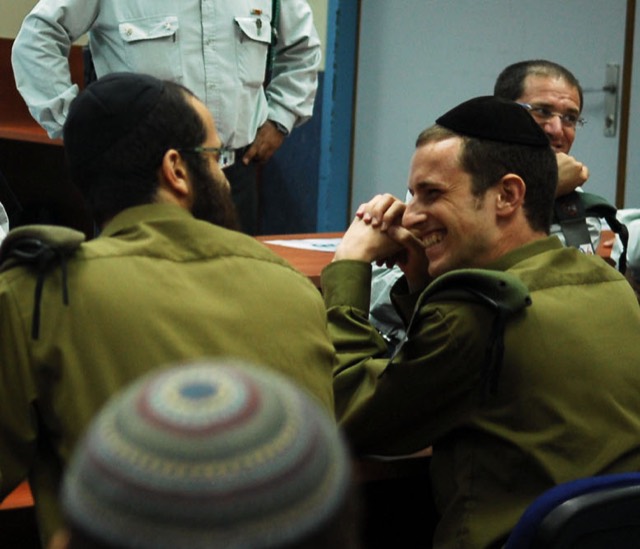
The context
The protests of 1–2 June 2026 did not come out of nowhere. Israel has long granted ultra-Orthodox (Haredi) men exemptions from mandatory military service — a political arrangement that has simmered for decades but exploded into a full constitutional and coalition crisis as the ongoing Gaza war stretched the IDF’s manpower to its limits.
The immediate trigger was the Israeli government moving to enforce conscription more aggressively, leading to the arrest of Haredi yeshiva students who had evaded draft summonses. That action brought tens of thousands of protesters into the streets across the country, blocking major highways and halting trains near Jerusalem and Tel Aviv. Some cars were set on fire. Earlier conscription protests in 2026 had already turned violent, and the June demonstrations marked a significant escalation.
The numbers tell a stark story. According to testimony cited in the Knesset, only around 1,200 ultra-Orthodox men responded to roughly 24,000 military summonses — a compliance rate of about 5%. For a country at war and relying on reserve call-ups that are straining secular and traditional Jewish families, that gap has become politically untenable for large parts of the Israeli public.
The crisis lands squarely on Prime Minister Benjamin Netanyahu’s desk. His governing coalition depends on Haredi political parties, making any real enforcement of conscription a potential coalition-killer. Analysts describe the dispute, as of early June 2026, as a serious — potentially existential — threat to the government’s survival. The situation is still developing, and its political outcome remains uncertain.
This is a conflict with deep roots: religious conviction, national security, social solidarity, and raw political survival are all colliding at once. Every side has a genuine stake, and no resolution is in sight.
People also ask
- Is LGBTQ marriage allowed in Israel?
- What is the safest city to live in Israel?
- Why do Haredi refuse military service?
- Why are the Haredi protesting?
- Are Haredi against Zionism?
- What happens if you refuse conscription in Israel?
- What percent of US Jews are Haredi?
- Where do billionaires live in Israel?
- What is the most eaten food in Israel?
- Is LGBTQ marriage allowed in Israel?#
- Not exactly. Israel does not perform same-sex marriages domestically, as civil marriage of any kind does not exist there — all marriages are handled by religious authorities (Jewish, Muslim, Christian, etc.), none of which officially conduct same-sex unions. However, Israel does legally recognise same-sex marriages performed abroad, and LGBTQ couples have access to many spousal rights. Tel Aviv is widely regarded as one of the most LGBTQ-friendly cities in the world, making the legal gap all the more striking.
- What is the safest city to live in Israel?#
- By most reported crime and security metrics, smaller inland cities such as Ra'anana, Herzliya, and Kfar Saba in the greater Tel Aviv area consistently rank among Israel's safest for daily urban life. Beer Sheva and Haifa also appear in safety comparisons favourably relative to their size. That said, 'safety' in Israel is inseparable from the broader security context, which shifts with geopolitical events — no ranking should be treated as permanent.
- Why do Haredi refuse military service?#
- The core Haredi position, as the community itself articulates it, is that full-time Torah study is both a religious obligation and a form of spiritual protection for the Jewish people — one that must not be interrupted by military service. This belief is not a modern convenience; it traces back to a post-Holocaust agreement between Israel's founding leaders and ultra-Orthodox rabbinical authorities. From the Haredi perspective, the yeshiva is the front line, not a draft dodge.
- Why are the Haredi protesting?#
- The immediate cause of the 1–2 June 2026 protests was the arrest of Haredi yeshiva students who had evaded military draft summonses, which demonstrators viewed as a direct government assault on their religious way of life. Tens of thousands took to the streets across Israel, blocking major highways and halting trains near Jerusalem and Tel Aviv; some cars were set on fire. The protests are the most visible flashpoint of a longer-running conflict over whether the state can compel Haredi men to serve in the military.
- Are Haredi against Zionism?#
- Sort of — but the picture is more complicated than a flat yes. Some Haredi streams, most notably the Satmar Hasidic movement, hold a theologically anti-Zionist position, arguing that a Jewish state must not be established before the messianic era. Other Haredi groups are non-Zionist rather than anti-Zionist: they live in Israel, participate in its political system (often very effectively), and accept the state's existence without embracing its founding secular-nationalist ideology. Equating all Haredi Jews with anti-Zionism would be a significant oversimplification.
- What happens if you refuse conscription in Israel?#
- Under Israeli law, evading military conscription is a criminal offence that can result in arrest, detention, and repeated imprisonment — typically in a military prison — for as long as a person continues to refuse service. In practice, enforcement has been highly uneven, particularly regarding Haredi draft evaders; the June 2026 arrests of yeshiva students represent a notably firmer application of the law. Secular or non-Haredi refusers generally face the process more consistently.
- What percent of US Jews are Haredi?#
- Reliable estimates, including from the Pew Research Center's major surveys of American Jews, put the Haredi (ultra-Orthodox) share of the U.S. Jewish population at roughly 6–9%, though the community's high birth rate means its share is growing faster than any other Jewish denomination. In absolute terms, that translates to several hundred thousand people, concentrated heavily in New York (particularly Brooklyn and the Hudson Valley), New Jersey, and a few other metro areas.
- Where do billionaires live in Israel?#
- Israel's wealthiest residents cluster primarily in the affluent suburbs north of Tel Aviv — particularly Herzliya Pituah, Caesarea, and Savyon — as well as in upscale neighbourhoods of Tel Aviv itself, such as the Old North and Neve Tzedek. Caesarea, built around a private planned community near the ancient Roman ruins, is especially associated with Israel's tech and business elite. Jerusalem attracts some wealthy ultra-Orthodox and diaspora Jewish buyers, but the commercial-tech wealth is overwhelmingly concentrated in the Tel Aviv metro corridor.
- What is the most eaten food in Israel?#
- Hummus is the undisputed everyday staple — consumed across all communities, religions, and classes, at dedicated hummusiyot (hummus restaurants), as a breakfast dish, and as a side to almost everything. Falafel and pita are a close cultural second, forming the backbone of Israeli street food. Israel's food culture is a genuine mosaic, drawing from Middle Eastern, North African, Eastern European, and Yemeni traditions, but if you had to name one dish that unites the country, hummus wins without debate.