← BRANDS
datastats / Money
LIVE
Money

Wendy's

Wendy's built its empire on "fresh, never frozen" beef, but the questions people are actually Googling reveal a brand under serious pressure on price, health, politics, and trust.
By · datastats · Updated June 4, 2026
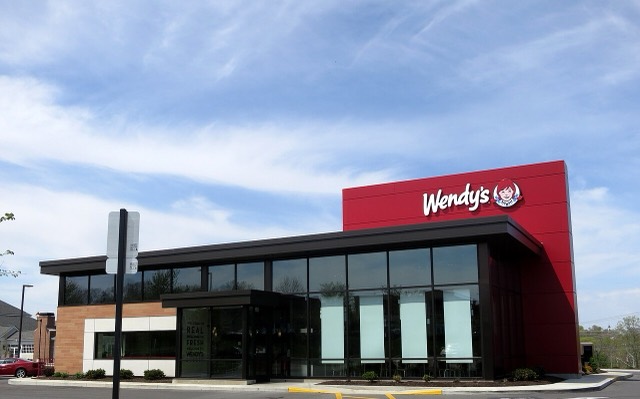
Wendy's
Nheyob · CC BY-SA 4.0

Wendy’s is the world’s third-largest burger chain by locations, founded in Columbus, Ohio in 1969 by Dave Thomas. It operates thousands of restaurants across the U.S. and internationally, competing directly with McDonald’s and Burger King. Its trademark square patties, Frosty desserts, and sassy Twitter persona have kept it culturally relevant for decades, but cultural relevance doesn’t pay rent, and Wendy’s is learning that the hard way.

The chain is publicly traded under the ticker WEN on the Nasdaq, and its corporate parent, The Wendy’s Company, is majority-influenced by Trian Fund Management, the activist investment firm run by billionaire Nelson Peltz. That institutional muscle hasn’t insulated it from consumer backlash, shrinking foot traffic, and an increasingly value-obsessed fast-food landscape where every dollar is a battleground.

People are searching for Wendy’s en masse for two very different reasons: they want to find a deal, or they want to vent about something. The value menu questions, $4 Biggie Bag, $5 box, $6 bag, reflect a customer base that is price-stressed and hunting for the cheapest possible hot meal. The boycott, health, and “is it failing” questions reflect a brand that has made enough controversial moves to land on people’s bad sides.

What the brand’s own PR team will never say is buried right here in these search queries: people are getting stomachaches, questioning its ethics, and Googling whether it’s even worth visiting anymore. That’s the real Wendy’s story in 2024–2025.

People also ask

Wendy's is publicly traded on Nasdaq under the ticker WEN, so technically shareholders own it, but the single biggest power behind the brand is Trian Fund Management, the activist hedge fund run by billionaire Nelson Peltz, which holds a dominant stake and has long shaped the company's strategic direction. The Wendy's Company is the official corporate entity. Dave Thomas, the founder, died in 2002 and his family holds no operational control.

The biggest recent boycott wave hit Wendy's in early 2024 after the chain announced it was exploring 'dynamic pricing', essentially surge pricing where your burger costs more during the lunch rush. The backlash was swift and brutal; consumers heard 'we'll charge you more when you're hungriest' and did not appreciate it. Wendy's quickly walked the announcement back, claiming it was about digital menu boards and discounts, not surge pricing, but the internet had already made up its mind. There have also been separate, smaller calls to boycott tied to broader consumer-led economic protest days.

This question has nothing to do with the fast-food chain, 'Wendy Ortiz' appears to refer to a private individual or a figure from reality TV or social media, depending on the context of the search. There is no single widely documented public figure by that name whose relationship status is a matter of reliable public record. Without a clear, verified public subject, this is not something that can be responsibly answered here.

Wendy's isn't bankrupt, but 'failing' is fair in the sense that it has struggled to grow same-store sales, close the gap with McDonald's and Chick-fil-A, and win back value-seeking customers who defected during inflation. The surge-pricing PR disaster of 2024 didn't help. Its international expansion has been slow, and it consistently ranks third, sometimes fourth, in a category where being anything but number one means fighting for scraps.

No medical advice here, but the likely culprits are the same as at any fast-food chain: high fat content slows digestion and can trigger cramping, sodium overload causes bloating, and processed ingredients can irritate sensitive stomachs. Wendy's beef is marketed as 'fresh, never frozen,' which sounds cleaner, but fresh beef still carries high saturated fat loads, and the fryers, sauces, and buns pile on from there. If it's a recurring problem, that's your gut telling you something your doctor should hear.

As of the most recent publicly available information, Wendy's does not have a single nationally standardized menu item specifically marketed as a '$7 special', value deals at Wendy's shift frequently by region and promotional period. Your best bet is to check the Wendy's app or your local restaurant directly, since these deals are often app-exclusive and change seasonally. The $7 price point has appeared in various combo configurations depending on the market.

Wendy's has offered various '$5 Biggie Bag' and '$5 meal' promotions over the years, with contents shifting by promotion cycle, but a typical $5 deal has included a Jr. Bacon Cheeseburger or a Crispy Chicken sandwich, 4-piece nuggets, small fries, and a small drink. These deals are often app-gated, meaning you need to order through the Wendy's app to unlock the price. Always confirm the current lineup in the app, because Wendy's rotates these aggressively.

Wendy's has periodically offered $3 breakfast deals and $3 single-item promotions, such as a $3 Breakfast Baconator or select Dave's combos at discounted prices, but there is no permanent, universal '$3 special' locked into the national menu. These are typically limited-time offers promoted through the app or in-store. At current inflation levels, a $3 fast-food deal is a loss-leader designed to get you in the door.

Multiple nutrition analyses and studies consistently place Sonic, Five Guys, and Dairy Queen among the worst offenders for calorie and sodium density per meal, but McDonald's and Wendy's are never far behind when you factor in full combo meals. Harvard Health and various dietitian-led rankings often flag Five Guys specifically because its 'customizable' model leads customers to pile on calories without realizing it. No fast-food chain earns a clean bill of health; the differences are matters of degree, not kind.

Sort of, it depends on the metric. Wendy's has reported sluggish same-store sales growth, and foot traffic data from firms like Placer.ai has shown declines relative to competitors in recent periods. The surge-pricing controversy in early 2024 demonstrably hurt brand sentiment. That said, Wendy's still serves millions of customers daily and remains the third-largest burger chain globally, so 'losing popularity' is more accurate than 'dying', but the trajectory is not flattering.

Yes, at the corporate level, Wendy's has scored on the Human Rights Campaign's Corporate Equality Index and has publicly supported LGBTQ+ causes in various campaigns. Like many major chains, it markets inclusivity broadly. However, it's worth noting that franchise ownership is decentralized, meaning individual restaurant culture can vary widely, and Wendy's corporate support is not uniformly celebrated across its entire customer base, which has occasionally made its social media messaging on the topic a flashpoint.

Where to start: Wendy's Dave's Double clocks in at around 840 calories, 46g of fat, and over 1,400mg of sodium, and that's before fries or a drink. A large combo can easily exceed 1,500 calories and 2,000mg of sodium, which is the entire FDA recommended daily sodium intake in one sitting. The Frosty is deceptively caloric, and the bacon add-ons push saturated fat into red-flag territory. 'Fresh, never frozen' beef sounds virtuous, but it doesn't change the fat content.

You're likely thinking of 'Buy Nothing Day,' which falls on the day after Thanksgiving in the U.S., Black Friday, and was launched by Adbusters in the early 1990s as an anti-consumerism protest. There have also been various social-media-organized economic blackout days targeting specific companies or industries. These are consumer activist movements, not official holidays, and their actual impact on corporate revenue is typically minimal despite the buzz they generate.

Wendy's has offered a '$6 Biggie Bag' at various points, typically featuring a larger sandwich (like a Dave's Single or Crispy Chicken), 4-piece nuggets, medium fries, and a medium drink. Like all Wendy's value bundles, the exact contents are subject to change by region and promotion period, and the deal is frequently app-exclusive. If you don't see it in the app, ask at the counter, sometimes these deals are quietly available even when not prominently advertised.

The '6 for $7' (sometimes searched as the '67 deal') was a Wendy's promotion offering six Jr. Bacon Cheeseburgers for $7, a classic volume deal designed to feed a group or a very hungry individual on a budget. This deal has appeared as a limited-time offer and varies by location and time period. Wendy's frequently resurrects cheap-burger-bundle deals like this, especially when it needs a traffic boost; check the current app to see if it's live in your area.

Wendy's has tested and rolled out various '$8 bundle' configurations, often featuring two sandwiches, two small fries, and two small drinks, essentially a shareable two-person deal. The specific contents have shifted across promotional cycles, and an $8 two-person meal is a deliberate play to compete with McDonald's McPick deals and similar value offers from rivals. App-only pricing is Wendy's go-to mechanism for these, so download it if you want the deal.

The classic $4 Biggie Bag, one of Wendy's most recognized value offers, traditionally includes a Jr. Bacon Cheeseburger, 4-piece chicken nuggets, small fries, and a small drink. It was one of the fast-food industry's more competitive value bundles when it launched, though inflation has pressured Wendy's to quietly adjust the price or contents in some markets. It remains the entry point into Wendy's value ecosystem and is frequently promoted through the app.

Yes, as of 2024, Wendy's has continued offering $5 meal deals, though the exact sandwich anchor and availability have shifted over time and by region. The broader fast-food industry, including McDonald's, has leaned hard into the $5 meal deal format in 2024 in response to consumer sticker shock, and Wendy's has followed suit competitively. Check the Wendy's app for the current version, as these deals rotate and are frequently app-exclusive.

Yes, Wendy's offers various bundle-style deals under the Biggie Bag umbrella and other promotional names, combining a sandwich, nuggets, fries, and a drink in a single packaged price. These 'bundle boxes' are central to Wendy's value strategy, designed to simplify ordering and anchor a perception of affordability. The specific bundles available at any given time vary by location and promotion cycle; the Wendy's app is the most reliable place to see what's currently active.

The $6 meal deal at Wendy's has typically featured a mid-tier sandwich, such as a Dave's Single or Crispy Chicken Sandwich, paired with medium fries and a medium drink, positioning it as a step up from the $4 Biggie Bag without breaking the bank. Like all Wendy's promotional pricing, the exact contents and availability are subject to change, and the deal is most reliably found and activated through the Wendy's mobile app. Regional pricing variation also means your market may see slightly different inclusions.

Related topics
Money Trending now
Richest people in the world 2026
Money Trending now
How to cancel Amazon Prime
Money Trending now
Coinbase vs Binance
Money Trending now
How to cancel Adobe Creative Cloud
Money Trending now
Compound interest
Money People
Bernard Arnault
Money People
Mark Cuban
Money People
Mukesh Ambani