← BRANDS
datastats / Culture
LIVE
Culture

Uniqlo

Uniqlo sells the fantasy of Japanese minimalist perfection, but behind the clean folds and lifetime basics lies a supply chain, a sizing system, and a pricing logic the brand would rather you didn't scrutinize too closely.
By · datastats · Updated June 4, 2026
Uniqlo
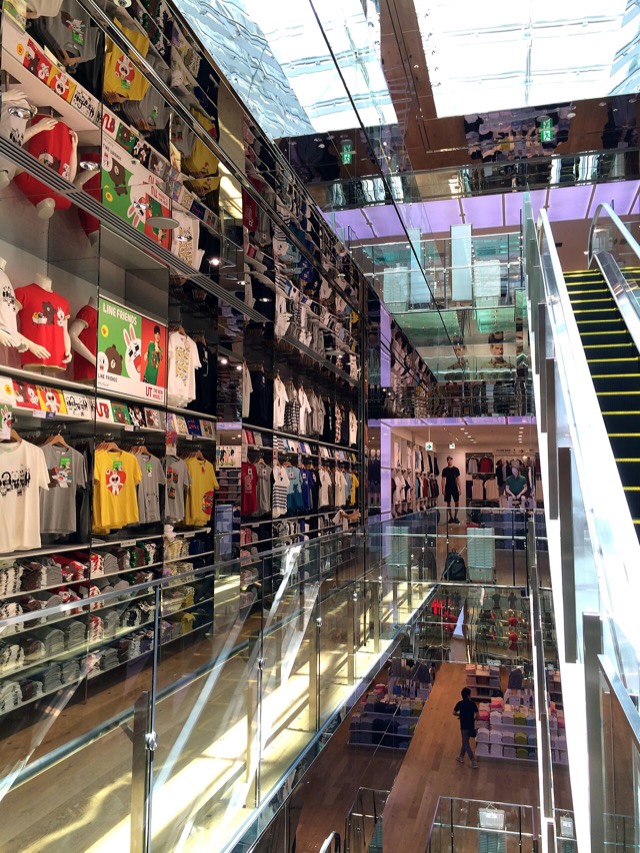
Wpcpey · CC BY-SA 4.0

Uniqlo is the flagship brand of Fast Retailing Co., Ltd., a Japanese retail giant founded in Yamaguchi, Japan in 1949 and relaunched under the Uniqlo name in 1984. It is now one of the world’s largest apparel retailers by revenue, competing directly with H&M and Zara, though it would hate that comparison, because its entire identity is built on being the anti-fast-fashion: timeless, functional, quietly elevated basics.

The brand’s cultural cachet exploded globally in the 2010s thanks to collaborations with designers like Jil Sander (the legendary “+J” line), Christophe Lemaire, and artists via its UT graphic tee series. It turned a fleece jacket and an $80 puffer into genuine cultural objects, no small feat for a retailer selling what are, technically, plain clothes.

People search obsessively about Uniqlo because it occupies an uncomfortable, interesting middle ground: too expensive to dismiss as throwaway fashion, too mass-market to be truly premium. Shoppers want to know if they’re being smart or suckered. That tension, value vs. cost, ethics vs. aesthetics, is exactly what this page unpacks.

What Uniqlo doesn’t volunteer: its manufacturing footprint spans Bangladesh, China, Vietnam, and Indonesia, countries where labor cost scrutiny is constant. Its sizing skews Japanese-standard, alienating Western body types. And its “innovation” fabrics, HeatTech, AIRism, are proprietary marketing terms for technology that other brands also sell, just with less elegant naming.

People also ask

Uniqlo is expensive relative to fast fashion because it genuinely invests more in fabric R&D, longer production runs, and proprietary textile technology, but it's also expensive because the brand has successfully sold itself as a premium-adjacent lifestyle. You're partly paying for real quality (Supima cotton, merino wool, patented HeatTech fibers) and partly paying for the aesthetic prestige of a Japanese minimalist label. The markup is real, and so is some of the quality, just don't confuse the two automatically.

Uniqlo offers complimentary hemming on trousers and jeans at most of its larger standalone stores, this is one of its genuinely consumer-friendly policies and sets it apart from most mass-market retailers. However, alteration availability varies by location and is not guaranteed at every outlet, especially smaller shops or concession units inside department stores. Your safest move is to call your local store directly before visiting, as the service depends on whether an in-store tailor is on duty.

Uniqlo sizing runs noticeably smaller than Western standard sizing, this is the single most common complaint from new customers and the brand communicates it poorly. A US/UK Large frequently fits like a Medium, and plus-size shoppers will find the upper size range genuinely limiting in most markets outside Japan. Always check Uniqlo's specific size chart (available on their website with measurements in cm and inches) and, when in doubt, size up, the fits are designed with a slimmer, straighter Japanese silhouette as the default template.

Uniqlo has offered in-store embroidery customization, adding names, initials, or small motifs to garments, as a paid service in select flagship stores, most notably its major locations in Japan and some flagship stores in cities like New York, London, and Paris. This service is not universally available and has been rolled out inconsistently across markets. Check the Uniqlo website for your specific country and store, as availability changes seasonally and by location.

Uniqlo's standard return policy allows returns within 30 days of purchase for unused, unwashed items in their original condition with tags attached, reasonable but not exceptional. Online orders typically follow the same 30-day window, with return shipping costs sometimes falling on the customer depending on the market. The brand is stricter than it looks: worn, washed, or tagless items are routinely refused, and sale items may carry additional restrictions, so read the small print before assuming goodwill.

Uniqlo is a contraction of "Unique Clothing Warehouse", the name used when the brand first registered in Hong Kong in the 1980s. A transcription error during registration turned "Uniqlо" into the spelling we know today, which the company then embraced. The name was meant to evoke individuality through clothing, though the irony is that Uniqlo's entire model is about universal, interchangeable basics, anything but unique in the conventional sense.

AIRism is Uniqlo's proprietary line of lightweight, moisture-wicking innerwear and base layers designed for hot, humid conditions. The fabric uses ultra-fine microfiber technology to move sweat away from the skin, dry quickly, and reduce odor, it's a genuine performer and one of the brand's best-selling innovations. Think of it as Uniqlo's answer to athletic base layers, but designed to be worn invisibly under everyday clothes rather than at the gym.

HeatTech is Uniqlo's flagship cold-weather base layer technology, developed in collaboration with Toray Industries, a major Japanese chemical company. The fabric converts body moisture into heat and traps it using a fine fiber structure, it's thin, light, and genuinely warmer than its weight suggests. HeatTech comes in multiple grades (standard, Extra Warm, Ultra Warm) for escalating cold conditions, and it's arguably the single product most responsible for turning Uniqlo into a global household name.

As of mid-2025, Uniqlo does not have a confirmed store opening date for Leeds publicly announced. The brand has been expanding steadily across the UK but has concentrated on London, with regional UK cities being rolled out gradually. For the most current information, check Uniqlo UK's official store locator or follow their press releases, the brand typically announces new UK locations a few weeks to months in advance.

Uniqlo runs sales seasonally, the most significant are end-of-season clearances (typically late June/July for summer and late December/January for winter) plus periodic "Special Price" promotions throughout the year. Unlike many retailers, Uniqlo does not heavily participate in events like Black Friday with deep sitewide discounts; its sales are more targeted and shorter-lived. Signing up for the Uniqlo app or email list is the most reliable way to catch flash promotions before stock runs out.

Uniqlo opened its first India store in October 2019 in New Delhi's Ambience Mall, Vasant Kunj, a notably late entry into one of the world's fastest-growing retail markets. The launch was cautious, and expansion within India has been slow compared to Uniqlo's aggressive rollout in Southeast Asia and China. Pricing in India is positioned at a premium tier relative to local incomes, which has kept the brand aspirational rather than mass-market in that market.

As of mid-2025, there is no publicly confirmed Uniqlo store opening scheduled for Bristol. The brand's UK expansion outside London remains limited, with most regional growth focused on larger city-centre flagships. Keep an eye on Uniqlo UK's official channels, if Bristol is on the roadmap, the announcement will come through their press office or store locator before anywhere else.

Uniqlo's sale rhythm follows end-of-season clearances (summer and winter), plus frequent shorter-window "Special Price" events that can pop up on specific product lines with little warning. The brand also runs app-exclusive discounts and loyalty promotions. The honest answer: Uniqlo is never dramatically cheap on sale the way fast fashion brands are, because its starting margins are tighter, expect 20–30% off rather than 70% clearance blowouts.

Critics point to several documented concerns: Uniqlo's supply chain has faced allegations of poor labor conditions, with reports from organizations like the Worker Rights Consortium raising questions about factories in Bangladesh, China, and Myanmar. The brand has also been criticized for its slow and initially evasive response to the Xinjiang cotton controversy, a major ethical flashpoint in the industry. On a consumer level, its sizing exclusivity and the shrinkage of some natural-fiber items after washing are legitimate grievances that the brand's marketing conveniently ignores.

The vast majority of Uniqlo garments are manufactured in China, Bangladesh, Vietnam, Indonesia, and Cambodia, standard for global apparel retail at this scale. Unlike brands that actively market "made in" provenance, Uniqlo is quiet about specific factory origins. Fast Retailing publishes a supplier list and sustainability reports, but labor rights groups have repeatedly flagged a gap between the brand's stated standards and conditions documented at contractor factories.

Uniqlo is generally cheapest in Japan, where it is a domestic mass-market brand rather than an imported premium one, prices in Tokyo can be 20–40% lower than equivalent items in the US, UK, or Australia when converted. South Korea and China also tend to have lower prices than Western markets. The premium you pay in Europe or North America is partly import logistics, partly the brand positioning Uniqlo chooses for those markets.

Japan is unambiguously where Uniqlo is cheapest, it is, after all, a Japanese domestic brand that happens to have gone global. Shoppers visiting Japan regularly report buying HeatTech multipacks, fleece, and basics at prices that feel like a different brand entirely. If you can't get to Japan, South Korea and mainland China are the next most affordable markets, and outlet or clearance purchases in any market can bring prices closer to Japanese retail norms.

Uniqlo became famous by doing one unfashionable thing brilliantly: making functional, well-constructed basics at scale and resisting the trend cycle that defines most apparel retail. Its collaborations with Jil Sander, Christophe Lemaire, and KAWS gave it cultural credibility that no amount of marketing spend could buy. The HeatTech and fleece jacket became genuine cultural phenomena, products people talked about without being paid to, which is the rarest currency in retail.

Uniqlo does, in fact, have a presence in the UAE, it has operated stores in Dubai, including at Mall of the Emirates and Dubai Mall, since around 2012 through a franchise partnership. If stores appear limited or absent in specific locations, it reflects franchise distribution decisions rather than the brand avoiding the market. For current Dubai store locations, the Uniqlo global store locator is the most accurate source.

Related topics
Culture Trending now
Taylor Swift and Travis Kelce Wedding 2026
Culture Trending now
Why Labubu is suddenly everywhere
Culture Trending now
The Odyssey (Christopher Nolan)
Culture Trending now
KPop Demon Hunters
Culture Trending now
House of the Dragon Season 3
Culture People
Adam Curry
Culture People
Adam Sandler
Culture People
Andrew Huberman