← BRANDS
datastats / Sport
LIVE
Sport

Under Armour

Under Armour built a billion-dollar empire on sweat and hype, then watched it unravel through accounting scandals, CEO drama, and a failure to keep up with Nike and Adidas.
By · datastats · Updated June 4, 2026
Under Armour
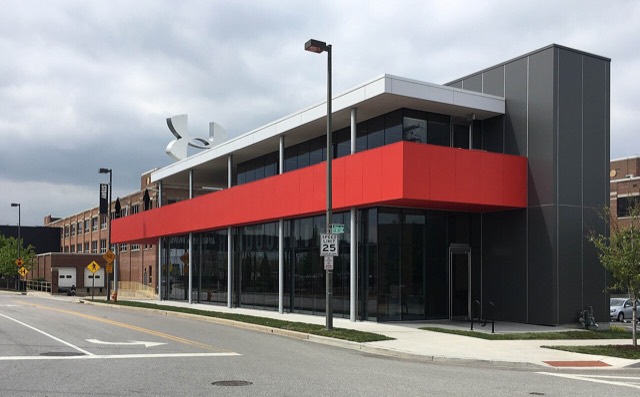
Fredlyfish4 · CC BY-SA 4.0

Under Armour is an American performance apparel, footwear, and accessories brand founded in 1996 in Baltimore, Maryland. It exploded onto the scene by making moisture-wicking compression gear that actually worked, rapidly becoming a household name in locker rooms across the U.S. and, eventually, the world. At its peak in the mid-2010s, it was the second-largest sportswear brand in America.

But the brand’s trajectory since then has been rocky, to put it mildly. Revenue growth stalled, product innovation slowed, and a series of high-profile controversies involving its founder, its books, and its biggest athlete endorsers kept it in the headlines for all the wrong reasons. People aren’t just asking about Under Armour because they want to buy leggings; they want to know if the brand is even worth trusting anymore.

The questions people search most about Under Armour are pointed: Is it ethical? Is it in trouble? Why did it lose its cool? Who’s really in charge? That tells you everything about where the brand stands, it’s no longer a growth story, it’s a turnaround story, and the jury is still very much out on whether it succeeds.

Under Armour remains publicly traded on the NYSE under the ticker UAA and UA, and still generates billions in annual revenue. But it is no longer the disruptor it once was, it’s a legacy brand fighting for relevance in a category dominated by Nike, Adidas, and an army of younger challengers like Lululemon and On Running.

People also ask

The biggest controversy is the U.S. Department of Justice and SEC investigation into Under Armour's accounting practices, which began around 2019. The company was accused of shifting sales between quarters to meet Wall Street expectations, a practice known as "pulling forward" revenue. Under Armour denied wrongdoing and reached a settlement with the SEC in 2021, paying $9 million without admitting or denying the charges. On top of that, founder Kevin Plank faced separate scrutiny over his personal conduct and his political proximity to Donald Trump, which sparked consumer backlash.

Under Armour shoes carry premium prices because of real R&D costs, technologies like HOVR cushioning and Flow outsoles aren't cheap to develop or manufacture. The brand also spends heavily on athlete endorsements and marketing to justify the price tag in a fiercely competitive market. That said, critics argue the price-to-performance ratio doesn't yet match Nike or Adidas at equivalent price points, which is a core reason the footwear division has struggled to gain serious market share.

Under Armour prices itself as a premium performance brand, high-grade synthetic fabrics, technical construction, and an athlete-first positioning all cost money to deliver. It also has to spend aggressively on sponsorships and advertising just to stay visible next to Nike, which outspends everyone. Whether the premium is earned or aspirational is the real debate, and the market's lukewarm response to its stock price suggests many consumers have decided it's the latter.

Under Armour, Inc. is a publicly traded company listed on the NYSE, meaning it is owned by its shareholders. Founder Kevin Plank retains significant voting control through Class C shares, giving him outsized influence over the company's direction even when he's not the day-to-day CEO. No single private entity or conglomerate owns Under Armour, it is an independent public company headquartered in Baltimore, Maryland.

The Under Armour brand is owned by Under Armour, Inc., the publicly traded corporation. Kevin Plank, as founder and controlling shareholder, is the single most powerful individual stakeholder. Unlike rivals Adidas (which is also independent and publicly traded) or Converse (owned by Nike), Under Armour has never been acquired by a larger sportswear conglomerate, it still stands alone.

As of the mid-2020s, Under Armour is still an independent public company. Kevin Plank returned as CEO in 2024 after a period away, reclaiming control of the brand he built. Major institutional investors like Vanguard and BlackRock hold large share positions, as is standard for any NYSE-listed company, but Plank's dual-class share structure keeps ultimate control firmly in his hands.

Kevin Plank founded Under Armour and, through a class-share structure, retains controlling voting power despite not always holding the CEO title. The company is publicly traded, so thousands of institutional and retail investors technically "own" it too. But in any vote that matters, Plank wins, it's his house.

Under Armour has faced boycott calls at various points, most notably in 2017 when Kevin Plank publicly praised Donald Trump as "a real asset" to the business community. Several high-profile Under Armour athletes, including Steph Curry and Dwayne Johnson, publicly distanced themselves from Plank's comments, amplifying the backlash. There is no single authoritative "boycott list," but Under Armour has appeared on consumer-organized boycott campaigns related to its founder's political statements.

The headline scandal is the SEC accounting fraud investigation settled in 2021, in which Under Armour paid $9 million over charges that it misled investors by manipulating revenue recognition to hit quarterly targets. Separately, Kevin Plank faced reputational damage from reports about his Trump-era comments and reported personal conduct issues. These overlapping crises, financial, ethical, and reputational, hit the brand simultaneously during an already difficult growth slowdown, compounding the damage.

Kevin Plank founded Under Armour in 1996, starting the business out of his grandmother's basement in Washington, D.C. A former University of Maryland football player, Plank was frustrated by heavy, sweat-soaked cotton T-shirts and designed a moisture-wicking alternative. He sold his first shirts out of his car to college and NFL teams, and within a decade had built one of the fastest-growing sportswear companies in the world.

Stephen Curry and Under Armour did not formally split, Curry remained a signature athlete and equity stakeholder in the brand as of the time of widely available reporting. However, the relationship became publicly strained in 2017 when Curry distanced himself from Kevin Plank's pro-Trump remarks, saying that Plank's use of the word "asset" was only accurate "if you remove the 'et.'" The tension was real and public, but Curry's shoe line continued under the brand, making it a bruised partnership rather than a clean break.

Under Armour's struggles come down to three compounding failures: it lost the cool factor, it botched its footwear expansion, and it got distracted by scandals during the years it should have been innovating. Nike and Adidas ate its lunch in lifestyle and fashion-forward sportswear, while Lululemon took the premium performance apparel lane. Under Armour became a brand that serious athletes sometimes use and casual consumers rarely choose, a brutal middle ground with no clear identity.

No, Under Armour is not going out of business. It still generates over $5 billion in annual revenue and has a global retail footprint. But "not going out of business" is a low bar, and the brand is clearly in a turnaround phase, not a growth phase. Kevin Plank returned as CEO in 2024 with a restructuring plan, and the company has been cutting costs and trying to rebuild brand equity, none of which suggests imminent collapse, but none of it screams confidence either.

Under Armour has been the target of consumer boycott campaigns, primarily triggered by Kevin Plank's 2017 comments praising Donald Trump. The boycott gained enough traction that it likely contributed to brand perception damage among younger, urban, and progressive consumers, exactly the demographic that drives sportswear culture. No official or industry-wide boycott designation exists, but the sentiment was real and the timing was terrible for a brand already losing momentum.

For actual athletic performance, Under Armour still delivers, its compression gear, base layers, and HOVR running shoes are genuinely well-regarded by athletes who prioritize function over fashion. The brand's commitment to technical fabrics and sweat-management technology remains a real differentiator at the core product level. If you're a serious athlete who cares more about performance than the logo on your chest, Under Armour often provides strong value. The problem is that most consumers aren't making purely rational performance decisions.

Under Armour didn't fully collapse, but it did experience a dramatic fall from its peak growth trajectory in the mid-2010s. The collapse in momentum came from a perfect storm: a failed push into lifestyle/fashion footwear, over-reliance on the North American market, the reputational fallout from Kevin Plank's Trump comments, the SEC accounting investigation, and a revolving door of CEOs. Each problem alone was manageable; all of them hitting at once was devastating for investor confidence and brand perception.

Under Armour is unambiguously American. It was founded in 1996 in Washington, D.C., is headquartered in Baltimore, Maryland, and is listed on the New York Stock Exchange. The brand is as American as it gets, born from college football culture, built on a founder's obsession with athletic performance, and fueled by NFL and college sports sponsorships. There is no British origin or ownership in its history.

Under Armour has not been prominently vocal about LGBTQ+ issues compared to some other major consumer brands. The company has general non-discrimination policies in its corporate framework, as most large U.S. corporations do. However, its founder Kevin Plank's association with Trump, whose administration rolled back various LGBTQ+ protections, made the brand's silence on these issues conspicuous during the late 2010s. Under Armour has not made LGBTQ+ allyship a visible part of its brand marketing in the way Nike or Levi's has.

Under Armour is from the United States. It was founded in 1996 by Kevin Plank in Washington, D.C., and has been headquartered in Baltimore, Maryland, for most of its history. Like virtually all major sportswear brands, its products are manufactured in countries such as Vietnam, Cambodia, and Indonesia, but the brand itself is American-owned and American-born.

Related topics
Sport Trending now
Argentina vs Spain: 2026 World Cup Final Preview
Sport Trending now
2026 NBA Finals
Sport Trending now
England vs Argentina 2026 World Cup Semi-Final
Sport Trending now
2026 World Cup Final: Date, Time, Venue and How to Watch
Sport Trending now
France vs Spain World Cup 2026 Semi-Final
Sport People
Aaron Judge
Sport People
Alexander Zverev
Sport People
Andre Agassi