← BRANDS
datastats / Money
LIVE
Money

Taco Bell

Taco Bell is a $13-billion-a-year fast-food empire owned by one of the most powerful restaurant conglomerates on the planet, and it has plenty of secrets it'd rather you not Google.
By · datastats · Updated June 4, 2026
Taco Bell
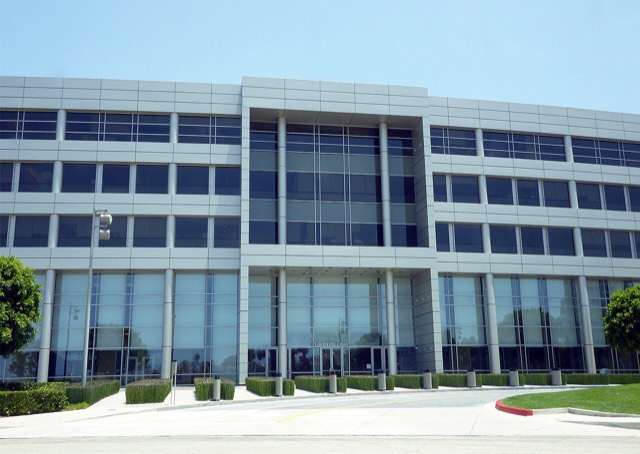
Coolcaesar · CC BY-SA 3.0

Taco Bell was founded in 1962 by Glen Bell in Downey, California, and today operates more than 8,000 locations across the United States and roughly 30 countries. It’s the dominant Tex-Mex fast-food chain in America by sheer footprint, serving an estimated 42 million customers per week. The brand built its empire on the promise of cheap, craveable food, which is exactly why any price increase lands like a betrayal.

Since 2021, Taco Bell has been caught in the same inflationary vice squeezing every fast-food chain: higher labor costs (driven by minimum wage laws, especially in California), surging beef and dairy prices, and supply chain turbulence. The result is a menu that now regularly pushes combo meals past the $10 mark, a jarring shift for a brand whose identity was built on the $1 menu.

Taco Bell is owned by Yum! Brands, Inc. (NYSE: YUM), a Louisville, Kentucky-based conglomerate that also controls KFC and Pizza Hut. Yum! Brands is itself publicly traded, meaning thousands of institutional investors, including Vanguard and BlackRock, are ultimately the biggest “owners.” This corporate structure is critical context: Taco Bell’s pricing, menu, and strategy are ultimately accountable to Wall Street, not to your craving for a cheap Crunchwrap.

Internationally, Taco Bell has a complicated track record. Its infamous failure in Mexico, the country that inspired the cuisine it commercializes, is one of fast food’s most-cited cautionary tales. The brand has also experimented with alcohol sales, upscale “Cantina” formats, and rotating limited-time menus, all of which keep it in the cultural conversation well beyond its core demographic.

People searching money-related questions about Taco Bell want the unvarnished truth: why costs are climbing, who profits from those costs, and what the brand is actually made of, literally. This page answers all of that without the PR filter.

People also ask

Taco Bell got expensive because the entire cost structure of fast food changed, labor, beef, dairy, and packaging all became significantly pricier post-2020. Taco Bell also quietly 'premiumized' parts of its menu, adding items like the Cantina Chicken lineup that carry higher price points by design. The brand built its identity on value, so any increase feels disproportionately shocking compared to, say, a steakhouse raising prices. You're not imagining it, the dollar menu is effectively dead, and Yum! Brands' shareholders are doing just fine.

Right now, two forces are compounding the price pain: California's AB 1228 law, which raised fast-food minimum wage in that state to $20/hour in 2024, and persistent food commodity inflation on ground beef and cheese. Taco Bell, heavily concentrated in California, passed those costs directly to consumers. Nationally, menu price inflation at fast-food chains averaged well above general CPI inflation between 2021 and 2024, and Taco Bell was no exception.

Taco Bell is owned by Yum! Brands, Inc., a publicly traded restaurant holding company based in Louisville, Kentucky. Yum! also owns KFC and Pizza Hut, making it one of the largest fast-food corporations on Earth by location count. Most individual Taco Bell locations are franchised, meaning independent operators own and run them under Yum!'s licensing agreement, paying royalties back to corporate. Glen Bell, the founder, sold the chain to PepsiCo in 1978; PepsiCo later spun off its restaurant division as Yum! Brands in 1997.

Taco Bell entered Mexico in the 1990s and flopped, hard, because it was selling a Americanized caricature of Mexican food to actual Mexicans, at prices that couldn't compete with local taquerías serving the real thing. Mexican consumers didn't recognize Taco Bell's product as their cuisine, and local street food was both cheaper and culturally superior. It's the fast-food equivalent of selling bottled Seine water to Parisians, the market had no need for the imitation when the original was everywhere. Taco Bell quietly retreated from Mexico, though it has made limited, tentative re-entries in subsequent years.

Taco Bell's seasoned beef is made from USDA-inspected ground beef combined with a blend of oats, water, seasoning, and a handful of additives (including soy lecithin, modified corn starch, and anti-dusting agents), a recipe the company voluntarily published in 2011 after a lawsuit alleged its beef didn't meet USDA standards for the 'beef' label. That lawsuit was dropped. The final product is roughly 88% beef and 12% other ingredients, according to Taco Bell's own disclosures. It's not a scandal so much as standard industrial food processing, but it is very different from what happens at a taquería.

Sean Tresvant became CEO of Taco Bell in January 2024, taking over from Mark King. Tresvant previously served as Taco Bell's Chief Brand and Strategy Officer, meaning the person now running the company is the same person who engineered much of its recent marketing. He reports up to Yum! Brands' broader corporate leadership. CEOs at franchise-heavy chains like Taco Bell wield enormous influence over brand direction and pricing strategy, even though most locations are technically run by independent franchisees.

This page can't access your location, so use the official Taco Bell store locator at tacobell.com or open Google Maps and search 'Taco Bell near me' for real-time results with hours and ratings. With 8,000+ U.S. locations, there's likely one within a few miles of most Americans. The app also lets you filter by features like drive-thru, dine-in, or late-night hours.

Taco Bell does not have an official halal-certified menu in the United States, the brand has not pursued halal certification for its standard U.S. locations. In some international markets, like the UK and parts of the Middle East, select Taco Bell locations do serve halal-certified meat; those locations are typically marked on local Taco Bell websites. If halal certification matters to you, always verify directly with the specific location, since franchise arrangements mean policies can vary.

Most Taco Bell locations are open until midnight or later on weekdays, with many drive-thrus running until 2 a.m. or even 24 hours, but hours vary dramatically by franchise owner and location. The only reliable way to check is the Taco Bell app, tacobell.com/find-a-taco-bell, or Google Maps, all of which pull live hours. Don't assume the location near you matches the chain's 'standard' hours; franchisees set their own schedules.

The Taco Bell quesadilla is served with their proprietary Creamy Jalapeño Sauce, a tangy, mildly spicy sauce that's become something of a cult item in its own right. It's not one of the standard red, green, or hot sauce packets; it's a specific condiment made for the quesadilla. Taco Bell has sold bottled versions of it, and copycat recipes are rampant online, which tells you everything about how much people care about this particular sauce.

Real-time open/closed status isn't something this page can provide, for that, open Google Maps, the Taco Bell app, or tacobell.com and search near your location; they all show live hours and whether a location is currently open. Many Taco Bell drive-thrus run late into the night or around the clock, so your odds are decent. The app is the fastest route.

Use the Taco Bell store locator at tacobell.com or search 'Taco Bell open near me' in Google Maps for live, location-aware results. This page has no access to your location or real-time data. The Taco Bell app is particularly useful here because it filters by services, drive-thru, mobile order pickup, dine-in, and shows confirmed hours for each location.

Nearly all Taco Bell locations are open seven days a week, including holidays, though reduced hours on major holidays like Thanksgiving and Christmas are common and decided by individual franchisees. Check the Taco Bell app or Google Maps for today's specific hours at the location nearest you. Don't rely on the 'standard' hours posted online; franchise owners can and do adjust them.

Taco Bell corporate and franchise job openings are listed on jobs.tacobell.com, where you can filter by location, role type, and full- or part-time status. Since the majority of Taco Bell locations are franchised, hiring decisions are made by individual franchise operators, meaning pay, culture, and availability vary significantly by location. Fast-food turnover is notoriously high, so openings are frequent; competition for management-level roles is considerably stiffer than for crew positions.

Not all Taco Bell locations serve breakfast, it's a franchise decision, not a chain-wide mandate. Taco Bell relaunched its breakfast menu in 2020 (after initially debuting it in 2014) and has been expanding it selectively, but many locations still skip it entirely. The fastest way to know is to check the Taco Bell app or tacobell.com, which shows the full menu available at each specific location, including whether breakfast is offered.

Breakfast availability at Taco Bell is determined location by location, not system-wide, so there's no master public list of every breakfast-serving Taco Bell. Use the Taco Bell app and filter your local locations to see which ones show a breakfast menu. Where it is available, breakfast typically runs from around 7 a.m. to 11 a.m., featuring items like the Breakfast Crunchwrap and Cinnabon Delights.

Taco Bell Cantina locations serve alcohol, beer, wine, and frozen alcoholic drinks, including spiked versions of their classic freezes. Cantinas are Taco Bell's upscale urban-format restaurants, designed to attract a different demographic than the drive-thru crowd. As of 2024, there are around 50+ Cantina locations in major U.S. cities including Chicago, Las Vegas, Nashville, and New York. The alcohol menu varies by location and local licensing, check tacobell.com to find a Cantina near you.

Taco Bell does not publish a centralized, publicly available list of every location that serves breakfast, you have to check individual locations through the app or website. The breakfast program has been growing but remains opt-in for franchisees. If a location near you doesn't serve breakfast, it's almost certainly a franchisee business decision, not a logistical one.

Taco Bell does not have a certified gluten-free menu, and the company explicitly warns that cross-contact with gluten-containing ingredients is a real risk in its kitchens. That said, Taco Bell publishes a full allergen guide at tacobell.com where you can filter items by ingredient, several items are made without gluten-containing ingredients in their recipe, including some power bowls and certain proteins served without a shell. For anyone with celiac disease (not just a preference), the cross-contamination risk is significant and Taco Bell itself does not recommend it as a safe option.

This page can't deliver real-time location data, for that, Google Maps or the Taco Bell app is your best tool, giving you live open/closed status, today's hours, and drive-thru availability. The good news: Taco Bell has one of the longest average operating windows in fast food, with a large share of locations running until at least 1 or 2 a.m. Your chances of finding one open are high.

Related topics
Money Trending now
Richest people in the world 2026
Money Trending now
How to cancel Amazon Prime
Money Trending now
Coinbase vs Binance
Money Trending now
How to cancel Adobe Creative Cloud
Money Trending now
Compound interest
Money People
Bernard Arnault
Money People
Mark Cuban
Money People
Mukesh Ambani