← BRANDS
datastats / Money
LIVE
Money

Renault

Renault is France's national champion automaker, kept afloat partly by the state, partly by Dacia's profits, and lately by a retro electric hatchback nobody saw coming.
By · datastats · Updated June 27, 2026
Renault
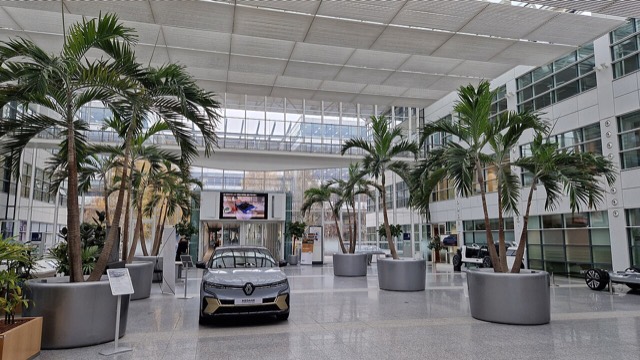
Wizly-08 · CC BY 4.0

Renault is France’s automaker in the fullest sense: founded in Paris in 1899 by the Renault brothers, nationalised after World War II, partly owned by the French State to this day, and woven into the country’s industrial identity. It sells roughly two million vehicles a year, mostly in Europe, Latin America, and North Africa, under the Renault, Dacia, and Alpine banners. It is not a global colossus like Toyota or Volkswagen, but within its territories it is a heavyweight.

People search Renault for a few recurring reasons: to ask whether it is reliable, to untangle its complicated ownership (the French State, Nissan, the famous Alliance), and increasingly to learn about its surprise electric hit, the retro Renault 5 E-Tech. The brand’s story right now is a turnaround story, dragged back from near-crisis in 2020 to a credible EV contender by 2025.

The honest picture is mixed in the ways that matter. Renault’s reliability is respectable but not class-leading, sitting comfortably above the Italian and some American brands while trailing the Japanese and Koreans. Its cheap-and-cheerful Dacia subsidiary quietly prints profit, its Alpine sub-brand chases glamour and Formula 1, and its core Renault range competes on value and comfort rather than bulletproof dependability. The complex tech is where the complaints cluster, not the basic mechanicals.

The Alliance with Nissan, once the defining fact about Renault, has been deliberately de-fanged. The 2023 rebalancing cut Renault’s controlling 43% Nissan stake down to a balanced 15%, ending an era of friction that peaked with the Carlos Ghosn affair. Meanwhile leadership changed hands in 2025, with turnaround architect Luca de Meo decamping to Kering and longtime insider Francois Provost taking the wheel. For buyers, the takeaway is simple: Renault in 2026 is a competitive European brand with a genuinely good EV lineup, not sold in the US, and best judged model by model rather than by reputation alone.

People also ask

Renault sits in the middle of the European reliability pack, neither a Toyota nor a disaster. Independent surveys (Germany's TÜV, France's UFC-Que Choisir, UK warranty data) consistently rank Renault ahead of most French and Italian rivals but behind the Japanese and Korean leaders. The diesel engines (the 1.5 dCi in particular) are durable workhorses, while the early dual-clutch EDC gearboxes and some electronics drew the most complaints. As a rule, a well-maintained Clio or Megane is dependable; the headaches cluster around complex tech, not the core mechanicals.

Renault Group is a publicly traded French company, so it has many shareholders rather than a single owner. The two reference shareholders are the French State, which holds roughly 15% of the capital, and Nissan, which holds a 15% stake following the 2023 Alliance rebalancing. The rest is free float. No single private individual or family controls Renault, unlike many of its rivals.

Partly. The French State owns around 15% of Renault's capital, making it the single largest shareholder. Thanks to the Florange law, which grants double voting rights to shares held more than two years, that 15% stake translates into roughly 22% of the voting power, giving Paris outsized influence over the company it nationalised back in 1945 and only partially re-privatised in the 1990s.

Yes, thoroughly. Renault was founded in France in 1899, is headquartered in Boulogne-Billancourt just outside Paris, and the French State remains its largest shareholder. It is one of the most emblematic French industrial brands, alongside Peugeot and Citroen. Many of its cars are still designed and assembled in France, though, like every mass-market automaker, it also builds vehicles in Spain, Turkey, Morocco, Romania, and beyond.

No. Renault left the US market in 1987 after its disastrous ownership of American Motors Corporation (AMC), which it sold to Chrysler that year. You cannot buy a new Renault in the United States today, and there are no plans to return. American buyers wanting a similar product would look at the company's former tie-ups or simply at other European and Asian brands. Renault's strength is Europe, Latin America, North Africa, and parts of Asia, not North America.

Renault builds cars across a wide industrial footprint. Historic French plants include Douai (now the ElectriCity EV hub making the Renault 5 and Megane E-Tech), Flins, Maubeuge, and Sandouville. Outside France, major plants sit in Spain (Valladolid, Palencia), Turkey (Bursa), Slovenia (Novo Mesto), Morocco (Tangier), Romania (for Dacia), and Brazil. So the country of origin depends heavily on the specific model and market.

Not anymore, at least not in the controlling sense it once did. Renault used to hold 43.4% of Nissan and effectively ran the partnership. The 2023 Alliance rebalancing cut Renault's direct, voting stake in Nissan to 15%, putting the two carmakers on equal footing. A further 28.4% of Nissan shares were placed in a French trust without voting rights. So Renault remains a major shareholder, but the days of Renault dominating Nissan are over.

Yes. Renault acquired Romania's Dacia in 1999 and turned it into one of its smartest bets. Dacia uses Renault's older, fully amortised platforms to build no-frills, low-price cars (the Sandero, Duster, and Spring EV) that have become huge sellers across Europe. Dacia is consistently one of the most profitable parts of the Renault Group, proving that cheap and simple can beat clever and complex.

Yes. Alpine is Renault's revived sports car and performance brand, famous historically for rally and the lightweight A110 coupe. Renault relaunched Alpine as a standalone premium-sporty marque and uses it as the identity for its Formula 1 effort (Alpine F1 Team, the renamed Renault works team). Alpine is also being positioned as an all-electric performance brand for the coming decade.

Renault was founded in 1899 by the three Renault brothers: Louis, Marcel, and Fernand. Louis Renault was the engineering genius who designed the early cars and pioneered the direct-drive transmission, while Marcel and Fernand handled the business side. Marcel died racing in 1903, and Louis went on to build the company into an industrial powerhouse, though his legacy is complicated by his conduct during the German occupation in World War II.

The Renault Clio, a small hatchback launched in 1990, is the brand's perennial best-seller and one of the best-selling cars in Europe of all time. The Captur compact SUV is the other high-volume pillar. More recently, the new Renault 5 E-Tech electric hatchback has become a genuine hit, becoming one of Europe's best-selling small EVs almost immediately after its late-2024 launch.

The Renault 5 E-Tech is a small electric hatchback launched at the end of 2024 that reimagines the iconic 1972 Renault 5 with neo-retro styling. Priced from around 25,000 euros, it offers roughly 300 to 400 km of range depending on battery, and it won the 2025 European Car of the Year award. It has been a commercial success, helping lift Renault's EV sales sharply and giving the brand a genuine halo product.

Aggressively, yes. Renault has built a dedicated EV manufacturing hub in northern France called ElectriCity (around Douai) and spun its electric and software activities into a unit called Ampere. Its EV lineup includes the Renault 5 E-Tech, the Megane E-Tech, the Scenic E-Tech, and the upcoming Renault 4 E-Tech, with Dacia covering the budget end via the Spring. Europe is the focus, where Renault's EV sales have been climbing fast.

The most frequently reported issues center on electronics and gearboxes rather than engines. The early EDC dual-clutch automatics could be jerky and, on some units, unreliable. Owners also flag electrical gremlins, dashboard warning lights, and occasional issues with diesel particulate filters (DPF) on short-trip cars. The petrol and diesel engines themselves, especially the 1.5 dCi diesel, are generally robust. As with most modern cars, the more tech a trim carries, the more there is to go wrong.

For European buyers, Renault offers strong value: competitive pricing, good ride comfort, frugal engines, and a much-praised new wave of electric models. The Clio and Captur are sensible, well-rounded choices, and Dacia (a Renault brand) is unbeatable on price. The honest caveats are average-at-best long-term reliability versus Japanese rivals and steeper depreciation than premium German brands. As a value-for-money daily driver in Europe, it stacks up well; as a long-term keeper, do your homework on the specific model year.

As of 2025, the CEO of Renault Group is Francois Provost, a long-serving Renault executive who took over on 31 July 2025. He succeeded Luca de Meo, the high-profile Italian executive widely credited with Renault's recent turnaround and EV revival, who left in mid-2025 to run luxury group Kering (the owner of Gucci). De Meo's departure was a notable shock given his success at the company.

Related topics
Money Trending now
Richest people in the world 2026
Money Trending now
How to cancel Amazon Prime
Money Trending now
Coinbase vs Binance
Money Trending now
How to cancel Adobe Creative Cloud
Money Trending now
Compound interest
Money People
Bernard Arnault
Money People
Mark Cuban
Money People
Mukesh Ambani