← BRANDS
datastats / Culture
LIVE
Culture

Ray-Ban

Ray-Ban sells $20 worth of Italian plastic for $200+ and has done so for decades, here's the full, unfiltered story.
By · datastats · Updated June 4, 2026
Ray-Ban
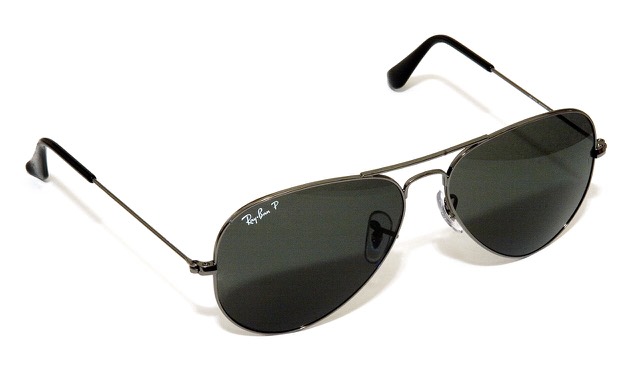
Rich Niewiroski Jr. · CC BY 2.5

Ray-Ban is one of the most recognized eyewear brands on the planet, built on iconic silhouettes like the Aviator (designed for U.S. military pilots in 1936) and the Wayfarer (the sunglasses that defined mid-century cool). The brand is now owned by EssilorLuxottica, the Franco-Italian conglomerate that controls an estimated 80% of the global eyewear market, a fact the industry rarely advertises loudly.

That monopoly-adjacent market position is the single most important thing to understand when asking whether Ray-Ban is “worth it.” EssilorLuxottica also manufactures and licenses glasses for dozens of luxury competitors, Oakley, Persol, Oliver Peoples, Prada, Chanel, Giorgio Armani eyewear, meaning the factory-floor difference between a $150 Ray-Ban and a $500 “luxury” frame is often far smaller than the price gap suggests.

People search for Ray-Ban in enormous volumes because the brand sits at a cultural crossroads: it’s aspirational enough to feel premium, mainstream enough to be counterfeit constantly, and now tech-adjacent thanks to the Ray-Ban Meta smart glasses collaboration with Meta. That last move has renewed attention, and skepticism, around pricing and value.

Ray-Ban’s retail prices range from roughly $150 for basic acetate frames to $300–$400 for polarized or prescription options, and $299–$329 for the Meta smart glasses. Counterfeits flood every online marketplace, and the brand’s own authorized retailer network is the only reliable safe harbor. The questions below cut through the marketing and give you the straight answers Ray-Ban’s own website will never volunteer.

People also ask

The honest answer has two parts: genuine quality, and a near-monopoly. Ray-Ban frames are made in Italy and use reasonably high-grade acetate and metal alloys, with solid optical-quality lenses, that costs real money. But the bigger driver is that parent company EssilorLuxottica controls manufacturing, licensing, retail, and distribution for the bulk of the global eyewear market, which means there's no meaningful competitive pressure to lower prices.

Brands like Cartier, Chopard, and Dolce & Gabbana release eyewear collections that routinely clear $1,000–$5,000 per frame, often using gold, titanium, or gemstones. At the extreme end, bespoke houses like Lugene Optics or limited-edition Cartier pieces have fetched tens of thousands of dollars. For everyday luxury, brands like Oliver Peoples, Lindberg, and Ic! Berlin sit in the $400–$800 range and are widely considered to offer better craftsmanship per dollar than Ray-Ban.

Sort of, it depends entirely on what's included. A $300 frame-only purchase is steep; $300 covering frames plus quality prescription lenses with anti-reflective coating is actually reasonable by industry standards. The U.S. eyewear market average for a complete pair of prescription glasses with mid-tier lenses runs $200–$400, so $300 lands squarely in the normal (if uncomfortable) zone, not the luxury one.

Same answer, worth repeating bluntly: EssilorLuxottica's vertical integration lets it set prices without real competition. The company owns or licenses almost every major eyewear brand, controls LensCrafters and Sunglass Hut retail chains, and has exclusive deals with most vision insurance networks. When one company runs the whole pipeline, prices stay high because they can.

For standard sunglasses, only partially. The optical quality and UV protection on genuine Ray-Bans are solid, and the frames are durable enough to last years with basic care. But you are paying a significant brand premium, independent optical labs and brands like Maui Jim or Warby Parker offer comparable or superior lens technology at similar or lower price points. If the Aviator silhouette means something to you culturally, you're also buying that, just be honest with yourself that you are.

Yes, ray-ban.com is the official brand website, operated by EssilorLuxottica, and is a fully legitimate place to buy. The concern arises because dozens of convincing counterfeit Ray-Ban websites use near-identical designs and URLs with slight variations. Always verify you're on the exact domain ray-ban.com before entering payment details, and be suspicious of any price that's more than 30% below retail.

Ray-Ban Equalized lenses use gradient tint technology designed to reduce glare while maintaining natural color perception, a real feature, not just marketing. Whether it's worth the premium over standard polarized lenses depends on your use case: cyclists and drivers in variable light report genuine benefits, casual wearers probably won't notice a dramatic difference versus standard polarized options at lower price points.

EssilorLuxottica, a Franco-Italian eyewear giant formed by the 2018 merger of Essilor (French lens maker) and Luxottica (Italian frame empire), owns Ray-Ban outright. Luxottica originally acquired Ray-Ban from Bausch & Lomb in 1999 for $640 million. EssilorLuxottica is publicly traded in Paris and had revenues of roughly €25 billion in 2023, it is not a boutique brand house; it is a global industrial monopoly.

For most people, yes on durability and brand recognition, no on pure value-for-money. Genuine Ray-Bans hold up well, carry good UV protection, and retain resale/cultural cachet. But if pure optical performance is your goal, brands like Maui Jim (especially for polarization) or Lindberg (for frame engineering) beat Ray-Ban at comparable or lower real-world prices. Know what you're actually buying.

The single most evidence-backed action is consistently using prescribed intraocular pressure-lowering eye drops and keeping every follow-up appointment with your ophthalmologist, early and sustained pressure management is what the clinical literature overwhelmingly supports. Lifestyle factors like regular aerobic exercise and avoiding prolonged head-down positions also show some supporting evidence. This is not medical advice; consult your ophthalmologist for a treatment plan tailored to your specific diagnosis.

For optical frames, Lindberg (titanium, Danish-engineered) and Silhouette (rimless titanium, Austrian) are the durability benchmarks, both carry lengthy warranties and are widely praised by opticians for longevity. For sunglasses and sport eyewear, Oakley's O-Matter frames and Maui Jim's titanium lines are the durability leaders. Ray-Ban is solidly above average for its price tier but doesn't top the category.

Four reliable tells: first, check the hinge, genuine Ray-Bans use a seven-barrel hinge that clicks and holds firmly; fakes feel loose. Second, look for the Ray-Ban logo etched (not printed or stickered) onto the lens in the upper corner. Third, genuine acetate frames feel dense and slightly warm to the touch; cheap fakes feel light and plasticky. Fourth, every legitimate pair comes with a hard case, a micro-fiber cleaning cloth, and documentation, if any of those are missing or feel flimsy, walk away.

Ray-Ban Meta smart glasses launched in late 2023 at $299–$329, and periodic sales reflect the typical consumer-tech markdown cycle as the product matures ahead of expected next-generation updates. There's also real market education still happening, smart glasses remain a niche category and discounting is a standard demand-stimulation tool. If you see them heavily discounted (40%+), a new version is almost certainly imminent.

Seasonal clearance (end-of-summer, Black Friday), model discontinuation, and authorized retailer promotions are the main drivers. Ray-Ban also regularly rotates colorways and limited collections, which pushes older SKUs into markdown territory. A sale at an authorized retailer like Sunglass Hut or ray-ban.com directly is fine, a "sale" on an unfamiliar third-party site should trigger immediate skepticism about authenticity.

Standard Ray-Ban sunglasses retail between $154 (basic Wayfarer or Aviator in plastic/metal) and $260+ for polarized or special-edition versions. Prescription Ray-Ban sunnies add $100–$200 on top of that depending on lens type. Ray-Ban Meta smart glasses sit at $299–$329. Anything dramatically below these figures from a non-authorized seller is almost certainly counterfeit.

Ophthalmologists most often recommend amber, brown, or copper-tinted lenses that block 99–100% of UV light and reduce blue light exposure, which can be beneficial for light-sensitive glaucoma patients. Wraparound styles that block peripheral light are also commonly suggested. Brands like Cocoons (designed for over-glasses wear) and Noir Medical are specifically manufactured for low-vision and glaucoma patients, general fashion brands including Ray-Ban are rarely the clinical first recommendation. Always confirm lens choices with your eye doctor.

There's no universal winner, it depends entirely on what you're optimizing for. For optical precision and lens technology, Zeiss and Essilor lenses (available through many independent opticians) are the lab benchmarks. For frame durability, Lindberg and Silhouette lead. For value-to-quality ratio, Warby Parker and Zenni have disrupted the market significantly. For polarized sunglasses specifically, Maui Jim is routinely ranked above Ray-Ban by independent optical reviews. Ray-Ban wins on cultural recognition, not technical supremacy.

Sort of, but they're not purpose-built for it. Ray-Ban sunglasses with polarized lenses do block 100% of UV-A and UV-B rays, which matters for eye health generally. However, for macular degeneration specifically, retinal specialists often recommend lenses that also filter blue light and high-energy visible (HEV) light, in wrap-around or side-shielded styles, features most standard Ray-Bans don't prioritize. Purpose-designed low-vision brands are a better clinical fit; discuss specifics with your retinal specialist.

No single fruit has been clinically proven to reduce glaucoma progression on its own, that's a hard line in the ophthalmological literature. That said, studies have found associations between diets rich in leafy greens and fruits high in antioxidants (particularly those with nitrates, vitamins C and E, and carotenoids like lutein and zeaxanthin, found in kiwi, citrus, and berries) and modestly lower glaucoma risk at a population level. Eat the fruit; don't skip your eye drops thinking it's a treatment.

As of current reporting, several promising directions are advancing toward or through clinical trials heading into 2026: sustained-release drug implants (like Durysta, already approved, with next-gen versions in trials) that eliminate the need for daily drops, minimally invasive glaucoma surgery (MIGS) devices continuing to expand, and gene therapy targeting the trabecular meshwork showing early-phase trial results. No single breakthrough has been confirmed as a 2026 arrival; the pipeline is active but regulatory timelines are unpredictable. Monitor announcements from the American Academy of Ophthalmology for the most current trial data.

Related topics
Culture Trending now
Taylor Swift and Travis Kelce Wedding 2026
Culture Trending now
Why Labubu is suddenly everywhere
Culture Trending now
The Odyssey (Christopher Nolan)
Culture Trending now
KPop Demon Hunters
Culture Trending now
House of the Dragon Season 3
Culture People
Adam Curry
Culture People
Adam Sandler
Culture People
Andrew Huberman