← BRANDS
datastats / Culture
LIVE
Culture

Pull&Bear

Pull&Bear is Inditex's youth-facing streetwear arm, same corporate machine as Zara, same fast-fashion controversies, slicker aesthetic packaging.
By · datastats · Updated June 4, 2026
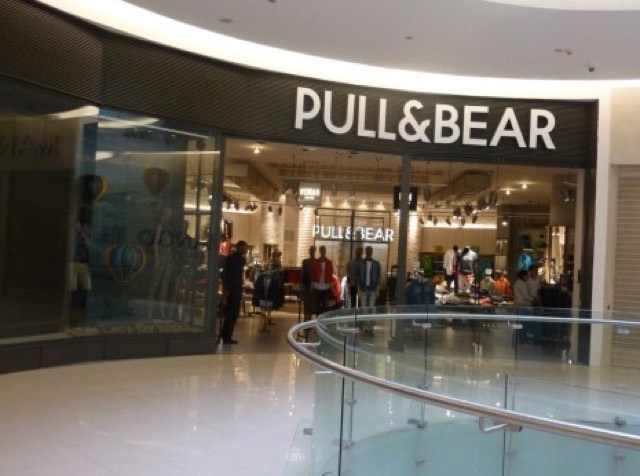
Pull&Bear
Rickywood · CC BY-SA 3.0

Pull&Bear is a Spanish fast-fashion retailer founded in 1991 and headquartered in Narón, Galicia. It sits inside the Inditex empire alongside Zara, Massimo Dutti, Bershka, and several other brands, making it part of one of the largest and most scrutinised fashion conglomerates on the planet.

The brand pitches itself squarely at 18-to-28-year-olds, leaning on streetwear aesthetics, skate culture references, and affordable denim. Think oversized hoodies, relaxed-fit jeans, and graphic tees priced to move fast, because in fast fashion, velocity is the whole business model.

People search for Pull&Bear for several distinct reasons: they want to know if it’s safe to order from, whether it’s ethically produced, and how it fits, especially since European sizing trips up international shoppers constantly. The brand’s low prices invite scepticism, and its Inditex parentage means every labour or environmental scandal touching the group inevitably lands on Pull&Bear’s doorstep too.

The brand operates physical stores across Europe, the Middle East, Asia, and Latin America, and a global e-commerce platform. It is not as dominant in North America, which makes it feel exotic and slightly underground to US shoppers, a perception Pull&Bear actively cultivates while being owned by a €90 billion+ company.

This page answers the questions Pull&Bear’s own marketing team will carefully sidestep, on ethics, quality, boycotts, and everything in between, using only documented, publicly reported facts.

People also ask

Yes, Pull&Bear is a fully legitimate retail brand with physical stores in dozens of countries and a functional global website. It is owned by Inditex, a publicly traded Spanish company listed on the Madrid Stock Exchange, so there is nothing fly-by-night about it. If you are buying from a third-party reseller using the Pull&Bear name, that is a different story, always buy direct from pullbear.com or an authorised retailer.

Pull&Bear is owned by Inditex (Industria de Diseño Textil, S.A.), the Spanish fast-fashion giant founded by Amancio Ortega, the same group that owns Zara, Massimo Dutti, Bershka, Stradivarius, Oysho, and Zara Home. Inditex is one of the world's largest fashion retailers by revenue, and the Ortega family remains its controlling shareholder. Pull&Bear itself was founded in 1991 and has always operated as an Inditex subsidiary.

Sort of, it depends on which boycott conversation you are plugged into. Pull&Bear, as an Inditex brand, has been caught up in broader boycotts targeting the group over labour conditions in supplier factories and environmental concerns around fast fashion's waste footprint. More specifically, some consumers began boycotting Inditex brands, including Pull&Bear, during the Israel-Gaza conflict, after viral (though disputed) social media claims about the group's political positions. Inditex has pushed back on those claims, but the boycott sentiment persists in certain communities regardless.

No, not by the standards of independent watchdogs. Good On You, the leading fashion ethics rating platform, scores Pull&Bear poorly across environment, labour, and animal welfare categories, which mirrors how the broader Inditex supply chain is assessed. Inditex publishes sustainability reports and has pledged net-zero targets, but the sheer volume of garments produced under the fast-fashion model structurally conflicts with genuine ethical production. The brand is not uniquely villainous, but calling it ethical would be a stretch the facts do not support.

Pull&Bear is a youth-oriented fast-fashion brand launched by Inditex in Spain in 1991. It targets roughly the 18-to-28 demographic with streetwear, denim, and casual basics influenced by skate, surf, and urban culture. Despite the relaxed, independent vibe it projects in its marketing, it is a corporate brand managed from Arteixo, Galicia, by the same headquarters team that runs Zara.

For price-to-trend ratio, yes, Pull&Bear reliably delivers on-trend pieces at a price point that undercuts most competitors. As a brand in the fuller sense, ethical practices, durability, transparency, it struggles, much like the rest of the fast-fashion category. If you want to look current without spending much, it delivers; if longevity or supply-chain integrity matters to you, you will be disappointed.

Mostly no, not by the standards of mid-market or premium clothing. Pull&Bear garments are priced for trend cycles, not for a decade in your wardrobe. Denim tends to get better reviews than its knitwear or lightweight basics, which are commonly reported as thinning or losing shape after repeated washing. You get what you pay for: decent enough for a season or two, not built to last.

Pull&Bear is a Spanish fast-fashion clothing brand founded in 1991 and owned by Inditex. It sells casual and streetwear-oriented clothing, jeans, hoodies, graphic tees, outerwear, accessories, primarily to young adults. It operates hundreds of physical stores globally and ships online to most major markets.

Pull&Bear is one of eight brands in the Inditex portfolio, positioned as the group's most streetwear-forward, youth-focused label. Where Zara chases fast runway trends and Massimo Dutti courts an older professional, Pull&Bear leans into skate aesthetics, relaxed silhouettes, and gender-fluid styling. It is the brand Inditex uses to capture the consumer who thinks they are too cool for Zara.

Pull&Bear's standard return window is 30 days from the date of purchase or delivery, both in-store and online. Items must be unworn, unwashed, and returned with their original tags attached. Online orders in many markets can be returned free to a Pull&Bear store, but courier return fees and conditions vary by country, always check the returns section on pullbear.com for your specific market before assuming free returns.

Pull&Bear's clothing line centres on casual everyday wear: relaxed and slim-fit denim, graphic T-shirts, hoodies and sweatshirts, outerwear (puffer jackets, overshirts, parkas), and basics. The aesthetic borrows heavily from 90s streetwear, skate culture, and beachwear, updated each season to reflect current trends. It covers both menswear and womenswear, with an increasingly gender-neutral direction.

Pull&Bear jeans are the brand's strongest-performing product category and the one that earns its most consistent positive reviews. The range spans skinny, slim, straight, wide-leg, and barrel fits, with denim washes from raw indigo to heavily distressed. They are competitively priced, generally €20–€40, and the fit and fabric quality tend to outperform the brand's other garment categories, making them the item most frequently recommended by repeat customers.

Pull&Bear's official customer service email contact varies by country, and the brand primarily funnels support through its online help centre at pullbear.com/en/help rather than publishing a single global inbox. For most markets, the fastest documented routes are the website's live chat function or the contact form in the Help section. Be cautious of any email address for Pull&Bear found on third-party sites, go directly to pullbear.com to find the verified contact details for your region.

Pull&Bear stores are physical retail outlets designed with an industrial-meets-skate-shop aesthetic, think exposed brick, wooden fixtures, and music that signals youth culture louder than any logo. The stores are concentrated in Europe (Spain, Portugal, the UK, France, Italy), the Middle East, and Latin America, with a smaller footprint in Asia. The brand also operates a full e-commerce store at pullbear.com serving most of those same markets.

Pull&Bear uses European sizing as its base, which runs small by US and UK standards, most shoppers report sizing up by at least one size, sometimes two for tops. The brand publishes a size guide on its website with specific measurements, and using that guide rather than your usual label size is genuinely necessary here. Denim sizing uses standard waist-and-length measurements (e.g. 28/32), which are more reliable, but the rise and leg cut can still run narrower than comparable US brands.

STWD (short for Stradivarius, Pull&Bear, and the wider Inditex digital ecosystem in some contexts) sometimes appears as a label on delivery packaging or banking statements for orders placed across Inditex brands. More specifically, STWD appears in some markets as a logistics or invoicing identifier grouping Inditex brand orders together under a single fulfilment operation. If you see it on a bank statement after ordering from Pull&Bear, it is the Inditex payment processing entity, not a separate company or a fraudulent charge.

Pull&Bear is a fast-fashion clothing brand owned by the Spanish retail conglomerate Inditex, founded in 1991 and based in Narón, Galicia, Spain. It sells affordable, trend-driven casualwear and streetwear to a primarily young adult audience through both physical stores and a global online platform. It is one of the most recognisable Inditex brands after Zara, even if its ownership connection is rarely front-and-centre in its marketing.

Pull&Bear runs two major seasonal sales: the end-of-summer sale (typically starting in late July or early August) and the end-of-winter sale (typically starting in early January). Mid-season promotions and flash discounts also appear in April–May and October. The brand does not publish fixed sale dates in advance, but the seasonal pattern has been consistent for years, sign up to their newsletter or check the app in the weeks surrounding those windows.

Pull&Bear participates in Black Friday every year, typically launching discounts on the Friday itself (the last Friday of November) and extending them through the weekend and into Cyber Monday. Discounts in recent years have ranged from 20% to 50% across selected lines, with denim and outerwear usually included. The deals go live simultaneously on the website and in-store, and stock on popular sizes moves fast, early online access is often available to newsletter subscribers.

Pull&Bear has had a presence in the Trafford Centre in Manchester, one of the UK's largest out-of-town shopping complexes. Store locations within large malls do shift over time with lease changes, so the most reliable way to confirm the current exact unit is to check the Trafford Centre's official store directory at traffordcentre.co.uk or use the mall's in-centre maps on arrival. Pull&Bear's own store locator at pullbear.com can also confirm whether the location is currently active.

Related topics
Culture Trending now
The Bear Season 5
Culture Trending now
Taylor Swift and Travis Kelce Wedding 2026
Culture Trending now
Why Labubu is suddenly everywhere
Culture Trending now
The Odyssey (Christopher Nolan)
Culture Trending now
KPop Demon Hunters
Culture Trending now
House of the Dragon Season 3
Culture People
Adam Curry
Culture People
Adam Sandler