← BRANDS
datastats / Money
LIVE
Money

Peugeot

Peugeot is one of the oldest car brands on earth, a French icon owned by Stellantis, and the great European bestseller most Americans have never been allowed to buy.
By · datastats · Updated June 27, 2026
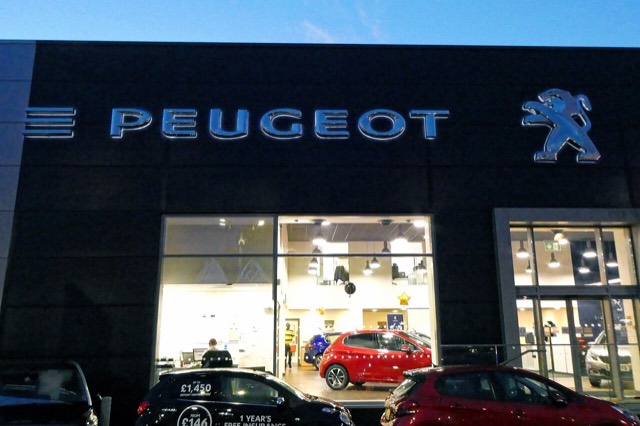
Peugeot
Acabashi · CC BY-SA 4.0

Peugeot is one of the oldest names in the car industry, a French institution whose history stretches back to an 1810 steel foundry making saw blades and coffee grinders long before the automobile existed. Its lion emblem, trademarked in 1858, predates its first car by decades, and Automobiles Peugeot was formally founded in 1896, making it one of the longest-running carmakers on earth.

For most of the world, Peugeot is a familiar, everyday brand. The 208, 2008 and 3008 are fixtures of European roads, and the company has leaned hard into SUVs and an expanding electric range badged with the “e-” prefix. American readers, though, occupy a strange position: Peugeot left the US market in 1991 and never came back, so for them the brand is an intriguing unknown rather than a dealership down the road.

Since January 2021, Peugeot has belonged to Stellantis, the giant formed when France’s Groupe PSA merged with Fiat Chrysler. That puts Peugeot in the same house as Citroen, Opel, Jeep, Fiat and Maserati, sharing platforms and engines across the group. The Peugeot family has not disappeared either: through its holding company it remains one of Stellantis’s largest shareholders, a rare case of a founding dynasty still anchored to a 200-year-old industrial name.

The questions people ask about Peugeot cluster around a few honest concerns: is it reliable, who really owns it, where is it built, and (for Americans) why can’t they buy one. This page answers those plainly, including the awkward bits Peugeot’s marketing would rather gloss over, like the earlier PureTech engine troubles and the ongoing Takata airbag situation affecting older models in Europe.

People also ask

Peugeot sits roughly in the middle of the reliability pack, better than its old French-car reputation suggests but short of Toyota or Lexus. UK MOT data and a 2019 J.D. Power survey actually ranked Peugeot near the top for dependability that year, and the 208 has won "most dependable small car" awards. The weak spots are well known: the older 1.6 THP/PureTech petrol engines (timing-belt and oil-dilution issues) and PSA's earlier diesel particulate filter systems. Stick to a well-serviced recent model and Peugeot is a reasonable bet.

Peugeot is owned by Stellantis, the multinational automaker created on 16 January 2021 when France's Groupe PSA merged with Fiat Chrysler Automobiles (FCA) in a roughly $52 billion deal. Stellantis is now the parent of 14 brands including Citroen, DS, Opel, Vauxhall, Jeep, Fiat, Ram, Dodge, Maserati and Alfa Romeo. The Peugeot family itself has not vanished: through its holding company (Peugeot 1810, formerly EPF/FFP) it still owns a meaningful stake in Stellantis, around 7 percent, making it one of the group's anchor shareholders.

Yes, thoroughly. Peugeot was founded in Franche-Comte in eastern France and remains a French brand to its core, with deep roots in Sochaux (its historic plant, still operating) and a head office in the Paris region at Poissy. Even under Stellantis (a Dutch-registered multinational), Peugeot's design language, naming and identity are unmistakably French. It is, alongside Renault and Citroen, one of the three pillars of the French auto industry.

Peugeots are built across Stellantis's European and global plants. The historic Sochaux factory in eastern France (open since 1912) still produces the 3008 and 5008 SUVs. Other models come out of Mulhouse and Poissy in France, Vigo in Spain, Trnava in Slovakia, plus plants in Morocco, and various sites worldwide for non-European markets. So the country of manufacture depends on the model: a 208 may be Spanish or Slovakian, while a 3008 is likely French.

No. Peugeot has not been sold in the United States since 1991, when it pulled out of the North American market after sales collapsed to barely 2,000 cars a year, crushed by Japanese rivals and unfavourable exchange rates. Stellantis floated plans to bring Peugeot back to the US around 2026, but those ambitions stalled. For now, if you live in America, you cannot buy a new Peugeot, which is exactly why so many US drivers search for the brand out of curiosity rather than as buyers.

It is pronounced roughly "PUH-zho" (or "PYOO-zho"), with the final "t" silent, as in most French words. The trickiest part for English speakers is the "geot" ending, which sounds like the "s" in "measure" followed by a long "o". Think "per-zhoh". Almost nobody outside France gets it perfect on the first try, and the brand has long given up correcting people.

The Peugeot family business dates back to 1810, when it ran a steel foundry in Franche-Comte making saw blades, tools, coffee grinders and later corset frames and bicycles. The automobile arm, Automobiles Peugeot, was formally created in 1896, which makes it one of the oldest car manufacturers in the world that is still operating under its original name. Its first cars appeared even earlier, around 1889 to 1890.

The lion has been a Peugeot trademark since 20 November 1858, decades before the company made a single car. It was originally chosen for the tool and saw-blade business: the lion symbolised the strength, sharpness and flexibility of Peugeot's saw blades, with early versions showing a lion walking along an arrow. The brand kept the lion when it moved into cars and has restyled it many times, most recently with a bold lion's-head crest introduced in 2021.

The Peugeot 208, a compact supermini, is the brand's bestseller and one of the top-selling cars in Europe, frequently a top-three seller in France. Behind it, the 2008 (small SUV) and the 3008 (mid-size SUV) are the volume drivers. The 308 hatchback rounds out the core range. Across the lineup, SUVs have become Peugeot's profit engine, just as they have for almost every mass-market brand.

Yes. Peugeot offers a growing all-electric range branded "e-", including the e-208, e-2008, e-308 and the e-3008, the last built on Stellantis's newer STLA Medium platform with a competitive real-world range. Peugeot's strategy, like the rest of Stellantis, is to electrify across its lineup rather than spin off a separate EV sub-brand. Most of its popular models now come in petrol, hybrid and full-electric versions.

The 3008 is one of Peugeot's strongest products: a stylish mid-size SUV with a distinctive interior (the i-Cockpit with its small steering wheel and high-set digital display divides opinion). It sells well across Europe and the latest generation, including the electric e-3008, has been praised for design and range. Reliability is around segment average; the main historic caution is the earlier PureTech petrol engines, so a hybrid or the EV version sidesteps that concern.

The i-Cockpit is Peugeot's signature interior layout, built around an unusually small steering wheel that you look over (rather than through) to read a high-mounted digital instrument display. Peugeot says it makes the car feel more agile and modern. In practice, drivers either love it or find that the small wheel obscures the dials depending on their seating position, so it is worth trying before you buy.

Peugeot's HDi and BlueHDi diesel engines have a solid reputation for longevity, and high-mileage examples are common, but they come with the usual modern-diesel caveats: diesel particulate filters that dislike short urban trips, EGR valve issues, and AdBlue system faults on the newer BlueHDi units. For motorway-heavy driving they are economical and durable; for short city commutes a petrol or hybrid is the smarter choice.

They are sister brands under the same parent. Citroen and Peugeot merged into Groupe PSA back in the 1970s, and since 2021 both sit inside Stellantis alongside DS, Opel and Vauxhall. They share platforms, engines and technology, which is why a Peugeot 208 and a Citroen C3 are mechanically close cousins. They keep distinct styling and brand personalities, but underneath, much of the engineering is shared.

A well-maintained Peugeot can comfortably exceed 150,000 to 200,000 miles, particularly the diesels used by high-mileage drivers. Longevity depends heavily on servicing: timing-belt intervals on the PureTech petrol engines must be respected, and DPF/EGR upkeep matters on diesels. Peugeots are not in the Toyota "runs forever with zero care" category, but treated properly they are durable, everyday-usable cars.

No, Peugeot is a mainstream mass-market brand, competing with Volkswagen, Renault, Ford and Opel rather than with premium marques. Within Stellantis, the upmarket French ambitions are handled by the DS brand, which spun off from Peugeot. That said, recent Peugeots have pushed noticeably upmarket in design and interior quality, blurring the line between mainstream and entry-premium more than most rivals do.

Related topics
Money Trending now
Richest people in the world 2026
Money Trending now
How to cancel Amazon Prime
Money Trending now
Coinbase vs Binance
Money Trending now
How to cancel Adobe Creative Cloud
Money Trending now
Compound interest
Money People
Bernard Arnault
Money People
Mark Cuban
Money People
Mukesh Ambani