← BRANDS
datastats / Money
LIVE
Money

Pepsi

Pepsi is a $91-billion snack-and-soda empire that has spent 130 years chasing a rival it has never quite caught, and the money trail explains everything.
By · datastats · Updated June 4, 2026
Pepsi
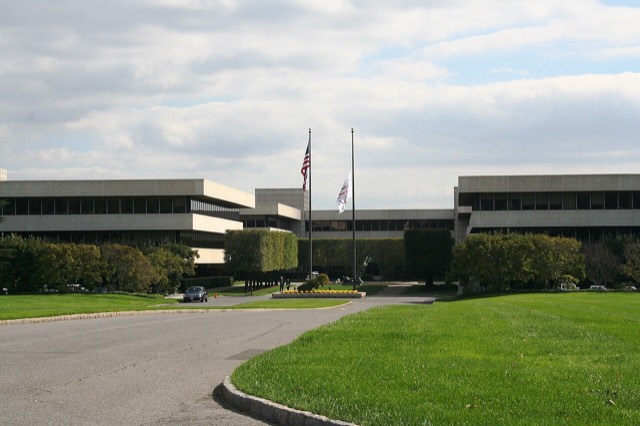
Peter Bond from Philadelphia, USA · CC BY-SA 2.0

PepsiCo, Inc. is one of the largest food and beverage corporations on the planet, headquartered in Purchase, New York. Founded on the back of a cola invented by pharmacist Caleb Bradham in 1893, it has since grown into a conglomerate that owns Lay’s, Doritos, Gatorade, Quaker Oats, Mountain Dew, and dozens of other household brands. The cola itself is almost secondary to the empire, but it remains the brand’s beating heart and its most emotionally charged product.

People search “Pepsi” through a money lens for good reason: the Cola Wars are one of the most studied rivalries in business history, involving billion-dollar marketing battles, aggressive acquisitions, and decades of market-share warfare. Investors, students, and casual consumers all want to know who’s winning, who owns what, and where the real power lies.

What the brand will never tell you: Pepsi has never convincingly beaten Coke in sustained global sales, its products sit near the top of every “unhealthiest drinks” list published by nutritionists, and its conglomerate structure means that when you buy a bag of Doritos, you are funding the same P&L as a can of Pepsi. The money flows are vast and the health trade-offs are real.

This page answers the questions PepsiCo’s PR department would prefer you didn’t Google, with straight facts, no spin.

People also ask

Mexican Coke is made with cane sugar instead of high-fructose corn syrup (HFCS), which has been the standard sweetener in U.S. Coke since the mid-1980s. Cane sugar produces a slightly different mouthfeel, cleaner, crisper, less lingering sweetness, that many drinkers genuinely detect and prefer. It also comes in a glass bottle, which affects temperature retention and arguably aroma. This isn't nostalgia talking; it's chemistry and cost: HFCS is cheaper in the U.S. thanks to corn subsidies, so American consumers got the cost-optimized formula whether they asked for it or not.

Coca-Cola is the richer brand by market capitalization, sitting around $260–270 billion USD versus PepsiCo's roughly $200–210 billion as of 2024. However, PepsiCo generates more total revenue than Coke because it sells food as well as drinks; PepsiCo's annual revenues regularly top $90 billion while Coca-Cola's hover around $45 billion. The distinction matters: Coke is the more valuable pure beverage brand, but PepsiCo is the larger diversified business.

Yes, Doritos is owned by Frito-Lay, which is a wholly owned subsidiary of PepsiCo. PepsiCo acquired Frito-Lay in 1965, making it one of the earliest and most profitable moves in the company's history. So every time someone buys a bag of Doritos, that money flows directly up to PepsiCo's balance sheet.

"When Pepsi Was a Baby" is a novelty/parody song, most notably associated with viral internet content and YouTube videos rather than any major label release. The lyrics typically mock the Cola Wars timeline in a playful, childlike way, often set to a simple tune. It is not an officially licensed Pepsi product and the brand has never endorsed it; it lives squarely in fan/meme culture territory.

Pepsi has appeared on various consumer boycott lists at different times, most prominently calls tied to geopolitical conflicts, including boycotts circulating in parts of the Middle East and among pro-Palestinian activist groups, who target major American multinational corporations broadly. PepsiCo itself has not publicly confirmed or denied specific boycott impacts on sales, though the company has reported some volume softness in certain international markets. Whether Pepsi specifically belongs on any given list depends on the boycott organizer's criteria, always check the source and their stated rationale directly.

No. Pepsi and Coca-Cola are fierce, fully independent competitors, two separate publicly traded companies with no shared ownership whatsoever. PepsiCo trades on NASDAQ under the ticker PEP; Coca-Cola trades on the NYSE under KO. Regulators would never allow one to own the other; the antitrust implications would be enormous.

Sort of, here's why. Pepsi Max (sold as Pepsi Zero Sugar in the U.S.) contains no sugar and essentially no calories, which removes the most obvious harm of regular soda. However, it relies on aspartame and acesulfame potassium as sweeteners, both of which remain subjects of ongoing nutritional research; the WHO flagged aspartame as a "possible carcinogen" (Group 2B) in 2023, a classification that signals uncertainty rather than proven danger at typical consumption levels. It also contains phosphoric acid, which is associated with reduced bone density over long-term heavy use. The honest answer: it's less bad than full-sugar Pepsi, but "zero calories" does not mean zero consequences.

Yes, if consumed regularly and in significant quantities. Regular Pepsi contains around 41 grams of sugar per 12 oz can, well above the American Heart Association's recommended daily added sugar limit for adults. High sugar intake is directly linked to obesity, type 2 diabetes, tooth decay, and cardiovascular disease. Occasional consumption is unlikely to cause harm, but Pepsi is not a health-neutral product, and the brand's own marketing has historically worked very hard to obscure that reality.

PepsiCo, Inc. is a publicly traded company, meaning it is owned collectively by its shareholders. As of 2024, the largest institutional shareholders include Vanguard Group, BlackRock, and State Street, the same index-fund giants that sit atop nearly every major U.S. corporation. No single individual controls the company; the CEO as of 2024 is Ramon Laguarta, who has led PepsiCo since 2018.

Coca-Cola is the world's best-selling soft drink, it has held that position for decades and remains the single most recognized commercial brand on the planet by most global surveys. Pepsi-Cola consistently ranks second. The gap has narrowed and widened at various points in history, but Coke has never genuinely lost the top spot in global volume terms.

Coke came first. Coca-Cola was invented by pharmacist John Stith Pemberton in Atlanta in 1886 and began commercial sales shortly after. Pepsi-Cola was invented by pharmacist Caleb Bradham in North Carolina in 1893, seven years later. Bradham originally called it "Brad's Drink" before renaming it Pepsi-Cola in 1898.

Antitrust law made it essentially impossible, a merger between the world's two dominant cola brands would have triggered immediate regulatory rejection in the U.S., EU, and most major markets. Beyond legality, Coke never needed to: it has led the market for over a century and buying Pepsi would have created a monopoly headache far larger than any competitive threat Pepsi ever posed. There have been no credible, documented acquisition attempts by Coke on Pepsi.

Various nutrition analyses consistently flag Mountain Dew, a PepsiCo brand, as among the most nutritionally damaging sodas on the market, owing to its extreme sugar content (around 46g per 12 oz), citric acid levels, and artificial dyes. Some analyses also place Sunkist Orange and Crush Orange at the top due to comparable sugar loads. Different rankings use different criteria (sugar, acid, caffeine, additives), but Mountain Dew appears on nearly every list, which is an irony PepsiCo would rather you not dwell on.

For most of modern history, Cuba and North Korea were the only two countries where Coca-Cola was not officially sold, due to long-standing U.S. trade embargoes and sanctions. This is widely reported and Coca-Cola itself has acknowledged it. In practice, the product does filter into these markets through unofficial channels, but there is no authorized Coca-Cola distribution there.

The United States is Pepsi's largest single market by volume and revenue, it's where PepsiCo generates the bulk of its sales and where its brand equity is strongest. Beyond the U.S., Pakistan, Saudi Arabia, and India are consistently reported as among Pepsi's strongest international markets, with Pepsi notably outselling Coca-Cola in Pakistan for extended periods. PepsiCo does not publish a definitive per-capita country ranking, but the U.S. anchors the empire.

The United States has historically ranked among the world's highest per-capita soda-consuming nations, alongside Mexico, Chile, and Argentina in the Americas. Mexico frequently tops global per-capita rankings for soft drink consumption, driven heavily by Coca-Cola penetration. In recent years, consumption has shifted as health awareness grows in Western markets, but the Americas collectively dominate global soda volume by a wide margin.

Yes, briefly and in specific contexts. During the "Pepsi Challenge" era of the late 1970s and early 1980s, Pepsi made genuine market-share gains in U.S. grocery store sales and at points claimed to outsell Coke in take-home retail. This panic directly triggered Coca-Cola's disastrous launch of "New Coke" in 1985. However, when fountain and food-service sales were included, Coke maintained overall dominance, and Pepsi has never sustained a lead in total global volume.

Cuba and North Korea, same answer as above, and worth repeating because it comes up so often. Both countries are subject to comprehensive U.S. trade sanctions and embargoes that prevent official Coca-Cola distribution. It's a geopolitical story, not a business choice on Coke's part; the company would presumably sell there if it legally could.

Coca-Cola, unambiguously and without contest. The Pepsi–Coke rivalry is one of the defining corporate battles in business history, spanning over a century of advertising wars, legal skirmishes, and billion-dollar marketing spend. In the snack food segment, PepsiCo faces competition from Kellogg's (now Kellanova) and other snack giants, but no single competitor has the cultural and commercial weight that Coca-Cola carries as Pepsi's existential opponent.

Related topics
Money Trending now
Richest people in the world 2026
Money Trending now
How to cancel Amazon Prime
Money Trending now
Coinbase vs Binance
Money Trending now
How to cancel Adobe Creative Cloud
Money Trending now
Compound interest
Money People
Bernard Arnault
Money People
Mark Cuban
Money People
Mukesh Ambani