← BRANDS
datastats / Money
LIVE
Money

Nutella

Nutella is a global billion-dollar phenomenon built on a recipe that is more sugar and palm oil than it is hazelnut, and the brand's marketing has spent decades making sure you forget that.
By · datastats · Updated June 4, 2026
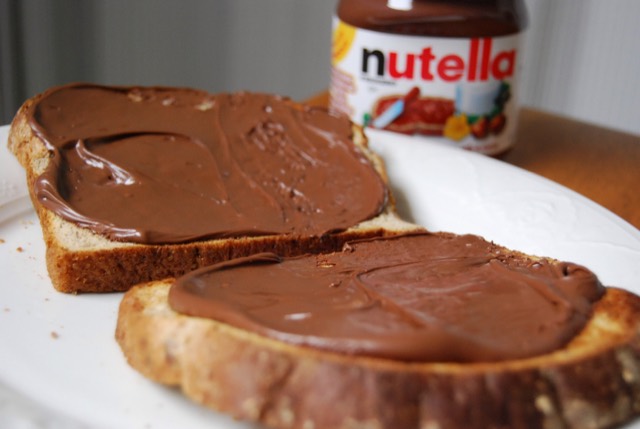
Nutella
Janine from South Korea, United States · CC BY 2.0

Nutella is a hazelnut-cocoa spread created by Italian confectionery giant Ferrero, first sold in 1964 and now available in more than 160 countries. It is one of the best-selling food products on the planet, with Ferrero reportedly producing around 365,000 tons of it per year. A single factory in Alba, Italy, where the brand was born, still carries enormous symbolic weight for the company.

The brand’s marketing has long leaned on wholesome imagery: breakfast tables, happy children, active families. But nutritionists, regulators, and consumer advocates have repeatedly pushed back on that framing, pointing out that sugar is Nutella’s single largest ingredient by weight, accounting for roughly 57% of the product. That tension, lovable brand vs. uncomfortable nutrition facts, is exactly why people keep searching for the truth.

On the money side, Nutella is a rare consumer product that commands premium pricing almost everywhere, yet its core ingredients (palm oil, sugar, skim milk powder) are among the cheapest commodities on earth. The hazelnut content, around 13%, is the one genuinely costly input, but it barely justifies the retail price markup that Ferrero sustains through sheer brand dominance.

Ferrero as a company is also a frequent subject of scrutiny: palm oil sourcing and deforestation concerns have fueled boycotts, and a major salmonella-linked recall in 2022 put the brand’s quality controls under an uncomfortable spotlight. People are not just asking about Nutella because they love it, they are asking because they increasingly suspect the full story is more complicated than a cheerful red-capped jar suggests.

People also ask

Hazelnuts are the honest answer, they are a genuinely pricey agricultural commodity, and Ferrero is the world's single largest buyer, consuming roughly 25% of the global hazelnut supply. But hazelnuts make up only about 13% of the jar; the other 87% is sugar, palm oil, skim milk powder, and cocoa, some of the cheapest ingredients in food manufacturing. The real price driver beyond raw materials is Ferrero's near-monopoly brand power: there is simply no comparable competitor, so the company charges what the market will bear.

The main trigger is palm oil. Environmental groups and consumers have targeted Nutella because Ferrero sources palm oil, an ingredient directly linked to rainforest destruction and biodiversity loss in Southeast Asia and beyond. Ferrero insists it uses only certified sustainable palm oil, but critics argue that 'sustainable' certification schemes are insufficient to stop deforestation in practice. A secondary grievance is misleading health marketing, the idea that a product that is more than half sugar has been pitched as a reasonable breakfast food.

Nutella is owned by Ferrero SpA, the Italian confectionery empire founded by Pietro Ferrero in Alba, Italy, in the 1940s. Ferrero remains a privately held, family-controlled company, the Ferrero family, one of the wealthiest in Europe, has never taken it public. There has been no ownership change; the brand has been continuously held by Ferrero since Nutella's creation in 1964.

Pure hazelnut butter, essentially ground hazelnuts and nothing else, is the most direct upgrade: same core flavour profile, a fraction of the sugar, and no palm oil. If you want the chocolate element, a blend of natural almond or hazelnut butter with a teaspoon of unsweetened cocoa and a touch of honey gets you close. Brands like Justin's Chocolate Hazelnut Butter or Nocciolata Organic are widely cited as cleaner commercial alternatives, though always check the label, 'healthier' spreads can still pack significant sugar.

Sort of, but the math works against you hard. A standard two-tablespoon serving is around 200 calories, with 21 grams of sugar and 12 grams of fat, and almost no protein to keep you full. You can technically fit it into a calorie-controlled diet, but its sugar load tends to spike and crash blood sugar, driving hunger rather than suppressing it. Most nutrition professionals would tell you it is one of the least efficient ways to spend your calorie budget if fat loss is the goal.

Nutella is owned by Ferrero SpA, the private Italian family company headquartered in Alba, Piedmont. The Ferrero family, now led by Giovanni Ferrero as executive chairman, retains full control and has consistently rejected any move toward a public listing. Ferrero is one of the world's largest confectionery groups, also owning Kinder, Tic Tac, and Ferrero Rocher.

No. Ferrero Rocher is an Italian brand, created by Ferrero SpA and originally manufactured in Italy. Ferrero does operate production facilities across Europe, including in Germany, and products sold in specific markets may be made at regional plants, but the brand's origin, headquarters, and primary identity are firmly Italian, rooted in Alba, Piedmont.

Peanut butter wins this one without much contest. A two-tablespoon serving of natural peanut butter has roughly 7–8 grams of protein, much lower sugar (often under 2 grams with no-added-sugar varieties), and healthy monounsaturated fats that improve satiety. Nutella has around 21 grams of sugar in the same serving and almost no protein. For weight loss, protein and satiety matter enormously, Nutella simply does not compete.

In April 2022, Ferrero recalled multiple Kinder chocolate products, not Nutella itself, from dozens of countries after an outbreak of Salmonella Typhimurium was linked to its Arlon factory in Belgium. The recall affected Kinder Surprise, Kinder Mini Eggs, and other Kinder lines. Nutella production (primarily based in other facilities) was not part of that specific recall, though the episode severely damaged Ferrero's quality-control reputation across all its brands.

The glass jars are generally considered microwave-safe as a material, but Ferrero does not officially endorse microwaving their product in the jar. The more immediate risk: the metal lid is absolutely not microwave safe and must always be removed first. If you want to warm Nutella to make it more spreadable, spooning the desired amount into a microwave-safe bowl is the safest and most controlled approach.

One level tablespoon (about 15g) of Nutella contains roughly 10–11 grams of sugar, that is close to 2.5 teaspoons of sugar in a single spoon of spread. The standard 'serving size' marketed by Ferrero is two tablespoons, which pushes that figure to around 21 grams. To put it bluntly: a jar of Nutella is approximately 57% sugar by weight, making it one of the sugariest mainstream spreads on the market.

The recipe varies subtly by market, and European consumers, particularly in France and Germany, have historically received a version with a slightly higher hazelnut content and lower sugar than some other markets. Ferrero has also quietly reformulated the product over the years; a 2017 reformulation in Europe increased the milk powder content, making the spread noticeably lighter in colour, which triggered a significant consumer backlash. Stricter EU food labelling laws also mean European packaging is more forthcoming about the actual composition.

Because sugar is its number-one ingredient, making up about 57% of the product by weight, followed by palm oil, a saturated fat linked to cardiovascular risk concerns and environmental destruction. Hazelnuts, the ingredient most people associate with Nutella, come in third at roughly 13%. The cocoa content is minimal. Nutritionally, it delivers high calories, high sugar, significant saturated fat, and almost no protein or fibre, the definition of an ultra-processed indulgence food.

Food science has a clear answer: Nutella is an almost perfectly engineered combination of sugar, fat, salt, and cocoa, the four palatability pillars that the human brain is wired to crave. The hazelnut flavour adds a roasted, nutty complexity that elevates it above plain chocolate sauce, and the smooth texture triggers what researchers call 'mouthfeel' pleasure. In short, it tastes extraordinary because it was designed, consciously or not, to hit every neurological reward button you have.

Yes, there is a credible concern. Nutella's second-largest ingredient is palm oil, which is high in saturated fat, the dietary fat most consistently linked to raising LDL ('bad') cholesterol in clinical research. A two-tablespoon serving contains about 11 grams of fat, with roughly 4 grams saturated. Eaten occasionally, the impact is modest; eaten daily, it is a meaningful saturated fat load that cardiologists and dietitians would flag for anyone managing cholesterol levels.

No, in fact, the evidence leans the other way for natural, unsweetened peanut butter. It is low in carbohydrates, high in protein and healthy fats, and has a low glycaemic index, meaning it does not cause sharp blood sugar spikes. Several studies suggest regular consumption of nuts and nut butters is associated with better blood sugar control. The caveat: heavily sweetened commercial peanut butters with added sugars and hydrogenated oils are a different story, always read the label.

Eaten as an occasional treat in a small portion, it is not going to ruin your health. But eaten the way it is widely consumed, multiple tablespoons daily, on toast, for breakfast, yes, it is a problem. The combination of extreme sugar density, saturated palm oil fat, and near-zero protein and fibre makes it nutritionally poor relative to its calorie cost. The brand's historical marketing positioning it as a breakfast staple is the part that nutritionists consistently call out as genuinely misleading.

Junk food, by any honest nutritional standard. More than half the product is sugar; the fat source is palm oil; the hazelnut and cocoa content, the 'wholesome' ingredients, are present in relatively small amounts. Regulators in several countries, including in the EU, have moved to restrict how products like Nutella can be marketed to children precisely because the health halo the brand cultivated does not match the nutrition label.

No, and it is not particularly close. Natural peanut butter has more protein, less sugar, lower saturated fat, and a better overall nutrient profile than Nutella by almost every measure. Nutella has more than 10 times the sugar of a natural peanut butter in a comparable serving. The only scenario where peanut butter 'loses' is if you are comparing to heavily sweetened, additive-laden commercial peanut butters, but compare like for like with natural versions, and Nutella is firmly the indulgence product.

Italy. Nutella was created by Pietro Ferrero in Alba, in the Piedmont region of northern Italy, and the first jar was sold in 1964. Ferrero's headquarters remain in Alba to this day. Germany is sometimes associated with the brand because Ferrero has a large German manufacturing and consumer presence, it is one of Nutella's biggest markets, but the origin story, the founding family, and the brand's cultural DNA are unambiguously Italian.

Related topics
Money Trending now
Richest people in the world 2026
Money Trending now
How to cancel Amazon Prime
Money Trending now
Coinbase vs Binance
Money Trending now
How to cancel Adobe Creative Cloud
Money Trending now
Compound interest
Money People
Bernard Arnault
Money People
Mark Cuban
Money People
Mukesh Ambani