Skip to content
datastats

Nestle

Nestlé is the world's largest food company — and also one of its most boycotted, most scrutinized, and most financially dissected.
Updated: May 31, 2026

Nestlé S.A. is a Swiss multinational that generates roughly CHF 90 billion in annual sales across 186 countries, selling everything from infant formula and bottled water to pet food and instant noodles. Founded in 1866, it owns more than 2,000 brands — KitKat, Nescafé, Maggi, Purina, Gerber — making it nearly impossible for a consumer anywhere on earth to avoid its products entirely. That scale is precisely why it attracts so much scrutiny.

The company has faced a near-continuous stream of controversies over more than five decades: aggressive infant-formula marketing in developing countries, water privatization battles, child labor in cocoa supply chains, and product safety scandals. It has also paid fines, signed pledges, and published sustainability reports — yet critics argue its remedial actions consistently lag behind its rhetoric.

On the financial side, Nestlé’s stock (NESN on the SIX Swiss Exchange; NSRGY as a US ADR; and NESTLEIND on the NSE/BSE in India) is closely watched by dividend investors worldwide. Its India-listed entity, Nestlé India, is particularly active on retail investor forums because of share splits, bonus issues, and dividend announcements.

People searching “Nestlé” in a money or investing context are usually asking one of three things: Is this stock still worth holding? What exactly did the company do wrong? And — for Indian investors specifically — when does my bonus or dividend hit my account? This page answers all of that, without the corporate spin.

People also ask

What nestle formula is being recalled?#
The most significant recent U.S. recall involved Nestlé's Gerber Good Start SoothePro powdered infant formula, but the recall that dominated headlines was the 2022 Abbott/Similac crisis — which is a competitor, not Nestlé. For Nestlé specifically, always check the FDA's recall database at fda.gov for the latest status, as recall situations change rapidly and vary by country.
When nestle india stock split?#
Nestlé India carried out a landmark stock split in January 2024 — a 10-for-1 split that reduced the face value of each share from ₹10 to ₹1. This was the company's first-ever stock split since listing in India, driven largely by its very high per-share price that was keeping retail investors on the sidelines.
When nestle share split?#
Nestlé India's share split was effective January 2024 (10:1 ratio, face value cut from ₹10 to ₹1). For the Swiss parent (NESN), Nestlé S.A. conducted a share split in 1992 and has not done one since; its Swiss-listed shares trade in the CHF 80–100 range as of 2024–2025.
Why nestle is boycott?#
Nestlé has faced boycotts on multiple fronts: the decades-old infant formula boycott (launched in 1977 and still active via groups like IBFAN) over allegedly unethical marketing of breast-milk substitutes in developing countries; a post-October 2023 boycott tied to perceived pro-Israel stances during the Gaza conflict; and periodic boycotts over water extraction and child labor in cocoa sourcing. The infant formula boycott is one of the longest-running consumer boycotts in history.
Why nestle is a bad company?#
The case against Nestlé is long and well-documented: it marketed infant formula in low-income countries in ways that WHO codes prohibit, contributing to infant deaths; its former CEO Peter Brabeck-Letmathe was caught on camera arguing water is not a human right; a 2021 company document admitted that more than 60% of its mainstream portfolio couldn't be considered healthy by recognized standards; and a 2022 Washington Post/Reuters investigation documented child labor in its West African cocoa supply chain. These aren't allegations — they're on the record.
Is nestle a bad company?#
Yes — at least by the standard of the gap between its stated ethics and its documented behavior. Nestlé has signed every sustainability pledge imaginable, yet it continues to face credible, evidence-backed criticism on infant formula marketing, water rights, child labor, and product health standards. Signing pledges while lobbying against regulation and moving slowly on systemic change is a pattern, not a one-off mistake.
Who's nestle ceo?#
Laurent Freixe has been Nestlé's CEO since September 2024, replacing Mark Schneider who had led the company since 2017. Freixe is a Nestlé lifer — he joined in 1986 and most recently ran the company's Latin America zone. He inherits a company under pressure from falling organic growth, activist investors, and persistent reputational headwinds.
What nestle chocolate is gluten free?#
Several Nestlé chocolate products are considered gluten-free, including many varieties of plain Nestlé Toll House morsels and certain KitKat products in some markets — but formulations and manufacturing lines vary by country, and cross-contamination risk is real. Always check the packaging for a certified gluten-free label rather than relying on general lists, since recipes change.
What nestle did in africa?#
In Africa, Nestlé has been credibly linked to two major issues: aggressive infant formula marketing in sub-Saharan Africa that critics say undermined breastfeeding and contributed to infant mortality (the core of the 1977 boycott), and sourcing cocoa from West African farms — primarily in Côte d'Ivoire and Ghana — where child labor has been documented by investigative journalists and its own supply chain audits. Nestlé has pledged remediation programs, but independent monitors say the problem remains widespread.
What nestle has done?#
Nestlé has built the world's largest food empire, but its legacy is complicated: it pioneered global food distribution and nutrition science, yet it also fought regulation of infant formula marketing for decades, extracted groundwater in drought-prone regions for minimal fees, and was repeatedly found to have child labor in its supply chains. The company has made genuine investments in R&D and sustainability, but its controversies are not ancient history — they are ongoing.
What is wrong with nestle products?#
The two biggest product-level concerns are health and safety. Internally, Nestlé's own 2021 analysis (reported by the Financial Times) found 60%+ of its food and beverage portfolio fails to meet a basic definition of 'healthy.' On safety, India's 2015 Maggi noodle crisis — where regulators found lead above permissible limits — forced a nationwide recall and a months-long ban. Critics also point to excessive sugar in products marketed to children.
What is nestle known for?#
Nestlé is best known as the maker of Nescafé, KitKat, Maggi, Milo, Purina pet food, Gerber baby food, and Perrier/S.Pellegrino water — among hundreds of other brands. In financial circles, it's known as a reliable dividend payer and a staple of European blue-chip portfolios. In activist circles, it's known as the poster child for corporate power outpacing corporate accountability.
When nestle came to india?#
Nestlé established its presence in India in 1912, initially trading as the Nestlé Anglo-Swiss Condensed Milk Company. It set up its first manufacturing facility in Moga, Punjab, in 1961 and was listed on Indian stock exchanges as Nestlé India Limited. It has been one of the country's most prominent FMCG companies for over six decades.
When nestle company started?#
The company traces its founding to 1866, when Henri Nestlé — a German-born pharmacist based in Vevey, Switzerland — developed Farine Lactée, an infant food combining cow's milk, wheat flour, and sugar. The modern Nestlé S.A. was formed through a 1905 merger between Henri Nestlé's firm and the Anglo-Swiss Milk Company.
When nestle dividend will be credited?#
For Nestlé India, dividends are typically credited within 30 days of the declared record date — directly to your bank account if your demat is linked via NACH mandate, or by cheque otherwise. The exact credit date varies each year; track it on the BSE/NSE corporate action pages or Nestlé India's investor relations website for the current financial year's schedule.
When nestle was founded?#
Nestlé was founded in 1866 by Henri Nestlé in Vevey, Switzerland. The brand name itself — a stylized bird's nest — is a play on his surname, which means 'little nest' in German. That logo has remained virtually unchanged for over 150 years.
When nestle pays dividends?#
Nestlé S.A. (Swiss parent) pays an annual dividend, typically approved at its April AGM and paid out in May each year — it has raised its dividend every year for more than two decades, making it a 'dividend aristocrat.' Nestlé India pays interim and/or final dividends, usually announced alongside quarterly results; check the company's investor relations page for the current year's specific dates.
When nestle bonus will be credited?#
Nestlé India issued a bonus share in 2023 (1:1 ratio — one free share for every share held). Bonus shares are credited to your demat account typically within 15 days of the record date. For future bonus issues, watch the NSE/BSE corporate action announcements; as of mid-2025, no new bonus issue has been officially announced.
When nestle company started in india?#
Nestlé began commercial operations in India in 1912 and incorporated its Indian subsidiary — Nestlé India Limited — in 1959. Its first Indian factory opened in Moga, Punjab, in 1961, producing Milkmaid condensed milk. The company went public on Indian exchanges shortly thereafter.
Where nestle come from?#
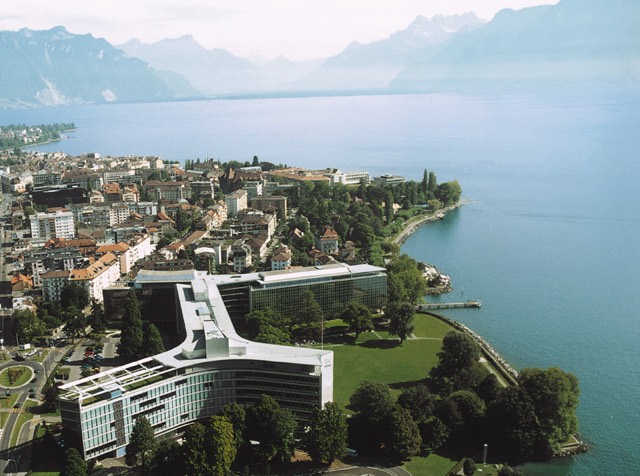
Nestlé comes from Vevey, Switzerland — a small town on the shores of Lake Geneva — where Henri Nestlé developed his infant food formula in 1866. Switzerland remains the company's global headquarters to this day, and Vevey is still home to its corporate campus.
Where nestle is located?#
Nestlé's global headquarters is in Vevey, canton of Vaud, Switzerland. It also maintains a major administrative presence in Lausanne. Nestlé India is headquartered in Gurugram (Gurgaon), Haryana, and operates factories in Moga, Nanjangud, Samalkha, Ponda, Bicholim, Tahliwal, and Sanand.
Where nestle products are made?#
Nestlé products are manufactured in 187 countries across more than 340 factories globally. In India, eight factories produce Maggi, Munch, KitKat, Milkmaid, Nescafé, and other lines. The 'made in' location varies significantly by product and market — a KitKat bought in Japan is made there; one bought in India is made domestically.
Where nestle was founded?#
Nestlé was founded in Vevey, Switzerland, in 1866. Henri Nestlé chose Vevey as his base because of its proximity to Alpine dairy farms, which supplied the milk essential to his infant formula. The town remains the symbolic and operational heart of the company.
Why nestle is bad?#
The factual case: Nestlé marketed breast-milk substitutes in ways that WHO guidelines prohibit, a practice linked to infant deaths in countries with unsafe water supplies; it bottled and sold municipal water in drought-stressed regions after acquiring permits critics called below-market; its own internal analysis confirmed most of its portfolio is nutritionally poor; and child labor persists in its cocoa supply chain despite years of pledges. 'Bad' is a judgment — these are the facts underpinning it.
Why nestle share is falling?#
Nestlé's stock — both globally and in India — has faced pressure from a combination of slowing volume growth after pandemic-era price hikes, softening consumer demand in key markets, and margin concerns. For Nestlé India specifically, post-split valuation normalization and broader FMCG sector headwinds have weighed on the share price. Rising input costs and rural demand slowdowns in India have also been cited by analysts.
Why nestle is falling?#
Nestlé's global stock has been one of the weaker performers among European blue-chips in 2023–2025, falling from peak levels as organic growth decelerated sharply. The company over-relied on price increases rather than volume growth post-COVID, and when consumers pushed back and traded down to private labels, the growth story cracked. Activist investor pressure from Third Point and others has also kept the stock volatile.
Why nestle pops discontinued?#
Nestlé Pops (a water-ice novelty product) were discontinued as part of Nestlé's broader strategic divestiture of its North American ice cream business. In 2022–2023, Nestlé sold significant portions of its U.S. ice cream brands and operations, exiting or shrinking product lines that didn't fit its premiumization strategy. Brand rationalization — cutting underperformers to focus on high-margin products — is a deliberate, ongoing corporate strategy.
Why nestle stock is falling today?#
Day-to-day moves in Nestlé stock typically reflect macro factors (CHF strength hurting exports, European consumer sentiment data, interest rate expectations) or company-specific news (quarterly sales updates, guidance cuts, or management changes). For today's specific move, check a live financial data source — Bloomberg, Reuters, or your broker's feed — since stock prices change faster than any static page can track.
Why nestle share price is falling?#
The medium-term structural reason: Nestlé built its post-pandemic revenue on price hikes, not volume. Once inflation eased and consumers became price-sensitive, volumes didn't recover as expected — and the market punished that. Analyst downgrades, guidance cuts in 2023–2024, and concerns about the company's ability to regain volume growth without sacrificing margins have all kept the share under pressure.
Why nestle is up today?#
When Nestlé stock rises on a given day, it's usually driven by one of a few catalysts: better-than-expected quarterly sales figures, a dividend announcement, broader defensive-stock rotation (investors fleeing risk assets into staples), or a currency tailwind for the Swiss franc. For the precise reason on any specific day, check financial news wires — Reuters, Bloomberg, or Moneycontrol for NESTLEIND — in real time.

Brands