Monster Energy
Monster Energy is a $6-billion-a-year habit that the company sells as a lifestyle — but the health tab is something their marketing never puts on the can.
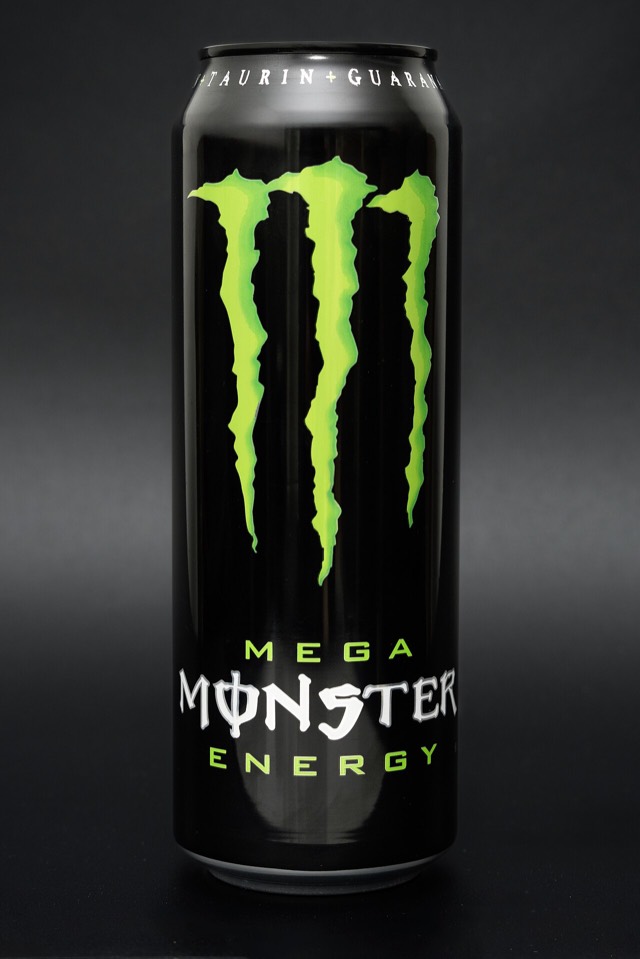
Monster Energy is one of the two kings of the global energy drink market, neck-and-neck with Red Bull and comfortably ahead of everyone else. Launched in 2002 by Hansen Natural (now Monster Beverage Corporation), the brand is publicly traded on NASDAQ under the ticker MNST and has a market cap that regularly hovers above $50 billion. Coca-Cola owns roughly 19% of the company and handles its distribution worldwide — making “independent” Monster a lot more corporate than its claw-mark logo implies.
The drink’s formula is built around caffeine, B-vitamins, taurine, and sugar (or sweeteners in the zero-sugar lines). A standard 16 oz can packs 160 mg of caffeine — twice a standard cup of coffee. That’s the number the brand is legally required to disclose, but it’s rarely the number they lead with in their marketing, which leans hard on extreme sports, gaming, and youth culture instead.
People search Monster Energy questions obsessively for two reasons: they drink a lot of it and they’re starting to worry, or they’re parents watching their kids drink a lot of it and they’re already worried. The questions cluster around expiration dates, daily limits, and the blunt ask — is this bad for me? — that the brand’s own website buries under sponsored athlete profiles.
The FDA classifies energy drinks as dietary supplements or conventional beverages depending on how the maker labels them — a regulatory grey zone Monster has historically exploited to avoid stricter oversight. That loophole is the real story behind why a can this caffeinated can sit on a gas station shelf next to Gatorade with almost no age restriction in most U.S. states.
People also ask
- When do monster energy drinks expire?#
- Monster Energy cans typically carry a shelf life of 18 to 24 months from the production date. The exact expiration date is stamped on the bottom or side of the can. After that date, the drink is generally safe but the carbonation and flavor will degrade noticeably. The caffeine and other active ingredients don't magically disappear, but you're paying for a flat, off-tasting experience.
- When does monster energy expire?#
- The printed date on the can is your answer — usually 18 to 24 months after manufacture. Monster doesn't publicly advertise a universal expiration window, so you have to find the stamp yourself. It's typically embossed or inkjet-printed on the bottom of the can in a MM/DD/YY or DD/MM/YY format. Unopened and stored in a cool, dark place, it should stay at peak quality right up to that date.
- Is it bad to drink 1 Monster every day?#
- Sort of — it depends on who you are, but for most adults, the honest answer leans toward yes. One 16 oz Monster delivers 160 mg of caffeine, 54 grams of sugar (in the original), and a cocktail of B-vitamins at doses far above daily needs. The caffeine alone is within the FDA's generally-cited 400 mg daily safe limit for healthy adults, but daily high-sugar intake and the cardiovascular stress of routine high caffeine consumption are documented concerns. If you're under 18, pregnant, or have any heart condition, one a day is genuinely risky.
- Who owns monster energy?#
- Monster Energy is owned by Monster Beverage Corporation, a publicly traded company (NASDAQ: MNST). The Coca-Cola Company holds approximately 19.4% of Monster Beverage, making it the single largest shareholder and the brand's global distribution partner. Co-founders Rodney Sacks and Hilton Schlosberg still run the company as co-CEOs. So while Monster markets itself as a scrappy, rebel brand, it is firmly inside the Coca-Cola empire's orbit.
- Where is monster energy expiration date?#
- Check the bottom of the can first — that's where Monster most commonly stamps the expiration or "best by" date. It can also appear on the side of the can near the seam. The print is usually small and embossed or ink-stamped, so tilt the can under a light if you're struggling to find it. The format varies by production facility but is typically MM/DD/YY.
- Is Monster Energy good or bad for you?#
- Bad, on balance — and the evidence isn't close. Regular consumption is linked to increased blood pressure, elevated heart rate, and poor sleep quality, all of which are documented in peer-reviewed literature. The sugar load in the original formula is a near-daily ticket to metabolic problems over time, and even the sugar-free versions deliver a heavy caffeine and artificial sweetener hit. There are no meaningful health benefits in Monster that you couldn't get from a cup of coffee and a B-vitamin supplement.
- Why does Monster have so many vitamins?#
- Marketing, mostly. Loading a can with B-vitamins (B2, B3, B6, B12) lets Monster claim an "energy blend" that sounds scientific and health-adjacent. The reality is that B-vitamins only convert food into energy if you're actually deficient — if you're not, the excess is flushed out in your urine. The vitamin content also historically helped Monster qualify as a "dietary supplement" rather than a conventional beverage, giving it a regulatory edge that shielded it from stricter FDA rules.
- How much coffee is 1 Monster?#
- A standard 16 oz Monster contains 160 mg of caffeine, which is roughly equivalent to 1.5 to 2 standard 8 oz cups of drip coffee (which typically run 80–100 mg per cup). It's not dramatically more caffeinated than coffee, but the delivery mechanism is different — you tend to drink a cold, sweet can faster than a hot coffee, which accelerates the caffeine hit. The sugar spike on top of the caffeine is what makes the experience feel more intense.
- is monster energy bad for you#
- Yes, especially with regular use. A single can pushes your caffeine intake significantly and, in the original formula, dumps more than 50 grams of sugar into your system in one sitting. Documented risks associated with energy drink consumption include heart palpitations, high blood pressure, anxiety, disrupted sleep, and — in rare but reported cases — more serious cardiac events, particularly in people with underlying conditions. "Bad for you" isn't fear-mongering here; it's what the clinical literature says.
- Can I drink 2 Monsters per day?#
- Technically you can, but you shouldn't make it a habit. Two 16 oz Monsters means 320 mg of caffeine — still under the FDA's 400 mg daily ceiling for healthy adults, but right up against it with zero buffer for any other caffeine source. The sugar hit from two original cans is over 100 grams — more than double the American Heart Association's recommended daily limit for added sugar. For anyone under 18, pregnant, or with cardiovascular sensitivities, two cans a day is a clear no.
- Can energy drinks cause acidosis?#
- In extreme cases, yes — this is documented, not hypothetical. There are reported cases in medical literature of high-volume energy drink consumption contributing to metabolic acidosis, a condition where the blood becomes dangerously acidic. It's typically tied to excessive intake (multiple cans daily over sustained periods) rather than moderate use. The mechanism involves both the direct ingredients and the downstream effects on kidney function and acid-base balance. It's a rare but real risk that sits at the outer edge of the harm spectrum.
- Is Monster high on caffeine?#
- Yes, relative to most beverages, though not the highest on the market. At 160 mg of caffeine per 16 oz can, Monster is roughly double a standard cup of coffee by volume but comparable on a per-ounce basis. Specialty energy drinks and pre-workout products can go much higher. Monster sits in the "high caffeine" category and above the 71 mg per 12 oz threshold that the American Academy of Pediatrics says is too much for adolescents.
- Is 4 cans of Monster a day too much?#
- Yes, by a wide margin — this is a dangerous amount for virtually every adult. Four 16 oz cans delivers 640 mg of caffeine, well above the FDA's 400 mg daily safe limit, plus potentially 200+ grams of sugar if you're drinking the original formula. That level of caffeine intake is associated with caffeine toxicity symptoms: rapid heart rate, tremors, nausea, and in serious cases, cardiac arrhythmia. Four cans a day is not a gray area — it's objectively too much.
- What are the healthiest energy drinks?#
- The healthiest energy drink is, bluntly, the one you drink least often. Among commercial options, drinks with lower caffeine (under 100 mg), zero added sugar, and minimal artificial additives rank better by default. Brands like Celsius, RUNA, or Hiball are often cited in this context, though "healthy energy drink" remains a contradiction in terms for regular use. Black coffee or green tea gives you caffeine with a far cleaner ingredient profile and decades of safety data behind it.
- Is 3 monsters a day healthy?#
- No — three 16 oz Monsters a day is 480 mg of caffeine, which exceeds the FDA's recommended daily ceiling, plus a catastrophic sugar load if you're not drinking zero-sugar varieties. At this intake level, you're firmly in the territory of caffeine dependence, elevated blood pressure, and compounding cardiovascular strain. No credible health authority would describe this as healthy, and Monster's own can warns consumers not to exceed two cans per day.
- How many cups of coffee are in a Monster?#
- A 16 oz Monster (160 mg caffeine) is equivalent to roughly 1.5 to 2 standard 8 oz cups of drip coffee. If you're comparing to a strong brew or espresso-based drink, the gap narrows further. The caffeine content is similar — what differs is the added sugar, artificial flavoring, and the speed at which most people consume a cold canned drink versus a hot coffee.
- What happens if I drink Monster Energy every day?#
- Over time, daily Monster consumption is associated with caffeine dependence (meaning withdrawal headaches when you skip it), elevated resting blood pressure, poor sleep quality, and metabolic strain from the sugar load. Research published in journals like the Journal of the American Heart Association has linked regular energy drink consumption to measurable changes in heart rhythm and blood pressure. You'll also build caffeine tolerance, which drives people to drink more to feel the same effect — a loop the brand profits from.
- How often is it okay to drink Monster?#
- Occasional use — think once or twice a week at most — significantly reduces the documented risks compared to daily consumption. The problems with Monster accumulate with frequency: the cardiovascular stress, the sugar intake, the caffeine dependence. There's no official medical guidance that says energy drinks are fine as a daily staple. Treat it the way you'd treat a fast-food meal: fine occasionally, a problem as a routine.
- What is the maximum amount of Monster you can drink per day?#
- Monster's own label says do not exceed two 16 oz cans (320 mg caffeine) per day for healthy adults. The FDA's general safe caffeine ceiling for adults is 400 mg per day from all sources. So two cans is Monster's stated limit and leaves you only 80 mg of buffer from all other caffeine — coffee, tea, pre-workout, chocolate — for the entire day. For anyone under 18, the answer is zero cans per day, per major pediatric health organizations.
- Can I drink two monsters back to back?#
- Physically, yes. Wisely, no. Drinking two 16 oz Monsters in rapid succession means hitting your bloodstream with 320 mg of caffeine in a short window — the speed of absorption matters, and back-to-back consumption spikes caffeine levels faster than spacing them out. You're also at Monster's own stated daily maximum in one sitting, leaving no room for any other caffeine the rest of the day. Expect elevated heart rate, potential jitteriness, and disrupted sleep — and that's assuming you're a healthy adult.