← BRANDS
datastats / Money
LIVE
Money

Mercedes-Benz

Mercedes-Benz is the inventor of the modern car and one of the 'big three' German luxury brands, admired for comfort, scrutinised for maintenance bills.
By · datastats · Updated June 13, 2026
Mercedes-Benz
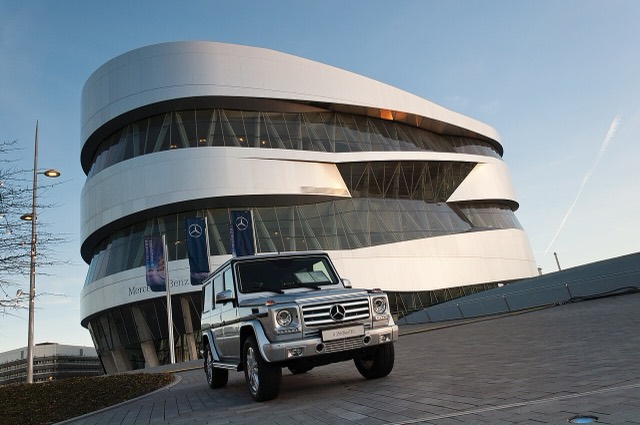
Julian Herzog (Website) · CC BY 4.0

Mercedes-Benz is one of the oldest and most storied names in motoring. Its founders, Karl Benz and Gottlieb Daimler, are widely credited with inventing the modern automobile in the 1880s, and the three-pointed star has stood for engineering prestige ever since. Today the brand sits alongside BMW and Audi as one of Germany’s luxury ‘big three’, selling everything from compact hatchbacks to the flagship S-Class and AMG performance cars.

People search for Mercedes-Benz for two very different reasons: aspiration and anxiety. Buyers want to know if it is reliable and worth the premium; existing owners want to understand maintenance costs and corporate ownership after the company renamed itself from Daimler. The answers below stick to widely reported facts about the company and the cars; nothing here is financial or purchasing advice, and reliability and running costs vary significantly by model, year and how the car is maintained.

People also ask

Mercedes-Benz is made by Mercedes-Benz Group AG, a publicly traded German company (formerly called Daimler AG until it was renamed in 2022). No single person owns it; its shares are held by institutional and individual investors worldwide. The largest single shareholders have included Chinese carmaker BAIC, Geely founder Li Shufu, and the Kuwait Investment Authority, each holding meaningful minority stakes, but none control the company.

The heart of production is Germany, plants in Sindelfingen, Stuttgart-Untertürkheim, Bremen and Rastatt build many core models. But Mercedes is a global manufacturer: SUVs for the world are built in Tuscaloosa, Alabama (USA), with additional plants in China, Hungary, South Africa and elsewhere. So a Mercedes badge does not automatically mean 'built in Germany', it depends on the model and the market it is sold in.

It is a mixed picture. Mercedes builds premium cars with advanced engineering, but reliability rankings from sources like Consumer Reports and J.D. Power have historically placed it in the middle of the pack rather than at the top, luxury complexity (air suspension, advanced electronics, twin-turbo engines) means more that can eventually go wrong and cost more to fix. Well-maintained models can be very durable; the reputation for big repair bills comes mostly from out-of-warranty ownership.

Generally yes, especially once out of warranty. Premium parts, specialist labour, and complex systems push routine service and repairs above mainstream brands. Models loaded with technology (air suspension, advanced driver aids) tend to be the costliest. This is a normal trade-off for a luxury car, but it is the single most common reason owners are surprised, the purchase price is only part of the cost of ownership. None of this is financial advice; budgets and models vary widely.

They are direct rivals among Germany's luxury 'big three' (with Audi). The traditional shorthand: Mercedes leans toward comfort, ride refinement and a sense of occasion, while BMW emphasises sporty handling and the 'driver's car' feel, though both have blurred those lines for years. In practice the gap is narrow and model-specific; people choose between them on a particular car, interior taste, and dealer experience rather than a clear overall winner.

Mercedes-Benz Group includes the AMG performance division and the ultra-luxury Maybach sub-brand, plus the electric EQ line integrated into the main range. It is a part-owner of the Smart city-car brand through a joint venture with Geely. Note that the truck and bus business was spun off as a separate listed company, Daimler Truck, in 2021, so Mercedes-Benz today is focused on passenger cars and vans.

Yes. Mercedes-Benz is German, headquartered in Stuttgart, and traces its roots to Karl Benz and Gottlieb Daimler, pioneers credited with building the first modern automobiles in the 1880s. Despite global manufacturing and international shareholders, its corporate home, engineering centre and brand identity remain firmly German.

They are essentially the same company under different names. The parent group was called Daimler AG until February 2022, when it renamed itself Mercedes-Benz Group AG to align with its best-known brand. Separately, the heavy-vehicle arm was split off in 2021 as Daimler Truck AG, a distinct listed company. So today 'Daimler Truck' makes trucks and buses, while 'Mercedes-Benz Group' makes the cars.

Related topics
Money Trending now
Richest people in the world 2026
Money Trending now
How to cancel Amazon Prime
Money Trending now
Coinbase vs Binance
Money Trending now
How to cancel Adobe Creative Cloud
Money Trending now
Compound interest
Money People
Bernard Arnault
Money People
Mark Cuban
Money People
Mukesh Ambani