← BRANDS
datastats / Culture
LIVE
Culture

Lush

Lush is the handmade cosmetics brand that built a cult following on bath bombs and ethics, then discovered that loud values come with loud consequences.
By · datastats · Updated June 4, 2026
Lush
Philafrenzy · CC BY-SA 4.0

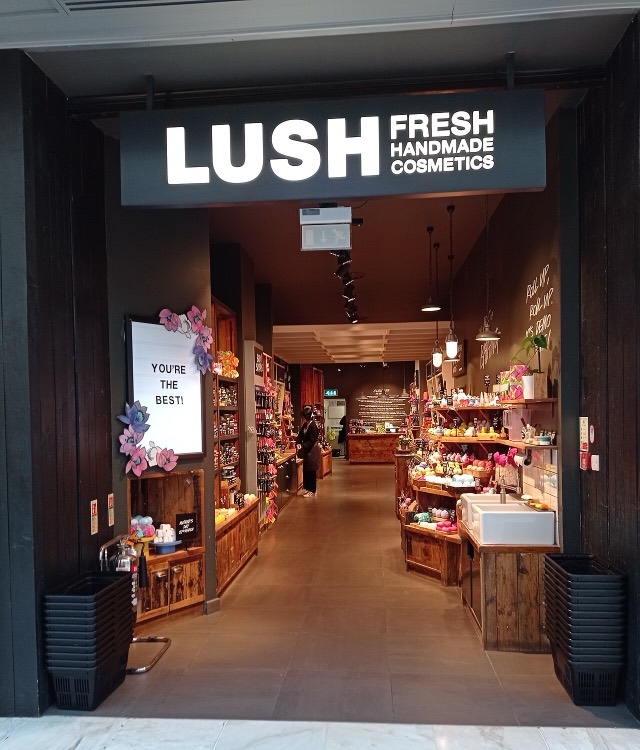
Lush Cosmetics is a UK-born, privately held retailer of handmade, mostly preservative-free beauty products, bath bombs, solid shampoos, face masks, and more, sold in over 900 stores across 48 countries. It was founded in 1995 in Poole, England, by Mark Constantine and Liz Weir (along with a handful of co-founders), veterans of the Body Shop supply chain who wanted to push further on freshness and ethics. The brand is immediately recognisable: open-display products sold by weight, staff who are trained to push samples on every customer, and a smell that hits you from twenty feet outside the door.

People search for Lush constantly because it sits at the intersection of three things the internet loves to argue about: premium pricing, activist politics, and ingredient safety. Is the price tag worth it? Is the company actually ethical or just performatively so? Are those bath bombs safe for children and pregnant women? The brand invites these questions by making its values central to its marketing, and then rarely answering them with the candour shoppers want.

It’s also worth noting that “Lush” is a crowded namespace. Lush Hair is an entirely separate African haircare and extension brand with no corporate connection to Lush Cosmetics. Lush Hair Nigeria is a further distinct entity operating in the Nigerian market. Searches mixing these brands up are extremely common, which is why ownership questions dominate the results.

Finally, “lush” as a plain English word has a life of its own, as British slang, as a descriptor for verdant scenery, and as an old-fashioned term for a heavy drinker. The brand name was chosen deliberately for its sensory richness, but it means the company shares search real estate with dictionaries, Welsh teenagers, and alcoholism recovery forums.

People also ask

Because fresh, handmade, and ethical costs more, and Lush leans into every one of those cost drivers. Ingredients are sourced with documented supply chains, products are made in small batches without cheap synthetic preservatives, and the packaging-free or minimal-packaging approach actually costs more to engineer than slapping something in a plastic bottle. You're also paying for prime high-street retail locations and a labour-intensive in-store experience. Whether that premium is *worth* it to you is a different question, but the pricing isn't arbitrary margin-grabbing, it reflects real production costs.

Sort of, with caveats that Lush itself is cagey about. Most plain Lush bath bombs are unlikely to harm children, but several contain essential oils (like cinnamon, clove, or citrus) that can irritate young, sensitive skin, and some contain glitter or dyes that are not ideal for toddlers' bathwater. The bigger concern for children, especially girls, is repeated use of heavily fragranced products in bathwater, which is associated with irritation of delicate tissue, a concern raised by paediatricians broadly, not specific to Lush. Check the ingredient list for each product; the brand does publish them in full.

Lush Hair, the hairpiece and extension brand popular across Africa and the UK, is a completely separate company from Lush Cosmetics and has no corporate relationship with it. Lush Hair was founded by Nigerian-British entrepreneur Yetunde Odukoya, who built it into one of the most recognised hair extension brands on the continent. The two brands simply share a word.

Lush Cosmetics is still majority-owned by its co-founders, making it one of the largest privately held beauty companies in the world. Mark Constantine (CEO) and his wife Mo Constantine are the dominant shareholders, alongside co-founders including Helen Ambrosen, Rowena Bird, Paul Greaves, and Mark's business partner Liz Weir. The company has explicitly resisted outside investment and stock-market listing, which is central to how it justifies its activist positions, no institutional shareholders to answer to.

Lush Hair Nigeria operates as part of the broader Lush Hair brand founded by Yetunde Odukoya, distributed and retailed across Nigeria through licensed stockists and its own retail points. Odukoya, who is of Nigerian heritage, built the brand with a specific focus on the African market and diaspora. Again, zero connection to Lush Cosmetics.

Lush has been boycotted multiple times for different reasons, which tells you something about how polarising its politics are. The most prominent was its 2019 "Spy Cops" campaign in the UK, which accused undercover police of abusing activist communities, a move that enraged law enforcement supporters and triggered a #FlushLush campaign. It has also faced backlash for campaigns perceived as anti-Israel, for pulling out of social media entirely in 2021 (frustrating customers who relied on it for support), and, conversely, from animal-rights campaigners who felt its "vegetarian" (not fully vegan) product range didn't go far enough. Lush courts controversy deliberately; boycotts are practically baked into the business model.

By measurable standards, Lush is one of the more credibly ethical mass-market beauty brands, not just a marketing exercise. It has held a Leaping Bunny cruelty-free certification for decades, publishes full ingredient sourcing, uses minimal packaging, pays above minimum wage in most markets, and funds grassroots activist causes through its Charity Pot product. Where it gets complicated: "ethical" supply chains are never perfectly clean, the company has faced worker complaints in individual stores, and its political campaigns (however sincere) function as free advertising. It's ethical in the structural sense; it is not a saint.

The Lush Bath Bomb is the brand's defining product, specifically the "Intergalactic" or "Sex Bomb" variants, which are among its best-sellers globally. Beyond that, the "Big" solid shampoo bar and the "Mask of Magnaminty" face mask are category-defining products that helped mainstream the idea of packaging-free cosmetics. If you want one product that explains why Lush has a cult following, start with a bath bomb: it's theatrical, it smells extraordinary, and nothing else on the mass market does quite the same thing.

The solid shampoo bars are genuinely worth it, one bar replaces roughly three bottles of shampoo, so the per-use cost is competitive despite the sticker price. The Charity Pot hand and body lotion is a perennial best-seller for good reason: rich formula, and 100% of the purchase price goes to grassroots charities. The bath bombs are worth it *once* as an experience; as a daily habit they're an expensive luxury. Skip the fresh face masks if you won't use them fast, the no-preservative formula means they expire in weeks, and wasted product is wasted money.

Yes. Lush holds Leaping Bunny certification, the gold standard for cruelty-free verification, and has since the programme launched. It does not sell in mainland China through channels that would require mandatory animal testing (a line many "cruelty-free" brands quietly cross). It also funds campaigns against animal testing in cosmetics regulation globally. This is one area where the brand's public stance and its actual practice are consistent.

For most adults, yes, but not unconditionally. The main documented concern is that heavily fragranced bath products, used frequently, can disrupt vaginal pH and cause irritation or infections. This is a category-wide issue, not unique to Lush, but Lush bath bombs are particularly high in essential oils and fragrance compounds. People with sensitive skin, eczema, or a history of UTIs should approach them with caution and avoid daily use. Lush publishes full ingredient lists on its website, if you're concerned about a specific product, the information is there.

Not categorically, and Lush won't tell you they are, which is the right call. Several Lush products contain essential oils (rosemary, clary sage, jasmine, peppermint in high concentrations) that are traditionally avoided in pregnancy, particularly in the first trimester, due to their potential to stimulate uterine contractions. This is not a Lush-specific scandal; it's standard aromatherapy caution. The brand's website flags some products as containing these ingredients. The honest advice: run the ingredient list past your midwife or OB, and avoid heavy essential oil products especially in the first 12 weeks.

Calling someone a "lush" means calling them a heavy, habitual drinker, essentially a functioning alcoholic or someone who drinks to excess regularly. The term has American English roots dating to at least the early 19th century, possibly derived from Lushington, a London drinking club of the era. It's mildly derogatory but not as harsh as "drunk" or "alcoholic", it often carries a faint note of affectionate exasperation, as in "oh, he's a bit of a lush."

"Lush" has several distinct meanings. As an adjective, it means richly abundant and verdant, lush rainforest, lush grass. In British and particularly Welsh and West Country slang, it means excellent, attractive, or delightful ("that's lush, that is"). As a noun, it means a heavy drinker. The cosmetics brand chose the word for its sensory richness, abundance, pleasure, verdancy, though the drinking connotation presumably wasn't lost on founders who named a soap company after it.

By any reasonable definition, yes, and deliberately so. Lush funds campaigns on police accountability, LGBTQ+ rights, refugee rights, environmental activism, and animal welfare. It pulled off all major social media platforms in 2021 explicitly citing harm to mental health and democracy. It has run in-store campaigns on issues most retailers would never touch. Whether you call that "woke" or "principled" depends entirely on your politics, but the company is not pretending to be neutral, and it never has been.

There's no specific Lush sub-brand called "Lush for Girls", the brand markets to everyone, though its aesthetic and product range (bath bombs, glittery scrubs, floral perfumes) skews heavily toward a female-coded consumer culture. Within its range, products like the "Snow Fairy" shower gel and "Twilight" bath bomb are particularly popular with younger female customers. If you've seen "Lush for Girls" referenced somewhere, it may be a regional marketing label or a third-party reseller name rather than an official product line.

Sort of. "Lush" as an adjective meaning verdant and rich is standard international English. But "lush" as slang for "great" or "attractive" is distinctly British, particularly associated with Wales, Bristol, and the West of England. You'll hear Welsh teenagers use it as an all-purpose term of approval. In American English, the word survives mainly as a noun meaning a heavy drinker. So it's not exclusively British, but the slang sense very much is.

Yes, and this is one of the brand's most consistent and long-standing commitments, not a recent rebrand. Lush has funded LGBTQ+ organisations for decades, runs Pride campaigns that go beyond rainbow packaging, and has explicitly supported trans rights at a time when many brands quietly avoid the topic. Its internal culture is widely reported as inclusive. This isn't performative allyship bolted on in 2020; it's woven into the brand's founding identity.

The Body Shop is the most direct competitor by positioning, ethical, values-led, high-street beauty, and the rivalry is personal, since Lush's founders came out of the Body Shop supply chain. In the bath bomb and sensory beauty space, competitors include Bath & Body Works (US-dominant, far less ethical in positioning) and a long tail of indie DTC brands that Lush essentially inspired. No competitor has replicated the full Lush formula, the in-store theatre, the fresh-made products, the political campaigning, which is why despite the premium pricing, Lush has retained its niche.

Lush has publicly supported Palestinian rights through its Charity Pot programme and campaign funding, consistent with its broader human rights activism, this is documented and in line with the brand's long-standing support for groups like Amnesty International and War on Want. Whether specific current proceeds are directed to Gaza relief organisations depends on which products and campaigns are active at the time you're reading this; Charity Pot recipients rotate and are listed on the Lush website by country. The brand has not been shy about its political position on the conflict, which has generated both praise and boycott calls.

Related topics
Culture Trending now
Taylor Swift and Travis Kelce Wedding 2026
Culture Trending now
Why Labubu is suddenly everywhere
Culture Trending now
The Odyssey (Christopher Nolan)
Culture Trending now
KPop Demon Hunters
Culture Trending now
House of the Dragon Season 3
Culture People
Adam Curry
Culture People
Adam Sandler
Culture People
Andrew Huberman