← BRANDS
datastats / Culture
LIVE
Culture

Levi's

Levi's invented the blue jean, built a $6-billion empire on it, and has spent 150 years trying to live down, and live up to, that one brilliant idea.
By · datastats · Updated June 4, 2026
Levi's
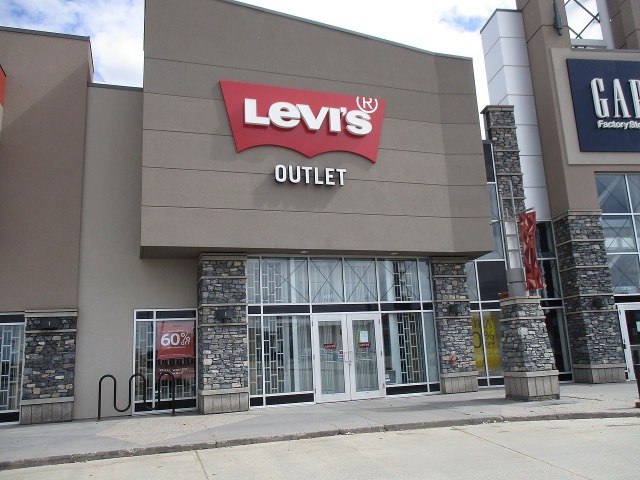
Rowanlovescars · CC BY-SA 4.0

Levi Strauss & Co. is the San Francisco denim institution that patented the riveted blue jean in 1873 alongside tailor Jacob Davis. That single garment became the default uniform of cowboys, rebels, rock stars, and runway models, and the company never fully escaped its own origin story, nor did it ever really need to.

Today Levi’s is a publicly traded company (NYSE: LEVI) with revenues around $6 billion annually, selling in more than 110 countries. The 501, its flagship straight-leg jean, is arguably the most recognizable piece of clothing ever made. Yet the brand sits in a permanent identity tension: it markets itself as a working-class American icon while charging premium prices and manufacturing almost nothing in the United States.

People search for Levi’s for wildly different reasons: nostalgia, vintage hunting, ethical sourcing concerns, celebrity style, and simple confusion about why a pair of jeans costs $80 at Levi.com but $35 at Walmart. That price gap alone drives thousands of monthly searches, and the brand’s PR team will never explain it as bluntly as it deserves.

The controversies are real too. Levi’s has faced criticism over labor practices, political donations, and its complex relationship with gun control advocacy, positions that alienated some customers and emboldened others. It is a brand that has genuinely tried to take stances, which means it has genuinely made enemies. That’s rarer than it sounds in corporate America.

People also ask

There isn't one single controversy, there's a stack of them. Most recently and visibly, Levi Strauss & Co. drew significant backlash for its gun-control advocacy starting in 2018, when CEO Chip Bergh announced the company would donate to anti-gun-violence groups and restrict firearm carry in its stores, a stance that cost it customers on one side and won praise on the other. The company has also faced long-running criticism over its offshore manufacturing, with most production moved out of the U.S. decades ago despite the brand's all-American mythology. Labor conditions in its overseas supply chain have been scrutinized repeatedly by human rights organizations.

The 501 carries a price premium because it is the original, the jean every other jean is measured against, and Levi's knows it can charge for that heritage. Compared to fast-fashion denim, the 501 uses heavier-weight denim, traditional construction details, and a brand story 150 years in the making. That said, part of what you're paying for is marketing and positioning, not just material cost.

Levi's prices its mainline jeans in the $60–$100 range because it has successfully positioned itself as an accessible-premium brand, above H&M, below True Religion. The actual cost of manufacturing a pair of denim jeans is a fraction of the retail price; the rest is brand equity, retail markup, and logistics. Levi's also sells cheaper tiers through wholesale accounts like Walmart, which tells you exactly how elastic those costs really are.

Levi's is expensive relative to generic denim because the brand itself is the product as much as the jeans are. Decades of cultural placement, on James Dean, on Marilyn Monroe, on every denim-clad musician ever, have made the red tab a premium signal. The brand also invests heavily in retail stores, marketing, and product collaborations that all get priced into the jean on your leg.

Levi Strauss & Co. is majority-owned by descendants of the founding Haas family, who are relatives of Levi Strauss himself through his nephews. The company went public again in 2019 (NYSE: LEVI), so public shareholders own a significant portion, but the Haas family retains voting control through a dual-class share structure. No outside corporate conglomerate owns Levi's; it remains unusually family-influenced for a brand of its scale.

They're built for entirely different bodies and aesthetics, so 'better' is the wrong frame. The 501 is a mid-rise, straight-leg, button-fly classic designed to sit at the natural waist and drape loosely through the hip, it rewards a relaxed, vintage-inspired look. The Ribcage is a high-rise, ultra-fitted style designed for a contemporary sculpted silhouette. If you want that lived-in '70s feel, the 501 wins. If you want maximum waist definition and a cleaner line, the Ribcage is the pick.

Same answer, worth repeating: these two jeans aren't competing, they're serving different purposes. The 501 is an archival garment with 150 years of cultural weight; the Ribcage is a modern silhouette engineered for the Instagram era. Pick the 501 for authenticity and relaxed fit; pick the Ribcage if you want a high-rise that holds its shape and flatters the waist. Most serious denim wardrobes have room for both.

Marilyn Monroe famously wore Levi's 501 jeans during the filming of 'The Misfits' in 1960, the film required its cast to look rugged and Western, and the 501 was the authentic choice. Photographs of Monroe in those jeans became iconic precisely because they subverted her glamour-queen image. Levi's has referenced and celebrated that association many times since.

In the collector market, 'vintage Levi's' typically means garments made before 1971, identified by specific details like the capital-E 'Big E' red tab (pre-1971), a single stitch on the back pockets, hidden rivets, and a cinch back or suspender buttons on older pieces. Big E 501s from the 1950s and '60s can fetch hundreds to thousands of dollars depending on condition. Levi's itself produces a 'Vintage Clothing' (LVC) line that faithfully reproduces these older constructions for collectors who want the details without the eBay treasure hunt.

This question appears to reference a specific couple named Levi and Petra, most likely from a reality TV show or social media context rather than anything connected to the Levi's brand. Without more context on which Levi and Petra this refers to, we can't verify the engagement location. If you're thinking of a specific show or public figure, the show's own coverage or social media is your best source.

Levi Ackerman is a fictional character from the manga and anime series 'Attack on Titan', he is not connected to the Levi's denim brand in any way. As of the story's ending, Levi Ackerman survives the events of 'Attack on Titan,' though he sustains severe injuries throughout the series. For full plot details, the manga's final arc is your definitive source.

Sort of, here's why. Levi's scores better than most mass-market denim brands on ethical metrics: it has published supplier lists, adopted the Fair Labor Association's standards, and committed to water-reduction programs through its 'Water<Less' manufacturing initiative. But the brand still produces the vast majority of its goods in lower-wage countries, and independent audits of garment supply chains consistently find gaps between brand policies and factory-floor reality. Levi's is trying harder than average; 'ethical' without qualification would be a stretch.

Because they're not the same jeans. Levi's produces a separate, lower-spec product line specifically for mass-market retailers like Walmart, different denim weight, simplified construction, and no red tab branding in some cases. This is a standard industry practice called retail channel segmentation, and Levi's is notably quiet about it. The $35 Walmart pair and the $80 Levi.com pair share a logo; they do not share a product spec sheet.

This question has nothing to do with Levi's, it's a celebrity health question that belongs on an entertainment or wellness page. As a factual matter, Jennifer Aniston has publicly discussed hair and wellness topics over the years, but any specific claims about her hair health or thickness would be speculative unless she has addressed them directly. We won't guess at a living person's medical condition.

Three reasons: lower import tariffs (or none, since it's the domestic market), lower retail overhead in a deeply competitive U.S. market, and the fact that Levi's prices to each market's purchasing power and competitive landscape. In Europe and Asia, Levi's also carries a stronger 'American import' premium that lets the brand charge more. Buying in the U.S., especially at U.S. outlet stores, is a well-documented arbitrage that savvy international travelers exploit deliberately.

Levi's is an American brand, founded in San Francisco in 1853 by Levi Strauss, who was a Bavarian-born Jewish immigrant from what is now Germany. So the founder was German-born, but the company is definitively American: incorporated in California, headquartered in San Francisco, listed on the New York Stock Exchange. The Bavarian origin is a fun historical footnote; the brand identity is entirely Stars and Stripes.

There is no functional difference, they are the same company. 'Levi Strauss & Co.' is the full legal corporate name, honoring the founder. 'Levi's' is the consumer-facing brand and trademark used on products and in advertising. You'll see 'Levi Strauss & Co.' on SEC filings, press releases, and the inside waistband of your jeans; you'll see 'Levi's' on the red tab, the store sign, and the ad campaign.

The 501 and 505 are close siblings with one decisive difference: the 501 has a button fly, the 505 has a zip fly and a slightly more relaxed seat and thigh. The 505 was introduced in 1967 partly because many consumers found the button fly inconvenient, so if that's your dealbreaker, the 505 is your answer. For purists, vintage hunters, and anyone who prizes authenticity over convenience, the 501 is the unambiguous choice. The 505 is the 501 for people who want the look without the ritual.

Jennifer Aniston has been photographed in Levi's 501 jeans on multiple occasions, the straight-leg, high-waisted silhouette that dominated her off-duty style in the '90s and has come back into fashion relevance since. She has not, to our knowledge, formally endorsed Levi's or specified her preferred fit in interviews. The association is organic and paparazzi-documented rather than a paid partnership.

Related topics
Culture Trending now
Taylor Swift and Travis Kelce Wedding 2026
Culture Trending now
Why Labubu is suddenly everywhere
Culture Trending now
The Odyssey (Christopher Nolan)
Culture Trending now
KPop Demon Hunters
Culture Trending now
House of the Dragon Season 3
Culture People
Adam Curry
Culture People
Adam Sandler
Culture People
Andrew Huberman