← BRANDS
datastats / Money
LIVE
Money

Kia

Kia went from Korea's bicycle maker to the design-led arm of the world's third-largest car group, and the long warranty is no longer the only reason to buy one.
By · datastats · Updated June 27, 2026
Kia
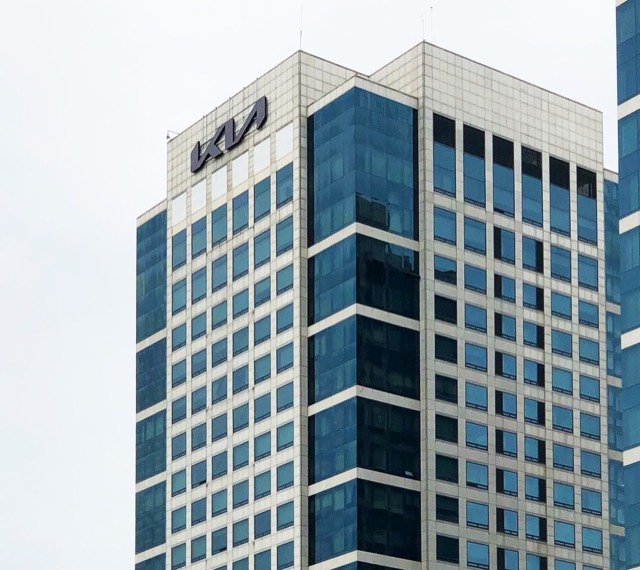
Ip juga · CC BY-SA 4.0

Kia Corporation is the design-led, value-driven arm of Hyundai Motor Group, which collectively ranks as one of the three largest carmakers on earth. Headquartered in Seoul, it sells SUVs, sedans, and a fast-growing lineup of electric vehicles under one of the strongest warranties in the business. What makes Kia interesting is not its size but its trajectory: few brands have remade their reputation as completely in twenty years.

People search Kia for a mix of reassurance and suspicion. They want to know if it is reliable (it largely is now), who really owns it (Hyundai, more or less), and whether the horror stories they half-remember are still relevant. That tension, between a brand that has genuinely improved and a brand still dragging old baggage, is the whole story of modern Kia.

The baggage is real. The Theta II engine recalls cost the group billions and burned trust, and the “Kia Boys” TikTok theft wave, caused by skipping a cheap immobilizer to save money, became a public-safety scandal with deaths, lawsuits, and insurers walking away. Kia patched both with software updates, free hardware, and legal settlements, but the internet has a long memory and those searches are not going away.

What Kia did right is harder to undo: it hired Peter Schreyer, gave the lineup the “tiger nose” face and real design confidence, rebranded in 2021 around “Movement that inspires,” and bet early on electric cars like the award-winning EV6 and the family-sized EV9. The result is a brand that no longer competes only on price. The questions people ask about Kia reflect exactly that shift, and this page answers them without the gloss Kia’s own marketing would add.

People also ask

Yes, with caveats. Kia now scores at or near the top of J.D. Power dependability studies, a remarkable turnaround from its bargain-bin reputation of the 1990s. The brand backs that confidence with a 10-year/100,000-mile powertrain warranty, the longest in the mainstream market, which is itself a statement about how Kia rates its own engineering. The asterisk: the 2011-2021 Theta II 2.0L and 2.4L engines had a well-documented oil-consumption and engine-fire problem that triggered multiple recalls and a class-action settlement. Newer Kias on the brand's current platforms are genuinely solid.

Kia Corporation is part of Hyundai Motor Group, but it is not a wholly owned subsidiary. Hyundai Motor Company holds roughly a third of Kia's shares (about 34.5% as of late 2024), the single largest stake, which gives Hyundai effective control. Kia, in turn, is a minority shareholder in more than twenty Hyundai-affiliated companies. It is a cross-holding web typical of Korean conglomerates, so "Hyundai owns Kia" is true in spirit but technically an oversimplification: Hyundai controls Kia, it does not own it outright.

Effectively, yes. Hyundai Motor Company rescued Kia from bankruptcy in 1998, outbidding Ford, and took a controlling 51% stake. That holding has since been diluted to roughly a third, but it remains the largest single block of Kia shares and keeps Hyundai firmly in the driver's seat. The two brands share platforms, engines, and electric architecture (the E-GMP platform underpins both the Kia EV6 and Hyundai Ioniq 5), while keeping separate design teams and dealer networks. Think sibling rivalry inside one family, not parent and child.

It depends on the model and the market. Most Kias sold globally are built in South Korea, at plants in Gwangju, Gwangmyeong, and Hwaseong. For the U.S. market, Kia operates a single plant in West Point, Georgia, which opened in 2009 and builds the Telluride, Sorento, Sportage, and the electric EV9. European-market cars are largely built in Zilina, Slovakia. So a Telluride is American-built, while a base Sportage might come from Korea or Georgia depending on trim and timing.

Yes. Kia Corporation is a South Korean company headquartered in Seoul, and it is one of Korea's oldest manufacturers of any kind. It was founded in 1944, long before it ever built a car, and the name itself is Korean in origin. Even though its parent group, Hyundai Motor Group, is a global operation with factories on several continents, Kia's identity, headquarters, and engineering center of gravity remain firmly Korean.

Kia is commonly explained as derived from the Sino-Korean characters "Ki" (to arise or come up) and "a" (referring to Asia), interpreted loosely as "arising from the East" or "rising out of Asia." It is not an acronym in the English sense, so the popular internet claim that it stands for "Killed In Action" is a joke, not an etymology. The reading reflects the company's ambition to rise as an Asian, and specifically Korean, industrial force.

Kia was founded in May 1944 as Kyungsung Precision Industry, making steel tubing and bicycle parts. In 1951 it produced South Korea's first domestic bicycle, the Samchuly. It moved into motorcycles and trucks before building its first passenger cars in the 1970s. That makes Kia roughly eighty years old and one of the oldest manufacturing companies in Korea, which is a useful corrective to the assumption that it is a young upstart brand.

For most buyers, yes. Modern Kias offer strong value, generous standard equipment, sharp design, and the industry's best warranty, while reliability has climbed from a punchline to genuinely competitive. The Telluride in particular has been a critical darling. Where Kia still trails the segment leaders is in long-term resale value (it lags Toyota and Honda) and in the lingering reputational damage from the engine recalls and the anti-theft crisis. As a new-car buy, a current Kia is an easy recommendation.

The design turnaround that made Kia desirable is largely credited to Peter Schreyer, the German designer hired from Audi and Volkswagen in 2006. He introduced the "tiger nose" grille, a unifying front-end signature that gave the whole lineup a coherent face. Schreyer rose to president and chief design officer, and the visual confidence of cars like the Stinger, the Telluride, and the EV6 is downstream of his influence. Kia's design center now spans Korea, Germany, and California.

The Kia Sportage, a compact SUV, is the brand's global volume leader and its top seller in the U.S., where it has been growing strongly. Behind it sit the three-row Telluride and Sorento, the subcompact Seltos, and the Soul. On the electric side, the EV6 and EV9 are the headline models but sell in far smaller numbers. The pattern is clear: Kia is now, like most of the industry, an SUV company first and a sedan maker second.

Yes, and they are arguably Kia's most impressive products. The EV6 won multiple car-of-the-year awards and shares the 800-volt E-GMP platform with the Hyundai Ioniq 5, enabling very fast charging. The three-row EV9 is one of the few genuinely family-sized electric SUVs at a competitive price, with a range up to roughly 304 miles. Kia backs the battery and EV system for 10 years or 100,000 miles. Sales softened in 2025 as the broader EV market cooled, but the engineering is well regarded.

Around 8.3 million Hyundai and Kia vehicles built between 2011 and 2022 shipped without standard engine immobilizers, leaving them startable with little more than a USB cable and a screwdriver. A viral 2022 TikTok trend under the "Kia Boyz" hashtag turned this flaw into a national epidemic, with thefts spiking over 1,000% in some U.S. cities, multiple deaths, and some insurers refusing coverage. Kia and Hyundai responded with a free anti-theft software update for compatible models and steering-wheel locks for older ones, plus a multi-state legal settlement.

Kia's headline coverage is a 10-year/100,000-mile limited powertrain warranty, the longest among mainstream brands, paired with a 5-year/60,000-mile basic (bumper-to-bumper) warranty. On electric models, the high-voltage battery and EV system are covered for 10 years/100,000 miles, with battery capacity guaranteed against dropping below 70%. The catch worth knowing: the full 10-year powertrain term applies to the original owner; subsequent owners typically get a shorter 5-year/60,000-mile powertrain term.

Three issues dominate. First, the Theta II 2.0L and 2.4L engines (used in models like the Optima, Sorento, and Sportage from roughly 2011-2021) had oil-consumption and engine-fire problems that led to major recalls and a settlement. Second, the immobilizer omission behind the Kia Boys theft wave. Third, some owners report transmission shudder on certain dual-clutch units and electrical gremlins. The current-generation cars have largely moved past the engine issues, but the used market still carries this baggage.

They are mechanically near-identical twins, so the honest answer is that it comes down to design and price rather than a meaningful quality gap. Kia tends to skew sportier and more youthful in styling, Hyundai a touch more conservative, and the two share engines, platforms, and the E-GMP electric architecture. On any given model, the better deal is whichever dealer is hungrier that week. Cross-shopping the equivalent Kia and Hyundai before buying either is simply smart.

Related topics
Money Trending now
Richest people in the world 2026
Money Trending now
How to cancel Amazon Prime
Money Trending now
Coinbase vs Binance
Money Trending now
How to cancel Adobe Creative Cloud
Money Trending now
Compound interest
Money People
Bernard Arnault
Money People
Mark Cuban
Money People
Mukesh Ambani