← BRANDS
datastats / Money
LIVE
Money

KFC

KFC charges premium prices, guards its secrets obsessively, and rarely gives straight answers about discounts or food safety, so we will.
By · datastats · Updated June 4, 2026
KFC
Harrison Keely · CC BY 4.0

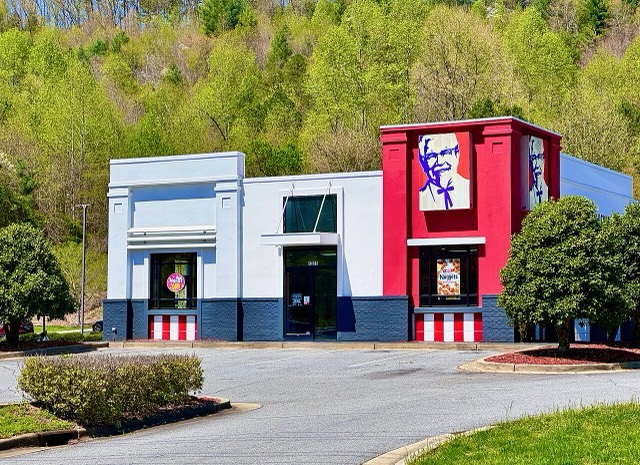
KFC, Kentucky Fried Chicken, is the world’s second-largest fast-food chain by locations, with over 27,000 restaurants in more than 145 countries. It was founded in Corbin, Kentucky by Harland Sanders in 1952, and has been owned by Yum! Brands (alongside Taco Bell and Pizza Hut) since 1997. The brand is built on one genuinely proprietary asset: a recipe of 11 herbs and spices that the company has turned into a global marketing mythology.

People search for KFC money questions more than almost any other fast-food brand, and for good reason. Prices have surged well above general food inflation since 2021, combo meals that once felt affordable now routinely crack $10–$15 per person, and promotional deals like the famous “$10 bucket” are heavily regional and poorly advertised, making them frustrating to track down.

The brand is also notoriously cagey about senior discounts, food safety guidance, and anything that might invite legal or reputational scrutiny. KFC’s official website and PR team deflect most of these questions entirely, leaving customers to crowdsource answers on Reddit and coupon forums.

This page compiles what is actually known, from USDA food safety guidelines, documented pricing surveys, and verified brand history, to answer the questions KFC itself refuses to address clearly.

People also ask

Three forces hit simultaneously: post-pandemic ingredient inflation (chicken prices spiked sharply in 2021–2023), rising labor costs as minimum wages climbed across U.S. states, and Yum! Brands' deliberate push toward higher average ticket sizes. KFC's own parent company has told investors it pursues "profitable growth," which is corporate-speak for charging more per visit. The bucket that felt like a deal five years ago now costs 30–40% more at many locations.

The full legal name is Kentucky Fried Chicken, KFC is just the abbreviation the company leaned into heavily starting in the early 1990s. The rebrand wasn't (as an old internet myth claims) an attempt to dodge the word "fried"; it was a straightforward modernization of a long brand name. The parent entity is KFC Corporation, a subsidiary of Yum! Brands, Inc., headquartered in Louisville, Kentucky.

KFC does not publish a standardized national senior discount program, and there is no widely verified, chain-wide discount specifically at age 55. AARP membership unlocks discounts at some restaurant chains, but KFC is not a confirmed partner. Your best move is to call your local franchise directly, because KFC locations are mostly independently franchised, discount policies vary store by store.

Chick-fil-A has no official, company-wide senior discount policy, it is entirely up to individual franchise owners. Some locations offer a free drink or a small percentage off for customers 55 or 60 and older, but there is no guaranteed age threshold across the chain. Don't assume; ask at the counter.

KFC has appeared on various consumer boycott lists at different times and in different countries, most notably calls linked to parent company Yum! Brands' business operations and, more recently, campaigns circulated on social media related to geopolitical conflicts. Whether any specific boycott is active, organized, or effective depends entirely on the campaign in question. No major government body has formally listed KFC or Yum! Brands as a prohibited entity.

A 12-piece bucket of KFC chicken costs roughly $30–$40 in the United States as of 2024–2025, depending on the region and whether you pick Original Recipe, Extra Crispy, or mixed. Prices are significantly higher in high cost-of-living markets like California or New York. This figure does not include sides, drinks, or taxes, those can push the total well past $45.

KFC's Twitter/X account famously follows exactly 11 people: six men named Herb and five members of the Spice Girls, a nod to the "11 herbs and spices" in Colonel Sanders' secret recipe. It was a marketing stunt discovered by a Twitter user in 2017 that went viral and earned KFC enormous free press. The brand confirmed it was intentional, making it one of the most cost-effective brand awareness plays in social media history.

Same answer as above: expect to pay in the $30–$40 range for a 12-piece bucket in the U.S., before sides and drinks. Prices vary by franchise, state, and whether a promotion is running. Always check the KFC app or your local store's menu for the most current price, the app frequently has exclusive deals that undercut in-store pricing.

The $10 bucket deal, when it exists, has most commonly been offered on Tuesdays at participating U.S. locations, but this is a limited, regional promotion, not a guaranteed nationwide fixture. KFC has run it on and off since the mid-2010s, and its availability is entirely franchise-dependent. Check the KFC app under "Deals" for your specific zip code; that is the only reliable way to know if your local store is running it.

The "$20 Fill Up" has been one of KFC's recurring value bundles, typically including 8 pieces of chicken, large mashed potatoes, gravy, coleslaw, and biscuits, enough for a family of four in theory. The exact contents and the $20 price point vary by market and promotion cycle; some locations have moved this to $22–$25 as of 2024. Again, the KFC app is your ground truth.

The "7 minute rule" refers to KFC's internal holding standard: cooked chicken that has been sitting in the holding unit for more than a set time (reported by former employees as ranging from 7 to 30 minutes depending on the product and the era of the policy) is supposed to be discarded and replaced. KFC does not publicly document this rule in detail, and enforcement reportedly varies by franchise. It's a food quality standard, not a food safety law, though the two overlap.

There is no confirmed, company-wide senior discount at KFC in the United States. Some independently owned franchise locations offer small discounts, a free drink, 10% off, to customers typically 55, 60, or 65 and older, but nothing is standardized or guaranteed. Call your nearest location and ask directly; you may be pleasantly surprised, or you may get a blank stare.

The R30 deal is a South African market promotion, R30 refers to 30 South African rand, a budget meal offering that KFC South Africa has run in various forms targeting price-sensitive customers. The exact contents have changed over time and are subject to regional pricing updates. This deal does not exist in the U.S. or most other markets; it is specific to KFC's African operations where the brand competes aggressively on value.

No, not safely. The USDA guidelines are clear: cooked poultry should be consumed within 3 to 4 days when stored in a refrigerator at or below 40°F (4°C). At day 5, you are outside the safe window and bacterial growth is a real risk, even if the chicken looks and smells fine. Toss it.

Per USDA food safety standards, leftover cooked chicken, including KFC, is safe to eat for up to 3 to 4 days in the refrigerator. Beyond that, the risk of foodborne illness from bacteria like Salmonella or Staphylococcus aureus increases significantly. If you want to keep it longer, freeze it (it'll hold for up to 4 months in the freezer) and reheat thoroughly to an internal temperature of 165°F.

KFC is not off-limits for people with diabetes, but it requires careful navigation. The breading and frying process adds significant carbohydrates and sodium, a single piece of Original Recipe chicken can carry 10–15g of carbs and 400–700mg of sodium. Grilled options (where available), removing the skin, and skipping biscuits and sugary sides are the practical harm-reduction moves. Anyone managing diabetes should discuss specific dietary choices with their healthcare provider, not a fast-food Q&A.

No. The USDA's "2-hour rule" is the governing standard: cooked chicken left at room temperature (between 40°F and 140°F, the "danger zone") for more than 2 hours should be discarded. At 4 hours, you are well past the safe threshold and bacterial toxins may have formed that reheating won't eliminate. This is one food safety rule worth taking seriously.

No. Seven days is nearly double the USDA-recommended 3–4 day refrigerator window for cooked poultry. Even if it passes the smell test, harmful bacteria or toxins can be present without obvious signs. Eating 7-day-old cooked chicken is a meaningful food poisoning risk, don't do it.

A 14-piece KFC bucket contains 14 pieces of bone-in chicken, typically a mix of breasts, thighs, legs, and wings in a ratio that varies by location, with no sides included unless you are ordering a meal bundle. KFC does not guarantee a specific piece breakdown per bucket; you can request preferences, but franchise staff are not obligated to accommodate them. Calorie counts for a full 14-piece bucket can easily exceed 4,000 calories total.

Tuesday is the day most commonly associated with the $10 bucket promotion at participating U.S. KFC locations, though this deal is not available everywhere and has come and gone over the years. It is a franchise-level promotion, meaning your local store may not run it at all. Open the KFC app, enter your location, and check the "Deals" tab, that is the only answer that is actually accurate for your specific store.

Related topics
Money Trending now
Richest people in the world 2026
Money Trending now
How to cancel Amazon Prime
Money Trending now
Coinbase vs Binance
Money Trending now
How to cancel Adobe Creative Cloud
Money Trending now
Compound interest
Money People
Bernard Arnault
Money People
Mark Cuban
Money People
Mukesh Ambani