← BRANDS
datastats / Money
LIVE
Money

Hyundai

Hyundai went from a punchline about cheap, disposable cars to a top-three global automaker that builds EVs better than most legacy brands, and it did it by buying reliability with the longest warranty in the business.
By · datastats · Updated June 27, 2026
Hyundai
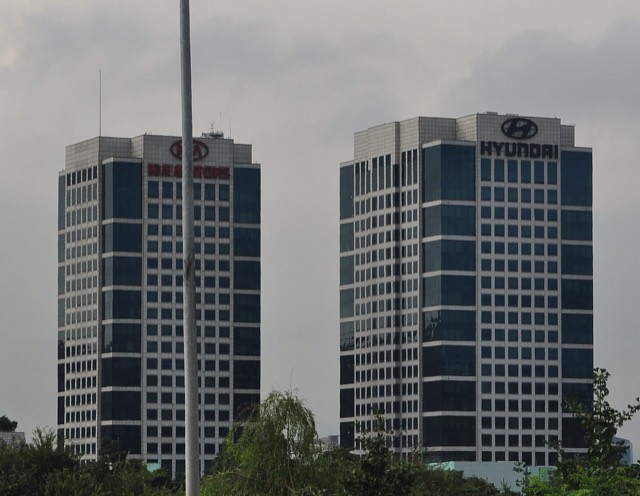
HappyMidnight · CC BY-SA 3.0

Hyundai Motor Company is a South Korean automaker founded in Seoul in 1967 by Chung Ju-yung, the industrialist behind one of Korea’s largest chaebols. It sits at the head of the Hyundai Motor Group, which also owns the Kia brand and the Genesis luxury division, and it builds everything from budget hatchbacks to award-winning electric vehicles at plants from Ulsan to Alabama to the new Georgia Metaplant.

People search Hyundai for a specific reason: they remember the old reputation and want to know if it still applies. For most of the 1990s and 2000s, Hyundai was shorthand for cheap, disposable cars. The brand fought that perception with the boldest warranty in the business, 10 years or 100,000 miles on the powertrain in the US, and over two decades it quietly turned that promise into genuine quality.

But Hyundai is not without scars. The Theta II engine generation (2011-2019) had real, dangerous defects that ended in a $1.3 billion settlement and a lifetime engine warranty for affected owners. And millions of older keyed Hyundais shipped without an engine immobilizer, a gap that a viral TikTok theft challenge exposed brutally in 2022, sending theft rates soaring in some US cities before Hyundai pushed a free software fix.

The questions people ask split cleanly: “Is it reliable, and can I trust it?” and “Who actually makes it, and where?” This page answers both honestly. The short version: today’s Hyundai is a top-three global automaker with class-leading EVs and a fair value proposition, but the used market still hides specific years and engines worth checking carefully before you buy.

People also ask

Mostly yes, with caveats. Modern Hyundais score solidly in J.D. Power and Consumer Reports dependability studies, and the brand's reputation has climbed dramatically since the 2000s. The big asterisk is the Theta II engine generation (roughly 2011-2019), which had genuine seizure and fire problems that triggered a $1.3 billion class-action settlement. Newer models on the latest platforms are a different, much more dependable animal.

Hyundai Motor Company is its own publicly traded South Korean company, not a subsidiary of anyone. It sits at the head of the Hyundai Motor Group, which also includes Kia (Hyundai owns roughly a third of Kia) and the Genesis luxury brand (wholly owned by Hyundai). The founding Chung family, via Chung Mong-koo and his son Chung Euisun, retains major influence over the group.

It depends on the model and market. Hyundai's home base and largest plant is Ulsan, South Korea, the world's biggest single integrated car factory. For the US market, many Hyundais are built domestically: the Santa Fe, Tucson, and Santa Cruz come out of Montgomery, Alabama, and the new Georgia Metaplant near Savannah now builds EVs like the Ioniq 5 and Ioniq 9. Other plants operate in the Czech Republic, India, Turkey, and beyond.

Yes. Hyundai is South Korean through and through, founded in Seoul in 1967 by Chung Ju-yung. The name itself is Korean, meaning roughly "modernity." While Hyundai now manufactures cars on several continents, the company, its design DNA, and its corporate leadership remain firmly South Korean.

Yes. Genesis is Hyundai's luxury division, spun off as a standalone brand in 2015 (much like Lexus is to Toyota). Genesis cars share platforms and engineering with Hyundai but are positioned, priced, and marketed as premium rivals to BMW, Mercedes, and Lexus. So a Genesis is, underneath, very much a Hyundai product, just a more expensive and polished one.

For most buyers, yes. Hyundai offers strong value: generous standard equipment, sharp design, competitive pricing, and an industry-leading warranty. Its EVs (the Ioniq 5 and 6) are genuinely class-leading and have won major awards. The brand isn't flawless, the engine recalls and the theft vulnerability on older models are real, but a current Hyundai is a smart, well-rounded buy.

In the US, Hyundai's own marketing says it: "Hyundai, like Sunday," so HUN-day. In South Korea it's closer to "Hyun-dae." In the UK and Australia many people say "high-UN-die." There's no single global standard, but the American HUN-day is what Hyundai itself promotes in its US ads.

In the US, Hyundai's headline warranty is one of the best in the industry: 10 years or 100,000 miles of powertrain coverage, plus 5 years or 60,000 miles bumper-to-bumper. That long powertrain warranty was a deliberate trust-buying strategy in the late 1990s when the brand had a poor quality reputation, and it stuck. Note that warranty terms are shorter in Europe (typically 5 years, unlimited mileage) and other markets.

The Theta II is a 2.0L and 2.4L four-cylinder engine used in many 2011-2019 Hyundais (and Kias). Defects in the crankshaft machining left metal debris that could starve bearings of oil, causing the engine to seize, stall, or in some cases catch fire. It led to multiple recalls and a $1.3 billion class-action settlement granting affected owners a lifetime engine warranty. If you buy a used Hyundai from that era, verify the recall work and software update were completed.

Many 2011-2022 Hyundai and Kia models with a traditional key (not push-button start) shipped without an engine immobilizer, an anti-theft device standard on most rivals. A viral TikTok "Kia Boys" challenge in 2022 showed thieves could start these cars with a screwdriver and a USB cable, and thefts spiked massively in some US cities. Hyundai responded with a free anti-theft software update and steering-wheel locks. Cars with push-button start were never vulnerable to this method.

Globally and in the US, the Tucson compact SUV is Hyundai's volume leader, followed by the Elantra sedan and the Santa Fe SUV. SUVs now make up the large majority of Hyundai's sales. The Ioniq 5 has become its standout EV, setting sales records, while the smaller Kona and Venue cover the budget-SUV end.

Yes, it's one of the best mainstream EVs on the market. The Ioniq 5 uses Hyundai's 800-volt E-GMP platform, enabling very fast charging (roughly 10 to 80 percent in around 18 minutes on a suitable charger), and it has won multiple World Car of the Year-level awards. Its sibling, the Ioniq 6, is a more aerodynamic sedan with class-leading efficiency. Hyundai's EV credibility is now genuine, not marketing.

The most serious historical issues are the Theta II engine failures (2011-2019) and the immobilizer-related theft vulnerability on older keyed models. Beyond those, owners report occasional complaints about electrical glitches, infotainment quirks, and some paint durability. None of these are universal, and the latest generation of Hyundais has shed most of the chronic problems that defined the brand a decade ago.

They're corporate siblings sharing platforms, engines, and much engineering, so quality and reliability are broadly the same. The real difference is styling and positioning: Hyundai tends to feel slightly more conservative and premium, Kia slightly sportier and bolder. Picking between them is mostly about which design and dealer you prefer, not which is fundamentally better built.

As of 2025, the Hyundai Motor Group (Hyundai, Kia, and Genesis combined) is the world's third-largest automaker by sales volume, behind Toyota and the Volkswagen Group. That's a remarkable rise for a company that, in the 1990s, was a byword for cheap and unreliable cars. Today it's a serious global force, especially in EVs.

Hyundai itself is a mainstream, value-focused brand, not luxury. For premium buyers, the group created a separate marque, Genesis, which competes directly with BMW, Mercedes, and Lexus. So if you want luxury from the same engineering family, you buy a Genesis, not a top-trim Hyundai, though high-end Hyundais like the Palisade Calligraphy blur that line.

Related topics
Money Trending now
Richest people in the world 2026
Money Trending now
How to cancel Amazon Prime
Money Trending now
Coinbase vs Binance
Money Trending now
How to cancel Adobe Creative Cloud
Money Trending now
Compound interest
Money People
Bernard Arnault
Money People
Mark Cuban
Money People
Mukesh Ambani