← BRANDS
datastats / Culture
LIVE
Culture

Hermès

Hermès is the luxury world's ultimate provocation: a brand that deliberately makes you wait, charges what it wants, and has never once needed to apologize for it.
By · datastats · Updated June 4, 2026
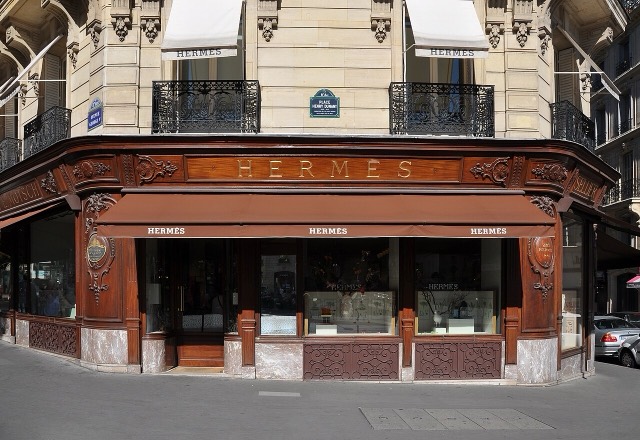
Hermès
Moonik · CC BY-SA 3.0

Hermès is a French luxury house founded in 1837 by Thierry Hermès as a harness-maker for the European elite. Nearly two centuries later, it is still family-controlled, still handcrafted in France, and still the single most aspirational name in the global luxury market, not because of aggressive marketing, but almost entirely because of scarcity, craft, and a ruthless refusal to play by anyone else’s rules.

The brand’s power rests on a handful of iconic objects: the Birkin bag, the Kelly bag, the silk carré scarf, and the Constance. These are not just accessories, they are financial instruments. Birkin bags have outperformed the S&P 500 and gold over multiple decades, a fact that has turned luxury shoppers into researchers and researchers into obsessives.

People search for Hermès constantly because the brand sits at the intersection of fashion, finance, and social status in a way no other house quite replicates. The waiting lists, the rumoured purchase-history requirements, the resale markups, all of it creates a permanent information gap that the brand itself has zero interest in filling.

That information gap is exactly what this page closes. From real price data to ownership structure to how to catch a fake, here is everything Hermès will never put in a press release.

People also ask

Three reasons, and none of them is marketing: genuine artisan scarcity, radical material standards, and deliberate supply restriction. Every Birkin and Kelly is hand-stitched by a single craftsperson in France, a process that takes 18 to 25 hours per bag. Hermès uses exotic skins (alligator, ostrich, crocodile) and its own top-grade Togo and Epsom leathers, sourced and tanned to specifications that most competitors simply do not bother with. The real price driver, though, is that Hermès produces far fewer bags than the market demands, on purpose. Scarcity is the product.

Yes, significantly. A entry-level Louis Vuitton bag (think a Speedy or a Neverfull) starts around $1,000–$2,000. An entry-level Hermès bag, not a Birkin, just an Evelyne or a Garden Party, starts around $2,000–$3,000, and a base Birkin opens at roughly $10,000 retail. At the top end, the gap is astronomical: a matte Himalaya Niloticus Crocodile Birkin has sold at auction for over $450,000. LV has nothing in the same stratosphere.

Yes, at the icon-to-icon level. Chanel's Classic Flap bag retails between approximately $9,000 and $11,000 depending on size (as of 2024), and the 2.55 runs in a similar range. A base Hermès Birkin 25 starts around $10,000–$11,000 at retail, already comparable, but Birkins quickly scale to $30,000, $60,000, and beyond depending on skin and hardware, territory Chanel's standard lineup simply does not reach. On the resale market, the gap widens further in Hermès's favor.

Yes, by a wide margin. Gucci's most iconic bags, the GG Marmont, the Dionysus, the Ophidia, retail between roughly $1,200 and $4,000. Even Gucci's most expensive ready-to-wear or leather pieces rarely approach the floor price of a Hermès Birkin or Kelly. Gucci operates in a different tier of the luxury pyramid: highly recognizable and aspirational, but not in the same rarefied scarcity bracket as Hermès.

Yes, and it's not close at the top end. Louis Vuitton has made genuine moves into ultra-luxury with its Capucines and collaboration pieces, but the brand's core business is still accessible luxury, with most bags sitting in the $1,000–$5,000 range. Hermès's core business is the exact opposite: engineered scarcity at prices that start where LV peaks. The brands are not really competing for the same customer, even if they share the same closets.

Same answer the brand refuses to give plainly: it's the combination of French artisan labor, exceptional raw materials, and a production volume that is kept artificially low relative to demand. One craftsperson, one bag, 18–25 hours of hand-stitching, that is the core cost structure. Add exotic skins that require years of sourcing and preparation, and hardware that is often gold- or palladium-plated, and the cost of goods alone is extraordinary before Hermès adds its margin.

Because Hermès decided decades ago that the brand would be built on craft and scarcity rather than volume and visibility. It spends almost nothing on traditional celebrity advertising compared to rivals like Louis Vuitton or Gucci. The price is the marketing. When a bag costs $10,000 at retail and resells for $20,000, it doesn't need a billboard, the price tag does all the talking.

The Birkin is the most extreme expression of everything Hermès stands for: one artisan, hand-stitched from start to finish, using some of the world's rarest leathers, with no shortcuts. But beyond the craft, the Birkin is expensive because it is rationed. Hermès reportedly requires customers to build a purchase history of other goods before being offered a Birkin, a practice the brand has never officially confirmed, but which is so universally reported by buyers and insiders that treating it as real is simply accurate. Scarcity-by-design turns a bag into a financial asset, and financial assets command financial prices.

At retail, a Birkin 25 in standard Togo or Epsom leather starts at approximately $10,000–$11,500 (2024 pricing). A Birkin 30 runs roughly $11,500–$13,000, and a Birkin 35 around $12,000–$14,000. Exotic skin versions, ostrich, alligator, crocodile, can push retail prices to $30,000–$60,000+. On the secondary market, almost all Birkins trade above retail, with rare configurations fetching multiples of the original price.

As a pure financial investment, the data is actually compelling: studies and resale platforms like Baghunter have reported that Birkin bags have appreciated in value over time, outperforming both gold and the S&P 500 over certain periods. As a purchase for personal use, "worth it" depends entirely on whether you can access retail pricing, buying at resale markup narrows the financial case considerably. The craft and durability are genuine; these bags last decades with proper care. Worth it by fashion standards? Unambiguously yes. Worth it as a liquid investment? Only if you can get it from a boutique.

Hermès is a publicly listed company (Euronext Paris: RMS), but it is majority-controlled by the Hermès family, direct descendants of founder Thierry Hermès. The Hermès family and related holding entities control over 66% of the capital, giving them effective veto power over any hostile takeover attempt. The family's grip on the company is one of the defining facts of its independence.

The Hermès fortune has been passed down through six generations of the founding family. The most prominent current figure is Axel Dumas, a sixth-generation descendant of Thierry Hermès, who has served as Executive Chairman since 2013. The inheritance has been widely distributed across family branches, which is precisely why the family formed a holding company, H51, to keep the shares unified and prevent any single branch from selling to an outside buyer.

In Greek mythology, which is where the name originates, Hermès (the messenger god, son of Zeus) had no official wife, but was associated with several consorts including Aphrodite, with whom he fathered Hermaphroditus. As for the brand: Thierry Hermès, the 19th-century founder, was a businessman and craftsman, not a deity, and the brand's name is purely a coincidence of history, his family name was Hermès.

No, and this is one of luxury's most dramatic corporate stories. LVMH's Bernard Arnault secretly accumulated a roughly 17% stake in Hermès between 2010 and 2011 through equity derivatives, shocking the fashion world and sparking a years-long legal battle. The Hermès family fought back, consolidated control through the H51 holding company, and ultimately forced LVMH to divest its stake by 2014 under a settlement with French regulators. Hermès remains fully independent and family-controlled, which is exactly how the family intends to keep it.

Start with the stitching: authentic Hermès bags use the saddle stitch technique, two needles, one thread, producing tight, even, diagonal stitches that are nearly impossible to replicate on a machine. Check the hardware: real Hermès hardware is weighty, precisely engraved, and either gold- or palladium-plated with no flaking. The blind stamp (craftsperson's mark, year letter, and atelier number) should be cleanly embossed inside the bag, counterfeiters frequently get the year-letter codes wrong or misplace the stamp. Finally, examine the leather itself: genuine Hermès leathers have a specific grain texture, smell, and weight that cheap fakes cannot mimic, and the date codes are publicly documented so you can cross-reference them.

The range is enormous. Entry-level Hermès bags like the Evelyne PM or the Herbag start around $1,500–$3,000. Mid-range icons like the Garden Party or Lindy run $3,000–$6,000. The Kelly and Birkin start at approximately $10,000 for the smallest sizes in standard leathers and climb steeply from there, exotic skin Kellys and Birkins routinely exceed $30,000 at retail. Silk scarves start around $400. The brand essentially covers a $400–$450,000+ range depending on what you're buying.

The Birkin 25, the smallest standard Birkin, retails at approximately $10,000–$11,500 in standard leathers like Togo or Epsom (2024 pricing). In exotic skins, retail prices for a Birkin 25 can reach $20,000–$40,000 depending on the skin type. On the resale market, a Birkin 25 in a sought-after color and leather typically sells for $15,000–$30,000+, with rare configurations going significantly higher.

The "mini Birkin" most people refer to is the Birkin 25 (25 cm), which starts around $10,000–$11,500 at retail. If you are referring to the even smaller Birkin 20, a genuinely micro version, retail pricing runs approximately $9,500–$13,000 depending on leather, but it is rarer and harder to source. The Birkin 20 in exotic skin can exceed $25,000 at retail. Both sizes command strong resale premiums.

"Giant killer" refers to Hermès's extraordinary success in defeating LVMH, the world's largest luxury conglomerate, when Bernard Arnault made his audacious stealth acquisition of a 17% stake around 2010–2011. Most observers assumed Hermès was done as an independent house. Instead, the family unified, lawyered up, went public with the assault, mobilized French regulators, and forced LVMH into a settlement and full divestiture by 2014. A family-controlled house with €3–4 billion in annual revenue had stared down the most powerful man in luxury and won, that's the giant-killer story.

Sort of, it depends entirely on what you want from an Hermès bag. The Herbag is one of the brand's most accessible entry points, retailing between roughly $2,000 and $3,500, and it carries genuine Hermès craftsmanship and the interchangeable canvas-and-leather system that makes it practically versatile. It does not, however, carry the resale power of a Birkin or Kelly, it appreciates modestly at best. If you want to wear an Hermès bag daily without the anxiety of owning a $10,000+ investment piece, the Herbag is a rational, underrated choice. If you're buying for resale upside, look elsewhere.

Related topics
Culture Trending now
Taylor Swift and Travis Kelce Wedding 2026
Culture Trending now
Why Labubu is suddenly everywhere
Culture Trending now
The Odyssey (Christopher Nolan)
Culture Trending now
KPop Demon Hunters
Culture Trending now
House of the Dragon Season 3
Culture People
Adam Curry
Culture People
Adam Sandler
Culture People
Andrew Huberman